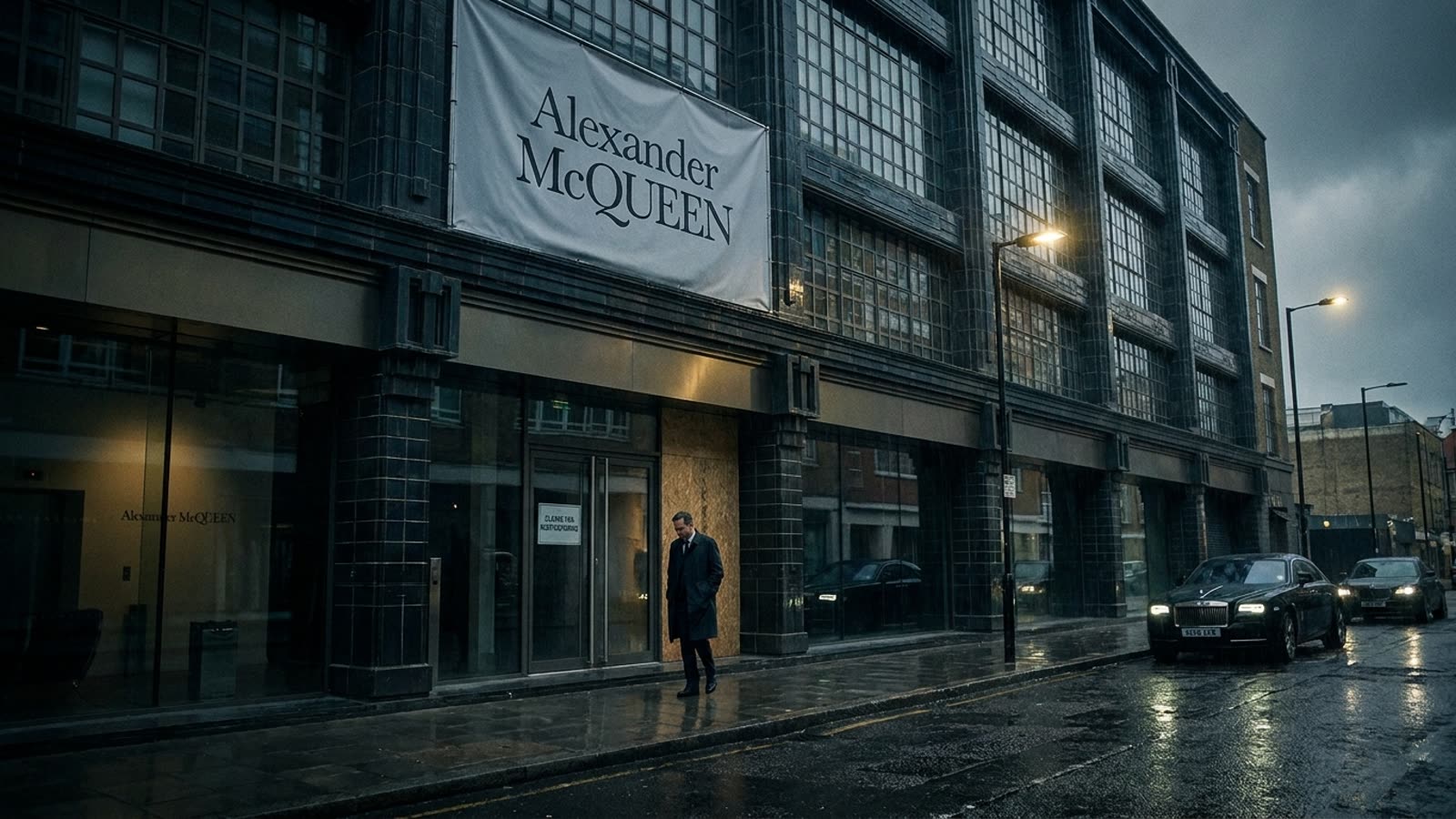
Kering cannot seem to keep a creative director in place long enough to matter. Seán McGirr's exit from Alexander McQueen, confirmed Thursday after three years at the helm, marks the latest in a string of high-profile departures that have left the French luxury group looking less like a curator of visionary talent and more like a revolving door with marble floors.
McGirr inherited one of fashion's most impossible briefs: following Sarah Burton, who had spent over two decades at the house and dressed a future queen for her wedding. His collections divided critics—some praised his willingness to move beyond Burton's romantic darkness, others found his work too detached from McQueen's theatrical DNA. Neither camp will get the chance to see whether his vision would have eventually cohered into something definitive.
The Kering pattern
The timing is conspicuous. McQueen joins a list of Kering houses that have struggled to maintain creative stability while LVMH's stable of designers—from Kim Jones at Dior Men to Jonathan Anderson at Loewe—have been given the runway to build multi-year narratives. At Gucci, the post-Alessandro Michele era has been marked by recalibration rather than revolution. At Balenciaga, Demna remains but under a cloud of controversy that refuses to fully dissipate. Now McQueen, a house that demands a singular and often disturbing vision, is searching again.
The problem is structural as much as it is creative. Kering's brands carry such heavy mythologies—McQueen's tortured genius, Balenciaga's architectural severity, Bottega's artisanal purity—that any designer stepping into them is immediately measured against ghosts. Burton survived because she had been Lee McQueen's right hand; she was continuity, not replacement. McGirr had no such protection.
What comes next
Kering has not named a successor, and the silence is telling. The bench of designers capable of handling McQueen's particular demands is thin. The house requires someone comfortable with spectacle, darkness, and technical virtuosity in tailoring—a combination that eliminates most of the obvious candidates currently making noise in London or Paris. Poaching from a competitor would signal ambition; promoting from within would signal caution. Neither path is without risk.
The business pressures are real. McQueen has never been Kering's cash cow—that role belongs to Gucci and, increasingly, Bottega Veneta—but the house's cultural prestige punches above its commercial weight. A prolonged interregnum, or worse, a miscast appointment, could erode what remains of that intangible equity.
Our take
McGirr was never going to be the answer at McQueen, and three years was probably two years too long to figure that out. But the larger issue is Kering's apparent inability to articulate what it wants from its creative leaders beyond "don't embarrass us" and "sell more bags." LVMH gives its designers time and protection; Kering gives them legacy and expectation. One of those formulas is working. The other keeps producing headlines like this one.