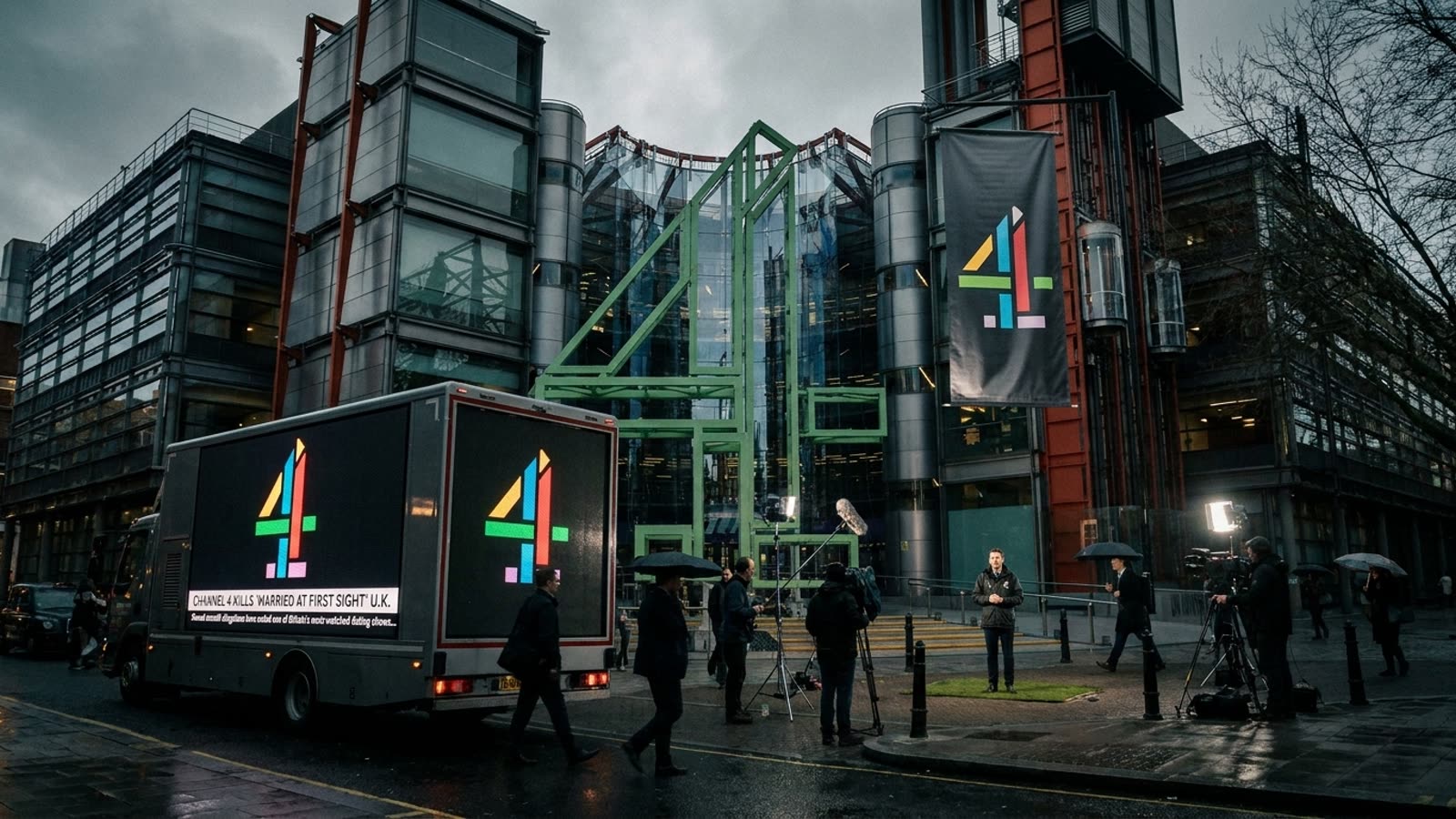
For years, the British reality-television industry operated on a grim understanding: contestants were expendable, headlines were currency, and the occasional scandal was simply the cost of doing business. That calculus collapsed this week when Channel 4 confirmed it has permanently canceled "Married at First Sight" U.K. following allegations of sexual assault involving a participant. The show will not return.
The decision is remarkable not because a broadcaster acted on serious misconduct claims—that should be unremarkable—but because it represents the first time a major U.K. network has killed a profitable franchise outright rather than retreating behind an "independent review" and a quiet hiatus. Channel 4's statement was terse, offering no timeline of events and no details about the allegations themselves. What it did offer was finality.
A format built on friction
"Married at First Sight," adapted from an Australian format that itself drew on a Danish original, asks strangers to wed on camera and cohabit while experts dispense advice. The premise is engineered for conflict: mismatched couples, enforced intimacy, elimination-style commitment ceremonies. British audiences made it one of Channel 4's streaming success stories, with the 2025 series drawing record on-demand numbers. That popularity now looks like a liability. When a format's entire value proposition rests on manufacturing romantic tension between people who have never met, the line between dramatic friction and genuine harm becomes perilously thin.
The post-'Love Island' landscape
British television has been here before. The suicides of former "Love Island" contestants Sophie Gradon and Mike Thalassitis in 2018 and 2019, followed by presenter Caroline Flack in 2020, forced ITV into a public overhaul of its aftercare protocols. Ofcom tightened guidance. Networks pledged psychological support. Yet the underlying economics of reality television—cheap to produce, catnip for advertisers targeting young demographics—remained unchanged. What Channel 4's cancellation suggests is that the regulatory and reputational environment has finally shifted enough to make outright termination the rational choice. A show that generates assault allegations is no longer a fixable problem; it is a brand contagion.
Our take
The cynical reading is that Channel 4, facing its own uncertain future amid privatization debates and advertising headwinds, simply could not afford the scrutiny. The charitable reading is that someone in a commissioning meeting finally asked whether a format predicated on strangers sharing a bed might carry structural risks that no amount of duty-of-care paperwork can mitigate. Either way, the outcome is the same: one less show treating human relationships as content farms. That is not a tragedy. It is an overdue correction.