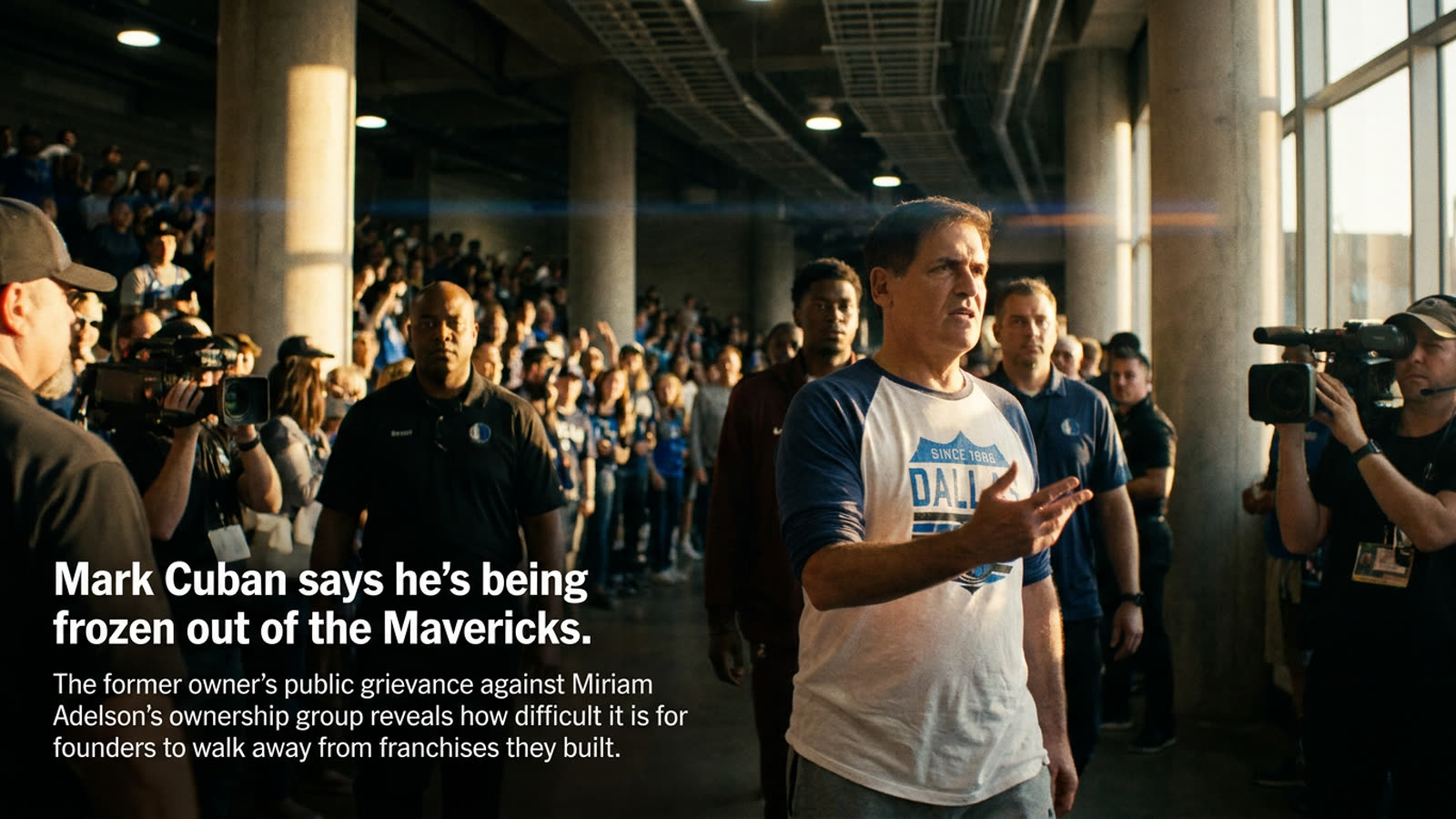
Mark Cuban spent two decades as the NBA's most visible owner — courtside heckler, fine collector, reality-TV investor, and relentless promoter of the Dallas Mavericks. He sold his controlling stake to Miriam Adelson's family office in December 2024 for a reported $3.5 billion, retaining a minority share and, he believed, operational influence. Now Cuban is telling anyone who will listen that the Adelsons have shut him out entirely, refusing meetings, ignoring calls, and treating him like a stranger with a season-ticket package.
The accusation surfaced in a podcast interview this week and immediately ricocheted through sports media. Cuban did not mince words: the new ownership group, he claimed, has frozen him out of basketball decisions despite assurances during the sale that he would remain involved in day-to-day operations. The Adelson camp has not responded publicly, which is itself a response.
The founder's dilemma
Cuban's complaint is emotionally coherent but structurally naïve. Minority owners in professional sports have precisely as much influence as majority owners choose to grant them, and that grant is revocable at will. When Cuban sold control, he sold control — the contractual language about "continued involvement" was always going to be interpreted by whoever held the checkbook. Founders who sell and stay often discover that their new role is decorative. Cuban, a man who built his fortune on understanding leverage, appears surprised to find himself without any.
Why the Adelsons might want distance
Miriam Adelson inherited a casino empire and a political operation; she did not inherit a desire for basketball theatrics. The Adelson family's public profile has been carefully curated around philanthropy and Republican megadonor status, not courtside antics. Cuban's brand — loud, opinionated, occasionally litigious — may simply be incompatible with how the new owners wish to present the franchise. Freezing him out is not personal; it is brand management.
There is also the matter of the Mavericks' on-court trajectory. Dallas reached the NBA Finals in 2024, lost to Boston, and has since settled into playoff-team purgatory. New ownership groups often prefer to install their own people rather than inherit a former owner's loyalists. Cuban's presence, even in a diminished capacity, complicates that transition.
The pattern across sports
Cuban is not the first founder to struggle with post-sale irrelevance. Jerry Buss's children feuded over the Lakers for years after his death. The Glazer family's purchase of Manchester United left former stakeholders bewildered by the new financial engineering. Selling a team you built is not like selling a company; the emotional residue is thicker, and the public stage makes every grievance performative. Cuban's podcast complaints are, in one sense, just another episode of a man processing loss in real time.
Our take
Cuban deserves sympathy the way a gambler deserves sympathy after cashing out and then complaining about the new player at his old seat. He took billions of dollars and a minority stake; he did not take a guarantee of relevance. The Adelsons owe him nothing except whatever is written in the sale agreement, and that document almost certainly does not include "must return Mark's calls." Cuban built something valuable, sold it at the top, and now must live with the oldest truth in ownership: once you sell, it is not yours anymore. The courtside seat remains, but the microphone is gone.