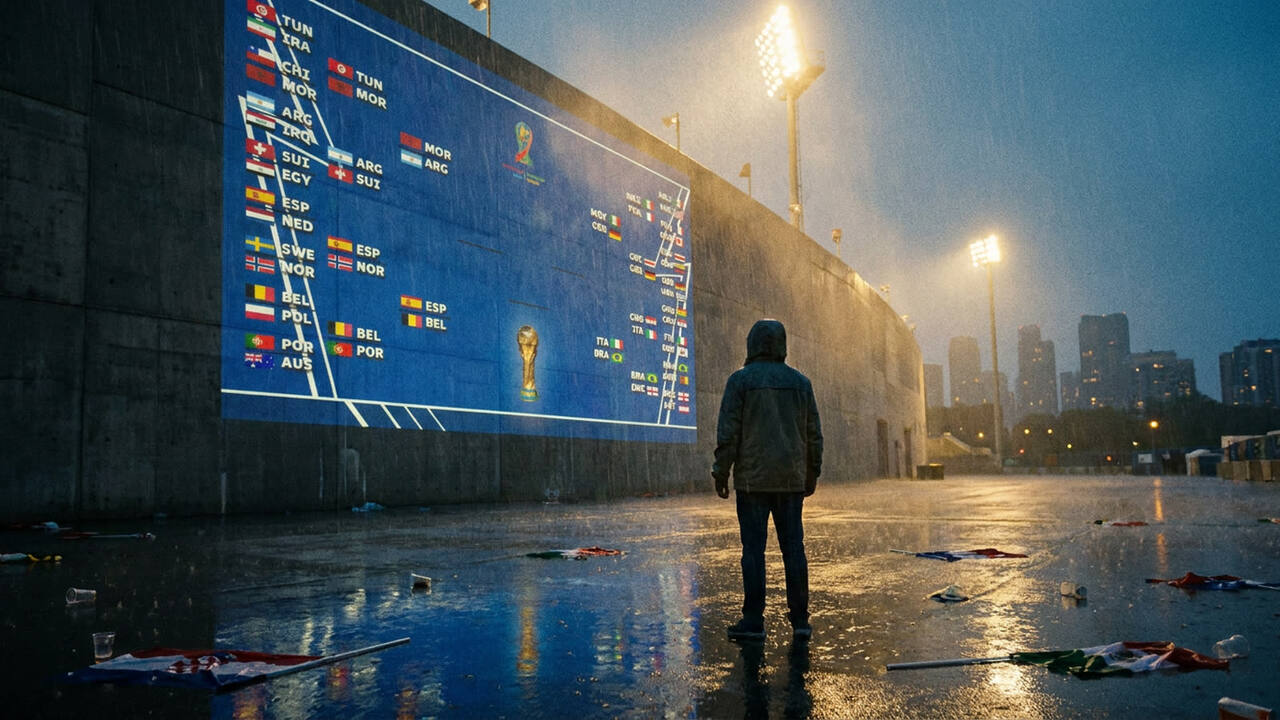
The 2026 World Cup has reached the stage where luck starts to matter less and depth starts to matter more. Eight nations remain, and while all can claim legitimate credentials, the quarterfinal draw has created a fascinating asymmetry: some brackets look like coronations waiting to happen, others like knife fights where the winner may be too bloodied to matter.
The tournament's group stage and Round of 16 have clarified which pre-tournament favorites were correctly assessed and which were operating on reputation alone. The United States, playing on home soil with enormous expectations, have already departed—their structural weaknesses in youth development exposed at the worst possible moment. Meanwhile, several European powers have advanced with the kind of controlled, unspectacular performances that tend to win tournaments rather than highlights reels.
The bracket imbalance problem
Quarterfinal draws are never perfectly balanced, but this year's structure has created what analysts are calling a "death bracket" on one side and something closer to a procession on the other. The clustering of certain powerhouses means at least one genuine contender will exit before the semifinals, while the opposite bracket could see a less-fancied side reach the final four through a notably softer path.
This asymmetry matters because World Cup knockout football is uniquely punishing. Unlike league campaigns or even Champions League group stages, there is no recovery from a single poor ninety minutes. The teams facing each other in the loaded bracket know that whoever survives will have spent significantly more physical and emotional capital than their semifinal opponent.
What the numbers suggest
Expected goals models and possession metrics have been reasonably predictive through the tournament's first four rounds, though with notable exceptions. Teams that have significantly outperformed their underlying numbers—winning matches they probably should have drawn—face a statistical correction that tends to arrive precisely when the stakes are highest. Conversely, sides that have been unlucky in finishing may be due for positive regression.
The bookmakers have adjusted accordingly, with several quarterfinal lines tighter than the casual observer might expect. The market is essentially saying: form is temporary, but squad depth and tournament experience are proving decisive at this stage.
Our take
World Cup quarterfinals are where narratives crystallize and legacies are made. The next four matches will likely produce at least one result that seems obvious in retrospect but would have been dismissed as fantasy a month ago. That is the tournament's particular magic—and its cruelty. For the eight remaining nations, the margin between glory and heartbreak has never been thinner.