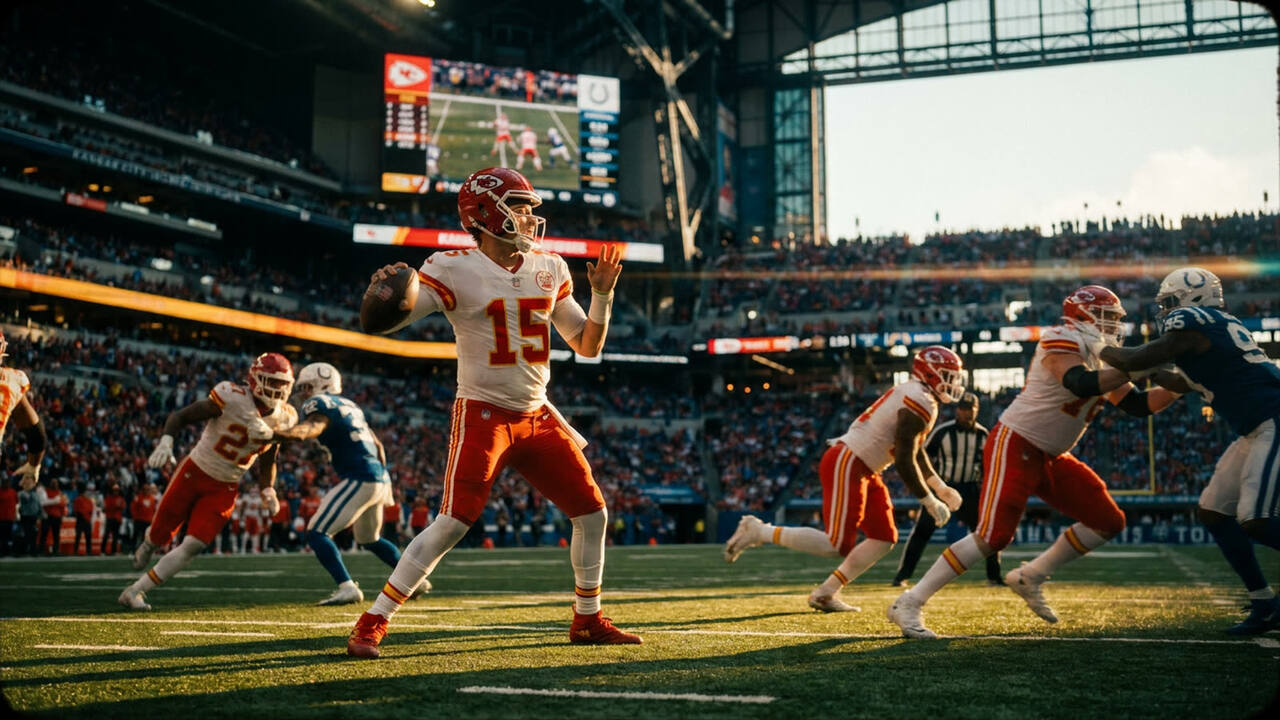
The numbers are so large they've become almost meaningless: Patrick Mahomes will earn more than $500 million under his reworked contract with the Kansas City Chiefs, a figure that sounds less like a professional athlete's salary and more like a mid-sized sovereign wealth fund's annual disbursement. But the significance isn't in the raw total—it's in what this contract signals about the NFL's accelerating financial stratification and the impossible math facing 31 other franchises.
Mahomes, who at 30 has already won three Super Bowls and established himself as the most valuable asset in American professional sports, was technically under contract through 2031. The restructure wasn't about keeping him in Kansas City; it was about recalibrating reality. The original ten-year, $450 million deal signed in 2020 looked revolutionary at the time. Six years later, it had become a relative bargain as the salary cap exploded and lesser quarterbacks commanded $50 million annually.
The new quarterback economy
What makes this contract architecturally different is its treatment of guaranteed money. Previous mega-deals often featured headline numbers inflated by voidable years and theoretical escalators. The Mahomes restructure reportedly locks in guarantees that dwarf anything previously seen at the position, creating a template that agents will weaponize in every negotiation for the next decade.
The ripple effects are already calculable. Joe Burrow, Lamar Jackson, and Justin Herbert all have contract situations approaching within the next two seasons. Each will now negotiate against the Mahomes benchmark, and each will have legitimate arguments for why their deals should approach similar territory. The quarterback position, already consuming an outsized portion of team salary caps, is about to become even more expensive.
The roster construction problem
For general managers, the Mahomes deal crystallizes an uncomfortable truth: you cannot build a championship-caliber roster while paying a quarterback at market rate unless that quarterback is Mahomes-level transcendent. The Chiefs have won three titles precisely because Mahomes's original contract was below market for his production. Now that arbitrage is gone.
Teams will increasingly face a binary choice: pay a franchise quarterback and hope he elevates replacement-level talent, or invest in a complete roster and pray you find a quarterback on a rookie deal. The middle path—paying a good-but-not-great quarterback $45 million while trying to surround him with talent—becomes mathematically untenable.
Our take
The NFL has spent two decades cultivating parity through its salary cap system, and Patrick Mahomes just exposed its fundamental flaw: the cap constrains mediocrity, not excellence. When one player can be worth $500 million to a franchise—through championships, merchandise, and the incalculable value of relevance—paying him that sum is rational even if it distorts everything else. The league's competitive balance was always a pleasant fiction. Now the fiction is getting expensive to maintain.