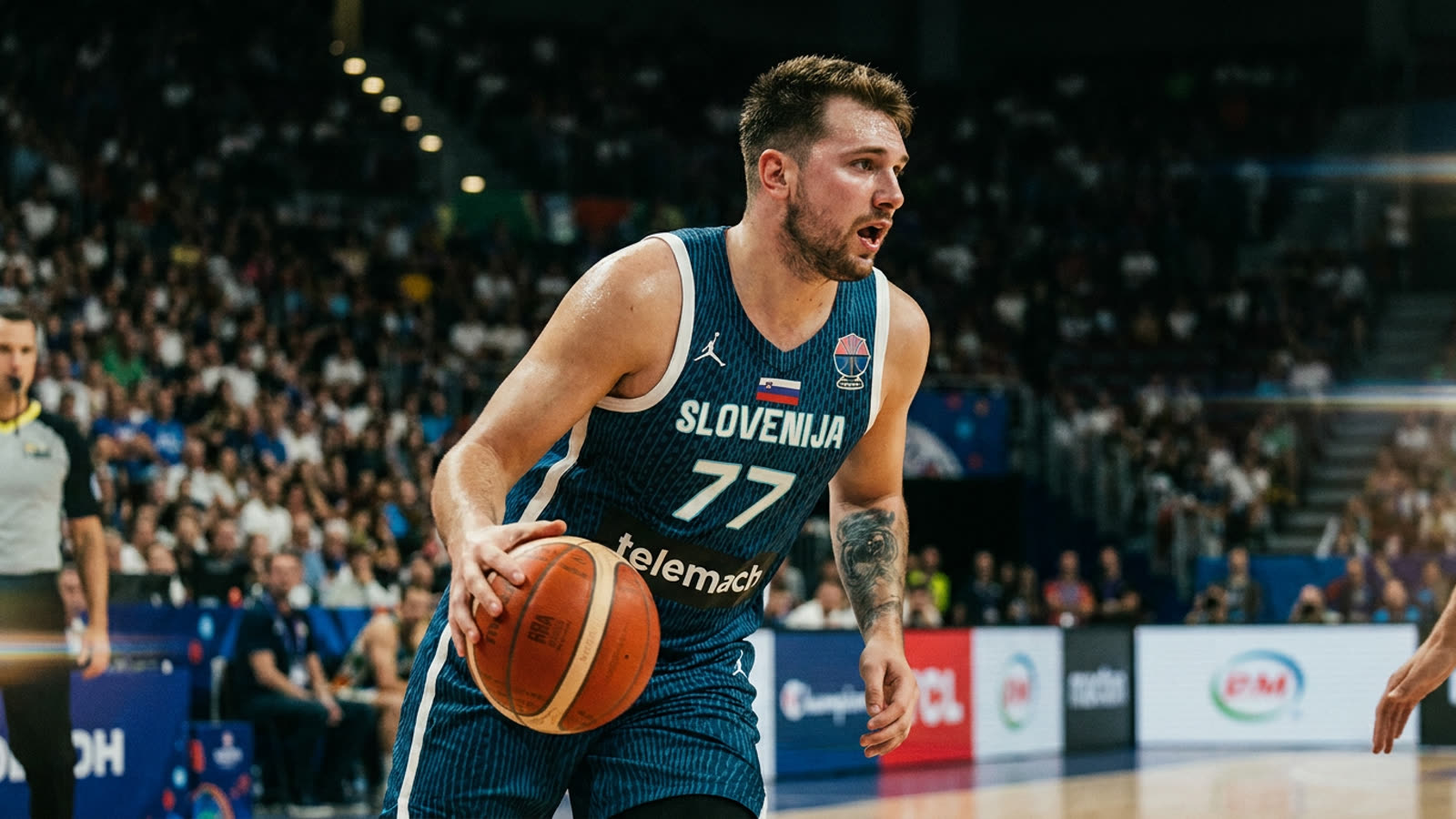
When Luka Dončić puts money into a basketball venture, it is worth asking what he sees that others might be missing. The Slovenian guard, who learned his craft in Real Madrid's academy before becoming one of the NBA's transcendent talents, has reportedly invested in a Rome-based franchise positioning itself for a potential NBA Europe league — a move that suggests the long-discussed transatlantic expansion may be closer to reality than the league's cautious public statements imply.
Dončić is not merely a celebrity investor lending his name to a speculative project. He is perhaps the single most credible bridge between European basketball culture and American commercial dominance, a player who proved definitively that EuroLeague development produces NBA superstars. His willingness to stake capital on European professional basketball's future carries weight that a hedge fund's participation would not.
The NBA's European question
Commissioner Adam Silver has spoken for years about international expansion, always in the conditional tense. The logistical challenges are genuine: travel distances, time zones, competitive balance, and the delicate politics of integrating existing European leagues into an American-dominated structure. Yet the economics increasingly favor action. European television markets remain underdeveloped relative to their potential, and the NBA's domestic growth has plateaued. A genuine European presence — not merely preseason exhibitions in London or Paris — would unlock revenue streams the league cannot access from Manhattan.
The Rome investment suggests that sophisticated parties believe the conditional tense is becoming present. Italian basketball has struggled for relevance since its 1980s and 1990s peak, but Rome offers what the NBA covets: a global city with infrastructure, corporate headquarters, and the kind of cultural cachet that makes sponsors eager to associate. If NBA Europe materializes, Rome would likely be among the founding franchises.
What Dončić understands
The investment also reflects Dončić's particular vantage point on basketball's shifting geography. He watched European basketball's commercial model stagnate while its talent pipeline accelerated. The gap between what EuroLeague produces and what it earns has never been wider. Victor Wembanyama, Nikola Jokić, Giannis Antetokounmpo — the league's most marketable international stars all developed outside the American system, yet nearly all the economic value they generate flows to American owners.
Dončić appears to be betting that this imbalance is unsustainable, and that capital positioned early in European markets will capture disproportionate returns when the correction arrives. Whether that correction comes through NBA Europe, a reformed EuroLeague, or some hybrid structure matters less than the directional bet: professional basketball's commercial center of gravity will shift eastward across the Atlantic.
Our take
Athletes investing in sports ventures is usually vanity; athletes investing in structural market shifts is rare and worth noting. Dončić has spent his entire career proving that the basketball establishment underestimates what happens outside America's borders. If he is now putting money behind that conviction, the NBA's European skeptics should pay attention. The most interesting thing about this investment is not the dollars involved — it is that Dončić apparently believes the moment has arrived.