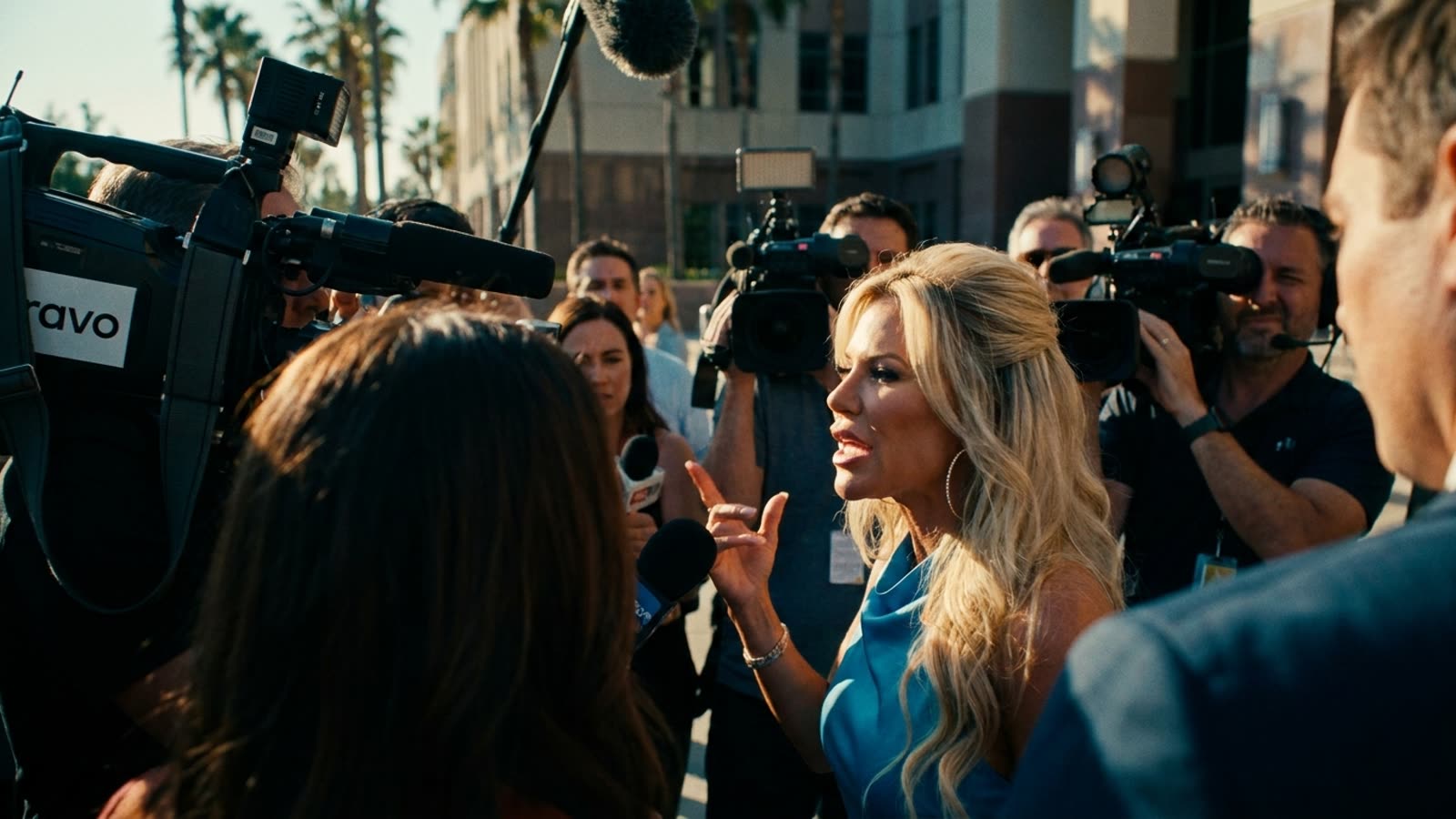
When Brittany Santiago was photographed this week looking conspicuously unbothered—radiant, even—just weeks after Marcelino Santiago filed for divorce, the images weren't evidence of healing. They were evidence of labor. The particular labor of being a reality television personality whose personal devastation must be metabolized into watchable narrative, whose grief must arrive camera-ready.
The Santiagos were one of Love After Lockup's rare success stories, a couple who met when Brittany was incarcerated and built what appeared to be a functional, even enviable, life on the other side. They married, had children, became franchise veterans. Their longevity was the show's implicit promise made flesh: that love forged in the most compromised circumstances could survive the transition to ordinary life. That the cameras might capture something real.
The economics of performed intimacy
Reality television operates on a brutal exchange. Participants trade access to their most vulnerable moments for visibility, income, and the peculiar celebrity that comes from being professionally ordinary. The Santiagos understood this bargain better than most—they'd been navigating it for years, calibrating how much to reveal, how to remain sympathetic, how to stay interesting enough to keep getting cast without becoming so chaotic they became unwatchable.
But divorce breaks the contract. A couple's dissolution is premium content precisely because it's the thing participants most want to protect. The incentive structure inverts: the worse things get privately, the more valuable the footage becomes publicly. Brittany's smiling photographs aren't just personal composure; they're a negotiating position, a refusal to let the worst moment of her life become someone else's season finale.
The franchise's body count
Love After Lockup and its spinoffs have always been honest about their premise's darkness—these are relationships forged across prison glass, weighted with addiction histories, criminal records, and the systematic disadvantages that follow incarceration. The show's appeal lies partly in watching people attempt dignity under conditions designed to deny it. But the franchise has cycled through dozens of couples now, and the survival rate is grim. The Santiagos' apparent stability made them anomalies. Their divorce makes them statistics.
What the show rarely examines is how the filming itself corrodes relationships. The presence of cameras doesn't just document dysfunction; it incentivizes it. Conflict is content. Resolution is boring. Couples learn, consciously or not, that their continued relevance depends on continued drama. The medium shapes the marriage it claims to merely observe.
Our take
Brittany Santiago's composed public appearance deserves to be read as what it is: a woman refusing to perform her pain on schedule. The reality television apparatus will eventually demand its footage—the tearful confessional, the custody logistics, the requisite "moving on" narrative arc. But for now, her smile is a small act of defiance, a reminder that even the most surveilled lives contain private rooms. The cruelty isn't that her marriage ended. It's that the ending was always going to be someone else's product.