The basement food halls of Japanese department stores—known as depachika, a portmanteau of depāto (department store) and chika (basement)—represent something the global luxury industry has studied for decades and consistently failed to copy. They are not grocery stores. They are not food courts. They are theatrical spaces where the act of purchasing a box of strawberries becomes a minor ceremony, and where the phrase "gift-worthy" applies to items as humble as pickled vegetables.
The concept emerged in the early twentieth century when department stores like Mitsukoshi and Takashimaya began consolidating food vendors in their lower levels. What started as practical real-estate allocation evolved into something philosophically distinct: a retail environment predicated on the assumption that food deserves the same reverence as fashion or fine jewelry.
The architecture of abundance
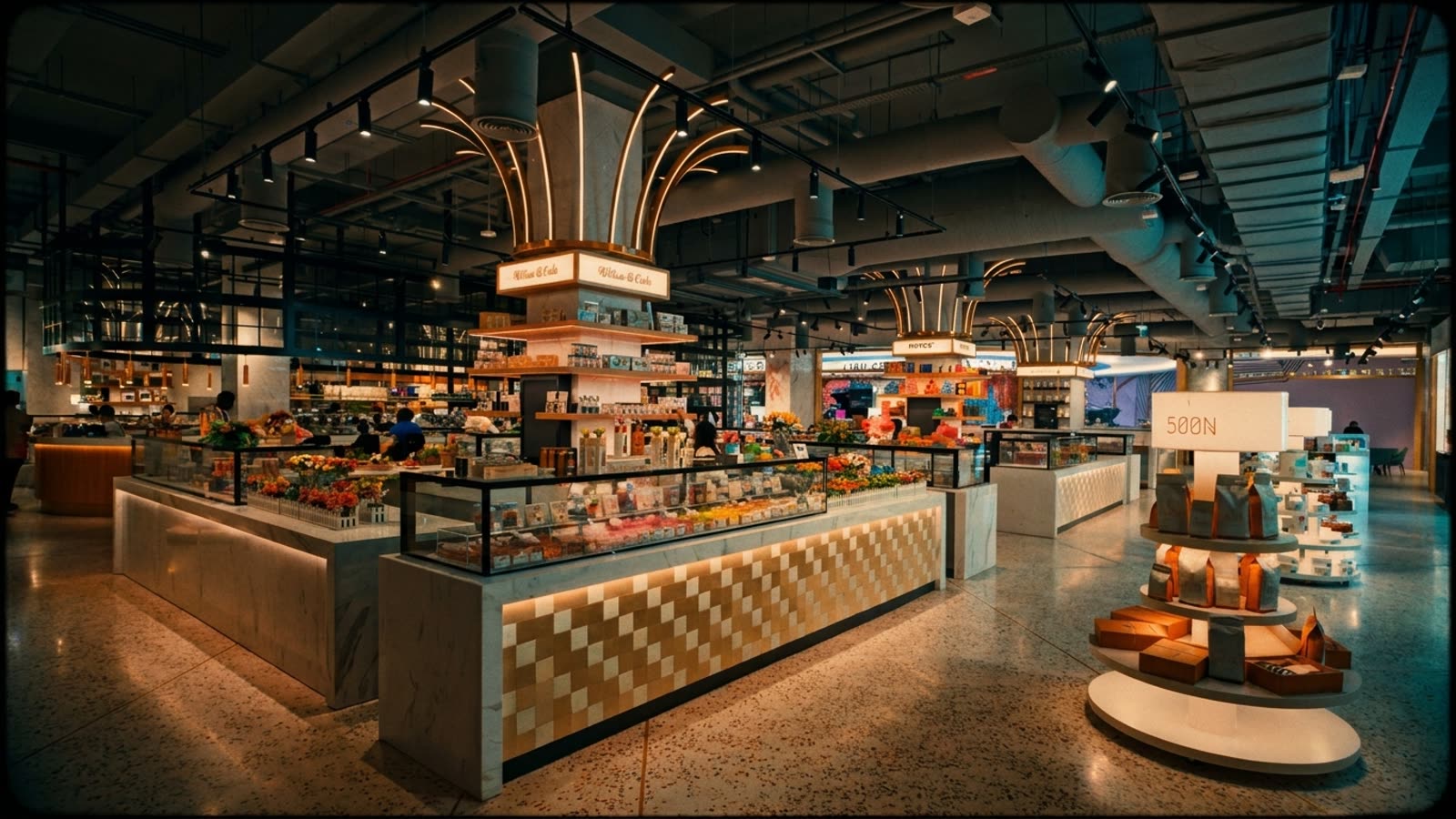
A well-designed depachika disorients by design. Isetan Shinjuku's basement sprawls across multiple subterranean floors, each section devoted to a category so specific it borders on the absurd: one counter sells only wagashi (traditional sweets) from Kyoto; another specializes in French patisserie; a third offers nothing but premium eggs. The lighting is calibrated to make produce glow. The temperature is controlled to the degree. Staff wear uniforms that would not look out of place in a Michelin-starred dining room.
The visual merchandising operates on principles foreign to Western supermarkets. Products are displayed as specimens, not inventory. A single melon might rest on a silk cushion inside a wooden box, priced at figures that would cover a week's groceries elsewhere. The message is unambiguous: this is not sustenance, this is connoisseurship.
The gift economy engine
Depachika thrive on Japan's elaborate gift-giving culture. The twice-yearly ochugen and oseibo seasons—summer and year-end gift periods—drive enormous traffic to these halls, where shoppers select meticulously packaged confections and delicacies to send to business associates, teachers, and relatives. The wrapping matters as much as the contents. A box from a prestigious depachika carries social weight that transcends the food inside.
This gift economy creates commercial dynamics that Western retailers struggle to understand. Customers willingly pay substantial premiums for items they will never taste themselves. The purchase is a communication, a gesture of respect encoded in brand reputation and presentation. Depachika have optimized for this transaction over a century.
Why the model resists export
Harrods has a food hall. So does Selfridges. Galeries Lafayette tried. None achieve the depachika effect. The reasons are structural. Japanese department stores occupy a different position in urban life—they are destinations, not detours. The density of Japanese cities concentrates foot traffic in ways that support the economics of hyper-specialized vendors. And the cultural infrastructure of gift-giving simply does not exist at comparable scale elsewhere.
There is also the matter of labor. Depachika staffing levels would be considered absurd by Western retail standards. Employees wrap packages with origami precision, offer samples with choreographed bows, and provide product knowledge that borders on scholarly. This is expensive. It is also the point.
Our take
The depachika model is not replicable because it is not really about food—it is about a society that decided, somewhere along the way, that the basement of a department store could be a temple. The West builds food halls as amenities; Japan built them as institutions. The distinction matters. In an era when grocery shopping increasingly means algorithmic delivery and cardboard boxes, the depachika stands as a quiet rebuke: the act of buying food can be beautiful, if you are willing to treat it as such.