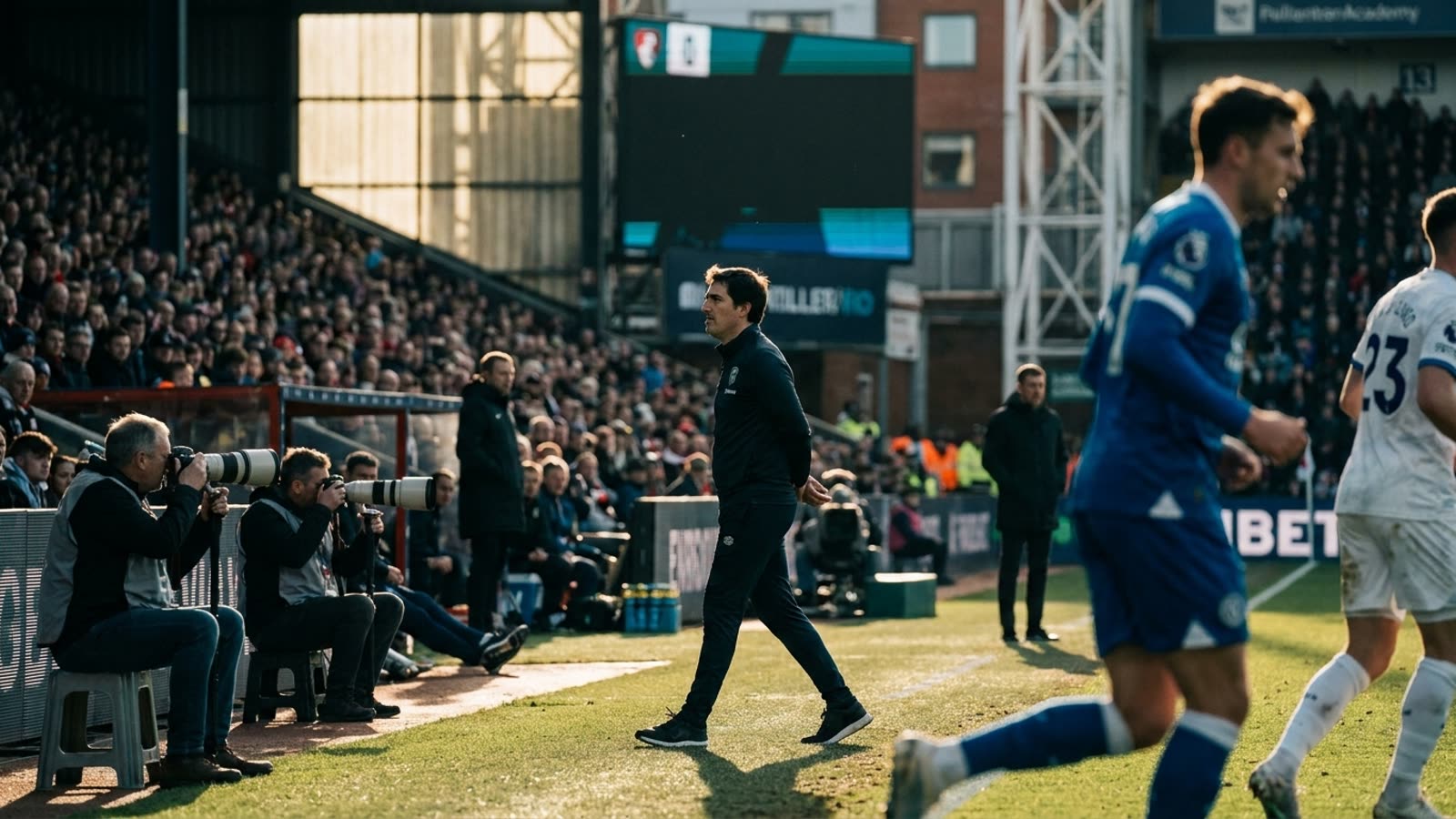
Liverpool's decision to appoint Andoni Iraola as their next manager is either a masterstroke of progressive thinking or a spectacular leap of faith — and the distinction may not become clear for years.
Sources confirmed Monday that the Anfield club has reached an agreement with the Bournemouth manager, ending weeks of speculation about who would inherit one of European football's most demanding jobs. Iraola, 42, arrives with a reputation that far exceeds his trophy cabinet. He has won nothing of consequence. His Bournemouth side finished seventh last season — impressive for a club of their resources, but hardly the pedigree Liverpool supporters expect from their manager.
The analytics darling
What Iraola lacks in silverware he compensates for in methodology. His Bournemouth teams have consistently overperformed their expected-goals metrics, playing a high-pressing, possession-dominant style that analytics departments across Europe have studied obsessively. Liverpool's ownership group, Fenway Sports Partners, has long prized data-driven decision-making; Iraola represents its logical endpoint in managerial recruitment.
The Basque coach's path to Anfield traces through Rayo Vallecano, where he transformed a relegation candidate into a Europa League qualifier, and Bournemouth, where he stabilized a squad many predicted would drop immediately after promotion. Neither job prepared him for managing a club where anything less than a title challenge constitutes failure.
The Klopp shadow
Liverpool have struggled to escape Jürgen Klopp's legacy since his departure. His immediate successor lasted eighteen months before the relationship soured. The club's hierarchy evidently concluded that hiring another established name would invite unfavorable comparisons; better to select someone whose style differs enough that direct measurement becomes impossible.
Iraola's appointment also signals Liverpool's acceptance that the transfer-market arms race with Manchester City and Chelsea cannot be won through spending alone. His ability to develop players and maximize limited resources was precisely what attracted Fenway's attention. Whether those skills translate when expectations — and budgets — multiply exponentially remains football's great unanswered question.
Our take
This is a defensible gamble, not an obvious triumph. Iraola possesses genuine tactical intelligence and has earned respect across the sport for his principled approach to football. But Liverpool is not Bournemouth, and the Premier League's middle class is littered with coaches who excelled at smaller clubs before drowning at larger ones. Fenway is betting that Iraola is different — that his methods scale, that his personality can command a dressing room of internationals, that his lack of elite experience is a feature rather than a flaw. They may be right. They are certainly not guaranteed to be.