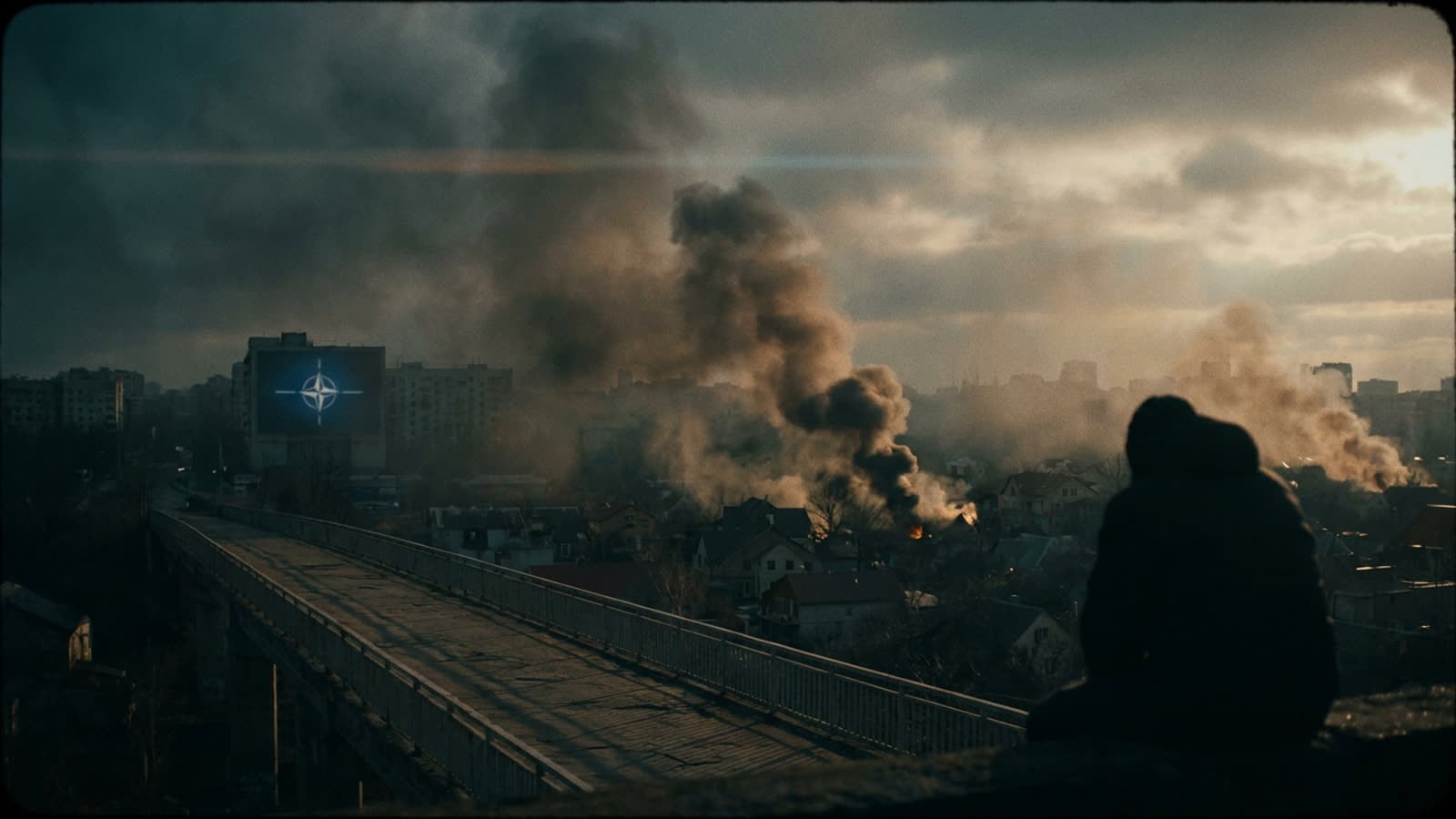
The explosions that tore through Kyiv on Saturday night were not military happenstance. They were a diplomatic communiqué written in cruise missiles, timed to land precisely as Air Force One prepared to carry President Trump to what may be the most consequential NATO summit since the alliance's founding.
Russia's barrage killed at least twelve civilians and wounded dozens more, striking residential areas in the Ukrainian capital with the kind of precision that leaves little doubt about intent. The Kremlin wanted Western leaders to arrive in Washington with fresh images of destruction on their screens — a reminder that whatever deals they discuss, Moscow retains the capacity to escalate at will.
The summit stakes
This week's NATO gathering carries unusual weight. Trump has spent months signaling openness to a negotiated settlement with Vladimir Putin, most recently offering during their Alaska meeting to help broker a deal. European allies, meanwhile, remain deeply divided between those eager for any path to peace and those who view premature concessions as an invitation to future Russian aggression.
The Kyiv strikes complicate both positions. Hawks will argue the attacks prove Putin cannot be trusted to negotiate in good faith. Doves will counter that continued bloodshed only reinforces the urgency of diplomacy. Putin, characteristically, has created conditions that serve his interests regardless of which faction prevails.
Ukraine's response
Kyiv has not remained passive. Ukrainian drone operations have intensified across Russian territory in recent weeks, with nearly every Russian region now reporting fuel supply disruptions. The asymmetric campaign represents Ukraine's attempt to impose costs without the heavy weaponry its Western backers have been reluctant to provide.
But the exchange rate remains brutally unfavorable. Ukrainian drones inconvenience Russian motorists; Russian missiles kill Ukrainian families. President Zelensky's government faces the grim arithmetic of a war of attrition against an adversary with deeper reserves of both munitions and indifference to casualties.
The Trump variable
The American president arrives at the summit in an unusual position: simultaneously the alliance's most powerful member and its most unpredictable one. His public overtures to Putin have alarmed traditional NATO partners, yet his administration has also maintained substantial military aid to Ukraine. The contradiction may be strategic ambiguity or simple incoherence — allies cannot tell which, and that uncertainty itself shapes their calculations.
Trump's response to the Kyiv strikes will signal much about the summit's trajectory. Strong condemnation would reassure nervous Europeans; muted reaction would confirm their fears about American reliability.
Our take
Putin understands Western summits better than Western leaders understand Putin. The Kyiv barrage was calibrated theater, designed to demonstrate that Russia sets the tempo of this war regardless of what diplomats discuss in air-conditioned conference rooms. NATO's challenge is not merely to craft a unified position on Ukraine — it is to prove that such positions matter when one party to the conflict communicates primarily through artillery.