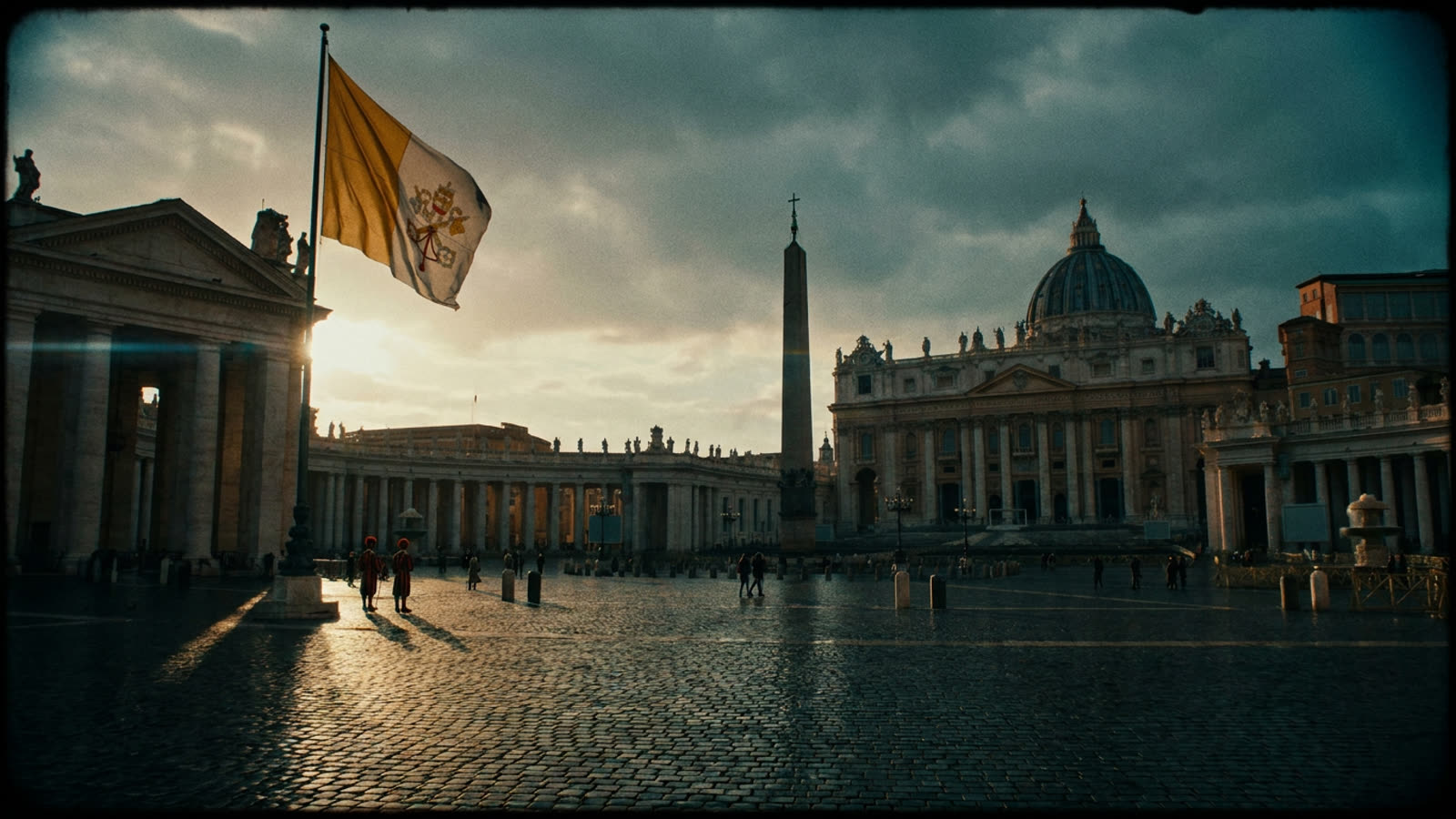
The Vatican maintains formal diplomatic relations with more countries than the United States does. This fact tends to surprise people who think of the Holy See primarily as a religious institution, or who note that its entire territory could fit inside Central Park with room to spare. But the Catholic Church has been conducting foreign policy since before most current nations existed, and its diplomatic apparatus remains one of the most sophisticated and underappreciated instruments of international influence on earth.
The confusion begins with terminology. The Holy See—the ecclesiastical jurisdiction of the Pope—is the entity that conducts diplomacy, not Vatican City State. This distinction matters because it means the Church's diplomatic standing derives from its spiritual authority over 1.3 billion Catholics worldwide, not from its 121-acre microstate. When a papal nuncio presents credentials to a foreign government, he represents an institution that was negotiating with emperors when most European capitals were still villages.
The Nuncio Network
Vatican ambassadors, called nuncios, operate under protocols established by the Congress of Vienna in 1815, which granted the papal representative automatic seniority as dean of the diplomatic corps in Catholic-majority countries. This seemingly ceremonial privilege provides practical advantages: the nuncio often becomes a trusted intermediary between feuding factions precisely because his position transcends local politics. During civil conflicts in Latin America and Africa, nuncios have repeatedly served as the only acceptable mediator between governments and rebel groups.
The Secretariat of State, the Vatican's equivalent of a foreign ministry, employs perhaps a few hundred diplomats—a fraction of what major powers deploy. But this small corps maintains an information network that intelligence agencies envy. Parish priests, bishops, and Catholic aid workers in virtually every country funnel observations upward through ecclesiastical channels that operate parallel to, and often beneath the radar of, state surveillance.
Soft Power, Hard Results
The Vatican's diplomatic achievements tend toward the quiet and the long-term. The Church played a documented role in the peaceful transitions in Poland and the Philippines during the 1980s, leveraging its institutional presence to support democratic movements while maintaining channels to authoritarian governments. More recently, the Holy See facilitated the normalization of relations between the United States and Cuba, hosting secret negotiations that both governments trusted precisely because the Vatican had no strategic stake in the outcome.
This posture of principled neutrality allows the Pope to criticize all sides of a conflict without being dismissed as a partisan actor. When Francis speaks about migration, arms sales, or environmental degradation, he addresses audiences that would reject identical messages from secular politicians. The moral vocabulary is the point: it permits conversations that realpolitik forecloses.
Our take
The Vatican's diplomatic model offers a counterintuitive lesson for an era obsessed with hard power metrics. Influence does not always correlate with military capacity or economic leverage. Sometimes it derives from institutional longevity, perceived impartiality, and the willingness to play games measured in decades rather than news cycles. The Holy See cannot sanction anyone or deploy peacekeepers. What it can do is remain in the room when everyone else has been expelled, and occasionally, that matters more than aircraft carriers.