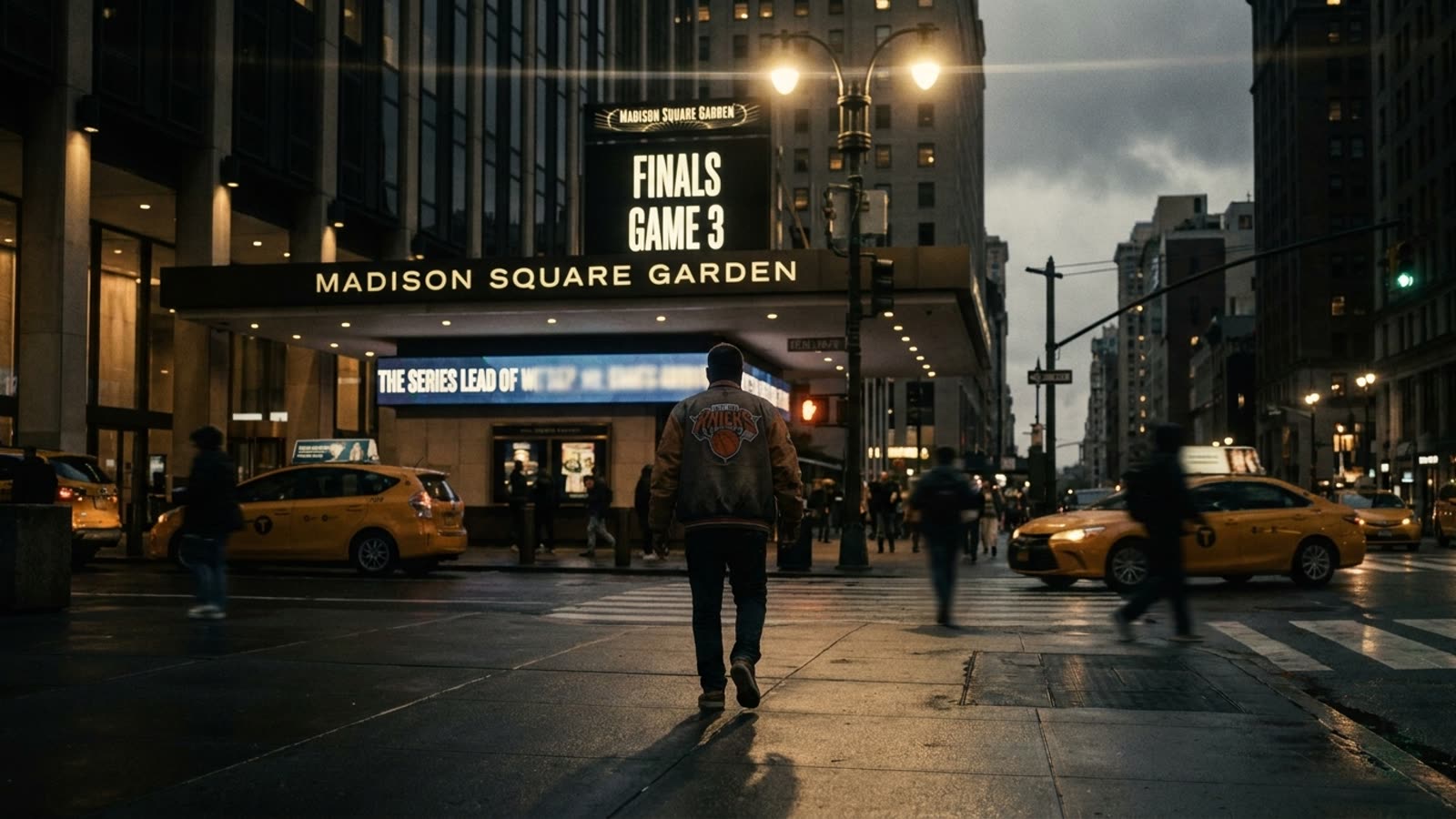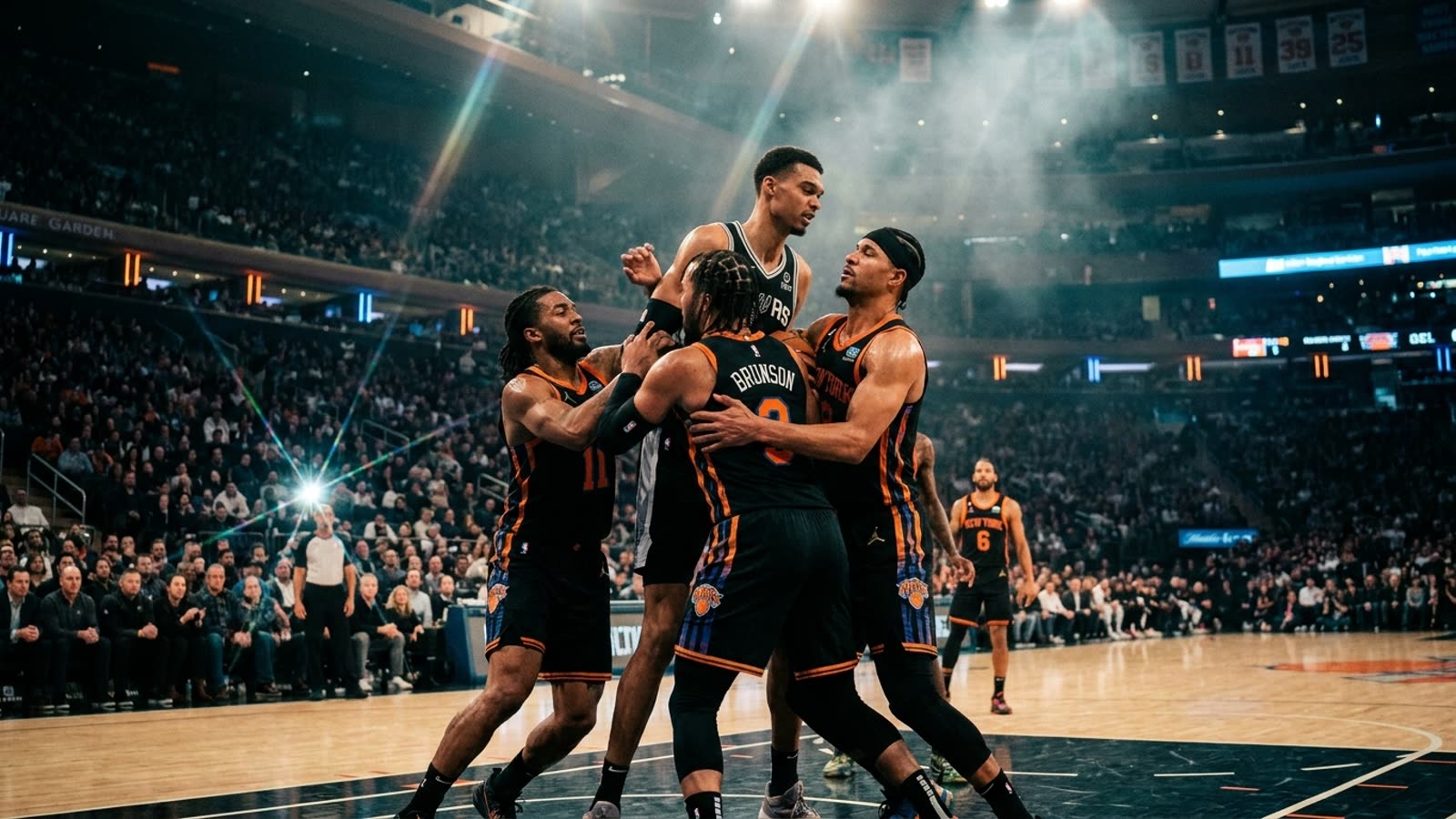
The conventional wisdom entering these Finals was simple: Victor Wembanyama cannot be stopped, only survived. Two games in, the Knicks have offered a more interesting thesis—he can be slowed, perhaps even frustrated, through a defensive architecture so elaborate it borders on performance art.
New York's scheme treats Wembanyama less like a basketball player and more like a weather system requiring constant monitoring. The Knicks are deploying what amounts to a permanent soft double, with their weakside defender shading toward the paint the moment the ball crosses halfcourt, regardless of where the 7-foot-4 center is standing. When Wembanyama catches in the post, the double arrives before his second dribble. When he floats to the perimeter, the closest defender goes under screens so aggressively it looks like disrespect—until you realize they're funneling him into a crowd.
The geometry of desperation
The numbers from Games 1 and 2 tell a story of controlled chaos. Wembanyama is shooting just 38 percent from the field, down from his regular-season mark of 52 percent. His three-point attempts have cratered—he's taking barely four per game after averaging nearly eight during the Western Conference Finals. Most tellingly, his assist numbers have spiked. The Knicks are essentially daring San Antonio's supporting cast to beat them.
This is not a new idea. Teams tried similar approaches against Shaquille O'Neal for a decade, against Hakeem Olajuwon before him. What makes the Knicks' version distinctive is the personnel flexibility required to execute it. Josh Hart, Mikal Bridges, and OG Anunoby can all switch onto Wembanyama in emergency situations without getting immediately posted up. That versatility allows New York to gamble on doubles without hemorrhaging open threes.
Why it probably won't last
The problem with any Wembanyama-specific scheme is that Wembanyama is still Wembanyama. He's averaging 11 assists through two games—career playoff highs—and San Antonio's role players have simply missed open shots. Tre Jones is shooting 29 percent from three in the series. Keldon Johnson has been worse. When those numbers regress toward competence, the Knicks' math collapses.
There's also the matter of fatigue. New York's defensive rotations require constant communication and near-perfect closeouts. By the fourth quarter of Game 2, the Knicks were visibly gassed, and Wembanyama dropped 18 points in the final frame despite the loss. A seven-game series is a war of attrition, and elaborate schemes tend to simplify under exhaustion.
Our take
The Knicks deserve credit for treating Wembanyama as a problem to be engineered around rather than a force to be endured. But the Finals have a way of exposing beautiful plans. New York's 2-0 lead is real, and so is the sense that they're playing with borrowed time. Wembanyama is 22 years old and already forcing opponents to reinvent defensive basketball. The Knicks found an answer. It's just not clear the question will stay the same.