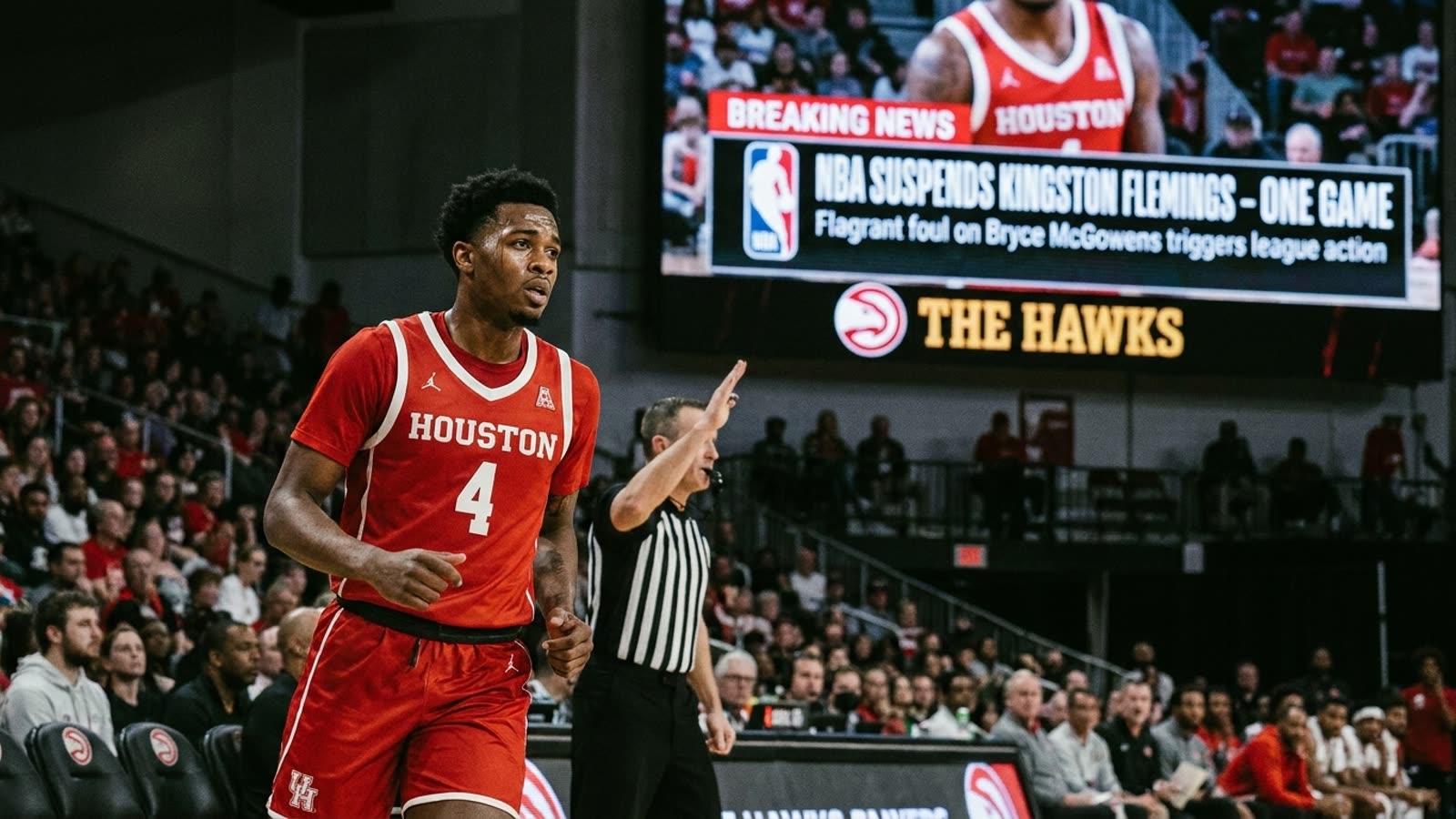
The NBA moved with unusual speed on Sunday night, suspending Atlanta Hawks guard Kingston Flemings for one game after he deliberately drove his elbow into the head of New Orleans Pelicans guard Bryce McGowens during Saturday's contest. The punishment arrived within forty-eight hours of the incident — a timeline that suggests the league office saw what it needed to see on the first viewing.
Flemings, in his second season with Atlanta, has shown flashes of defensive tenacity that made him a rotation fixture. But tenacity and recklessness share a blurry border, and the elbow to McGowens' head landed firmly on the wrong side. The play was not subtle. It was not incidental. It was the kind of act that invites precisely the scrutiny the league delivered.
The league's evolving calculus
One-game suspensions for physical altercations are not unprecedented, but the swiftness of this decision reflects a league increasingly unwilling to tolerate head contact of any kind. The NBA has spent the better part of a decade recalibrating its approach to player safety, driven partly by growing awareness of head trauma's long-term consequences and partly by the simple economics of protecting its most valuable assets. Star players sidelined by concussions do not sell tickets or drive television ratings.
The Flemings suspension also arrives at a moment when the Hawks can ill afford distractions. Atlanta sits in the lower half of the Eastern Conference standings, and the team's defensive identity — which Flemings was supposed to embody — has been inconsistent at best. Losing him for even a single game compounds an already difficult stretch.
What it means for McGowens
McGowens, fortunately, avoided serious injury on the play, though the optics of an elbow connecting with a player's skull are never good regardless of outcome. The Pelicans have their own struggles this season, but they can at least take some satisfaction in the league's response. When the rulebook is enforced quickly and visibly, it sends a message to every player on every roster: this behavior will cost you.
Our take
Flemings will miss one game and return to the rotation, chastened but not transformed. The suspension is appropriate — neither excessive nor lenient — and the league deserves credit for acting decisively. But the real test is whether this kind of swift accountability becomes the norm rather than the exception. The NBA has made impressive strides in protecting its players from the long-term consequences of head trauma. Maintaining that vigilance requires treating every flagrant act as seriously as this one, even when the cameras are not watching quite so closely.