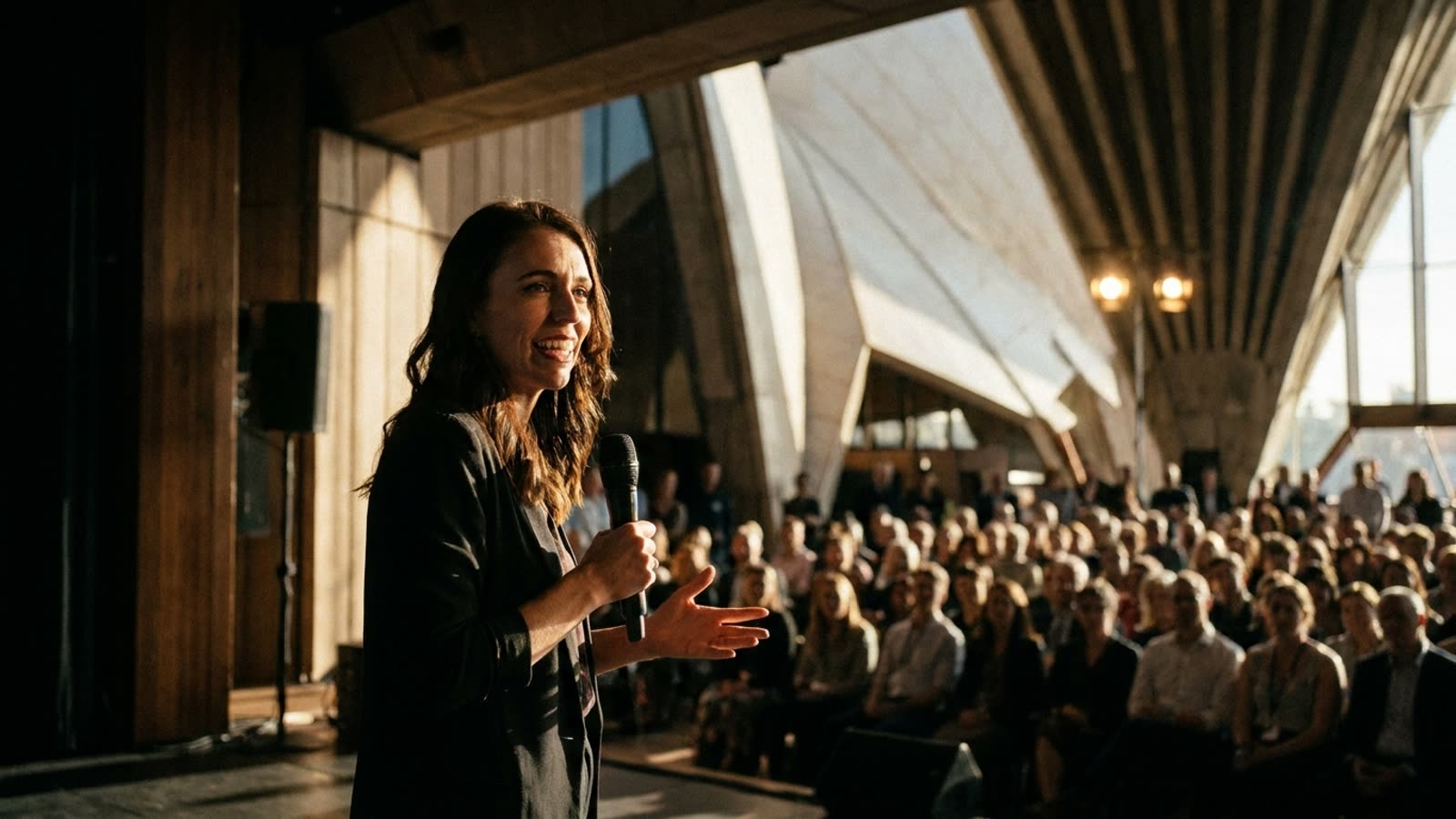
Jacinda Ardern left office in January 2023 citing exhaustion, but three years later she remains one of the few centre-left leaders whose name still draws crowds. Speaking from the Sydney Opera House stage over the weekend, the former New Zealand prime minister offered what amounted to a diagnosis of democratic malaise: voters have lost faith in institutions because those institutions stopped delivering material improvements to their lives.
The prescription — "rebuild trust by building financial security" — sounds almost banal. Yet it represents a quiet rebuke to the technocratic centrism that dominated progressive politics for a generation, and to the populist theatrics that have filled the vacuum since.
The Ardern paradox
Ardern's own record complicates her message. She governed through a pandemic with remarkable public approval, projecting competence and empathy in equal measure. But her housing policies failed to dent New Zealand's affordability crisis, and her successor, Chris Hipkins, led Labour to a crushing defeat in 2023. The party she once electrified now sits in opposition, watching a centre-right government dismantle much of her legacy.
That she can still command the Opera House suggests something about the hunger for political leaders who at least sound like they believe government can improve lives. Whether that hunger translates into electoral success for anyone currently in office is another matter.
Australia's uneasy audience
Ardern has relocated to Sydney, where she lectures at the University of Sydney and raises her daughter away from the fishbowl of Wellington. Her advice lands in a country where Anthony Albanese's Labor government faces its own trust deficit — cost-of-living pressures, a housing shortage that rivals New Zealand's, and a sense among voters that promised relief has been slow to materialise.
The irony is that Albanese ran on precisely the Ardern formula: steady, empathetic, focused on bread-and-butter concerns. His government has delivered wage increases and energy rebates, yet polls suggest Australians remain sceptical that their lives are improving. If financial security is the path to trust, the path is proving longer than advertised.
Our take
Ardern is right that economic anxiety corrodes democratic faith, and right that no amount of culture-war noise can substitute for tangible improvement in living standards. But her lecture circuit wisdom sidesteps the harder question: what do you do when the levers of government — zoning reform, housing supply, wage policy — move too slowly to match voter impatience? The answer, for now, is that voters turn elsewhere. Ardern's advice is sound. Her own political generation's inability to execute it is why she's giving lectures instead of leading a country.