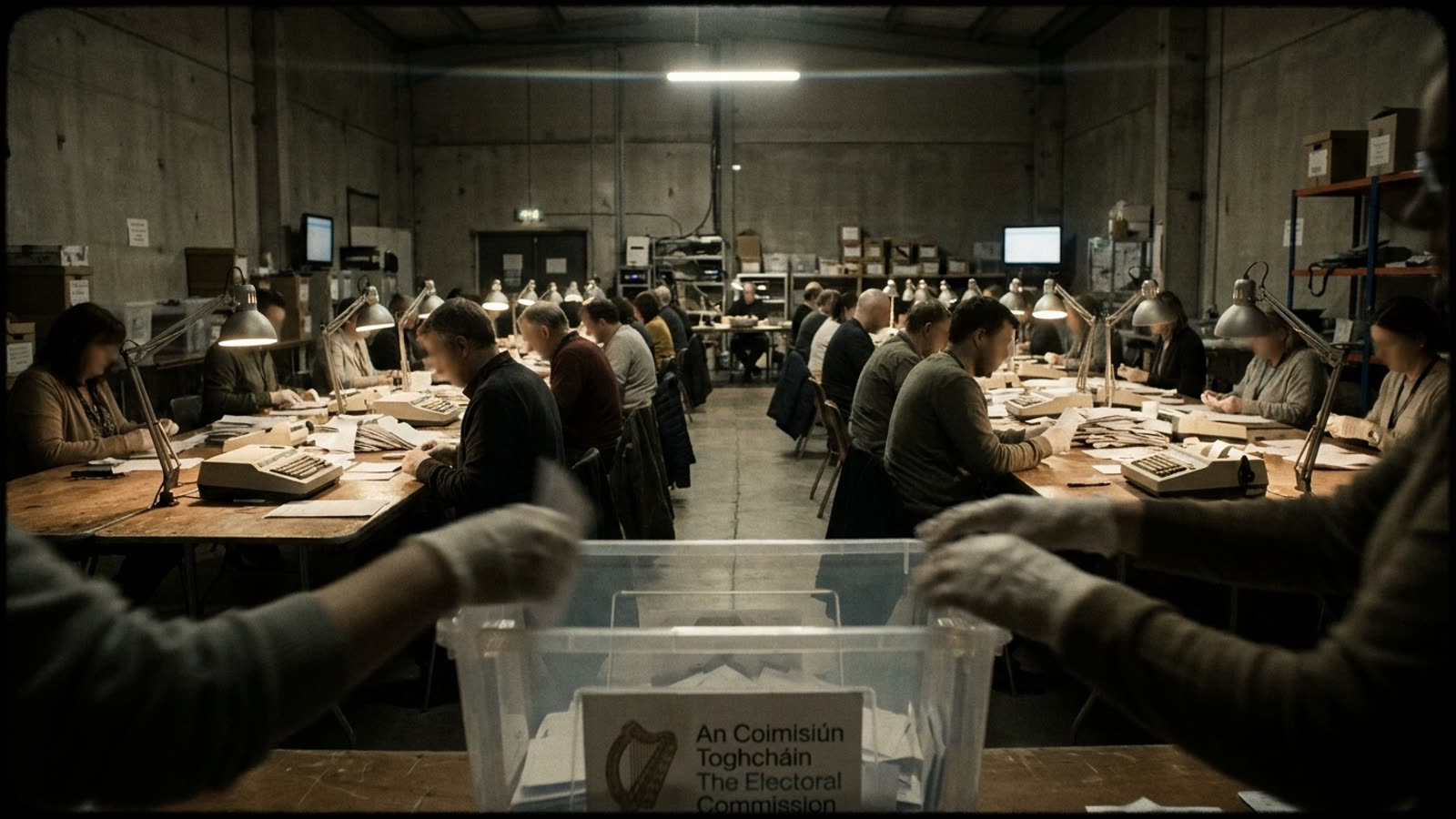
The drama of elections—the rallies, the debates, the breathless cable news maps—obscures a quieter truth: democracy's legitimacy rests on unglamorous bureaucracies staffed by people whose names you will never know. Electoral commissions, election boards, returning officers—whatever a country calls them, these bodies perform the mechanical miracle of converting millions of individual choices into a single, accepted result. Their work is tedious by design. When it becomes exciting, something has usually gone wrong.
Most voters assume counting is simple arithmetic. It is not. Every election involves thousands of judgment calls: whether a smudged mark constitutes intent, whether a signature matches closely enough, whether a ballot arrived before the deadline in a jurisdiction where the postmark is illegible. In close races, these micro-decisions accumulate into outcomes. The 2000 United States presidential election famously turned on how Florida officials interpreted hanging chads—a question no statute had anticipated. The lesson was not that the system failed, but that its human seams became visible under pressure.
Structure shapes trust
Electoral administration varies wildly across democracies. Some countries centralize the function under an independent national body with constitutional protection—India's Election Commission, for instance, operates with a degree of autonomy that would be unrecognizable in the American system, where authority is fragmented across more than ten thousand local jurisdictions. Others, like Germany, rely on a mix of federal oversight and state execution, with party representatives observing every step. The common thread is not a single model but a shared imperative: the losing side must believe the count was fair.
This is harder than it sounds. Partisan actors have obvious incentives to cry foul when they lose, and the complexity of election administration offers endless surface area for accusations. A delayed result in one precinct, a software glitch in another, a box of ballots discovered late—each incident, however innocent, becomes fodder for conspiracy if the underlying institution lacks credibility. The strongest commissions build trust not through perfection but through transparency: publishing procedures in advance, inviting observers from all parties, and explaining anomalies in real time.
The professionalization problem
Running elections is a peculiar profession. The work is intensely seasonal—months of preparation followed by a few days of controlled chaos, then years of quiet maintenance. It attracts a specific personality: detail-oriented, process-obsessed, allergic to spotlight. In many countries, these officials are career civil servants insulated from political pressure. In others, they are elected partisans or political appointees, creating obvious conflicts of interest.
The trend in recent decades has been toward professionalization, driven partly by the increasing technical complexity of voting systems and partly by the reputational cost of failures. International bodies like the International Foundation for Electoral Systems now train officials worldwide, exporting best practices from established democracies to newer ones. Yet professionalization has limits. When political leaders attack the legitimacy of electoral institutions—as has happened with increasing frequency in both mature and fragile democracies—no amount of technical competence can fully restore public confidence.
Our take
Electoral commissions are not designed to be interesting, and that is precisely the point. Their authority derives from being boring: predictable, procedural, immune to the passions of the moment. The most dangerous trend in contemporary politics is not any particular fraud but the erosion of the norm that losers accept results. Once that norm breaks, the quiet professionals who count ballots become targets rather than referees. Protecting them—through legal insulation, adequate funding, and bipartisan defense of their legitimacy—is not a technical matter. It is an existential one for self-government.