The American primary system occupies a peculiar position in democratic governance: it is simultaneously the most open method any major democracy uses to select party leaders and one of the most easily manipulated by determined minorities. This contradiction is not a bug but a feature, the result of reforms that tried to solve one problem and inadvertently created several others.
Most democracies let party members or parliamentary caucuses choose their leaders. Britain's Conservative and Labour parties use combinations of MP votes and member ballots. Germany's parties hold conventions where delegates—themselves elected by local organizations—make the call. The United States, uniquely, holds what amounts to a months-long rolling election in which any registered voter (in open primary states) can participate in choosing a party's standard-bearer. The system emerged from Progressive Era reforms meant to wrest control from smoke-filled rooms. It succeeded, perhaps too well.
The calendar as kingmaker
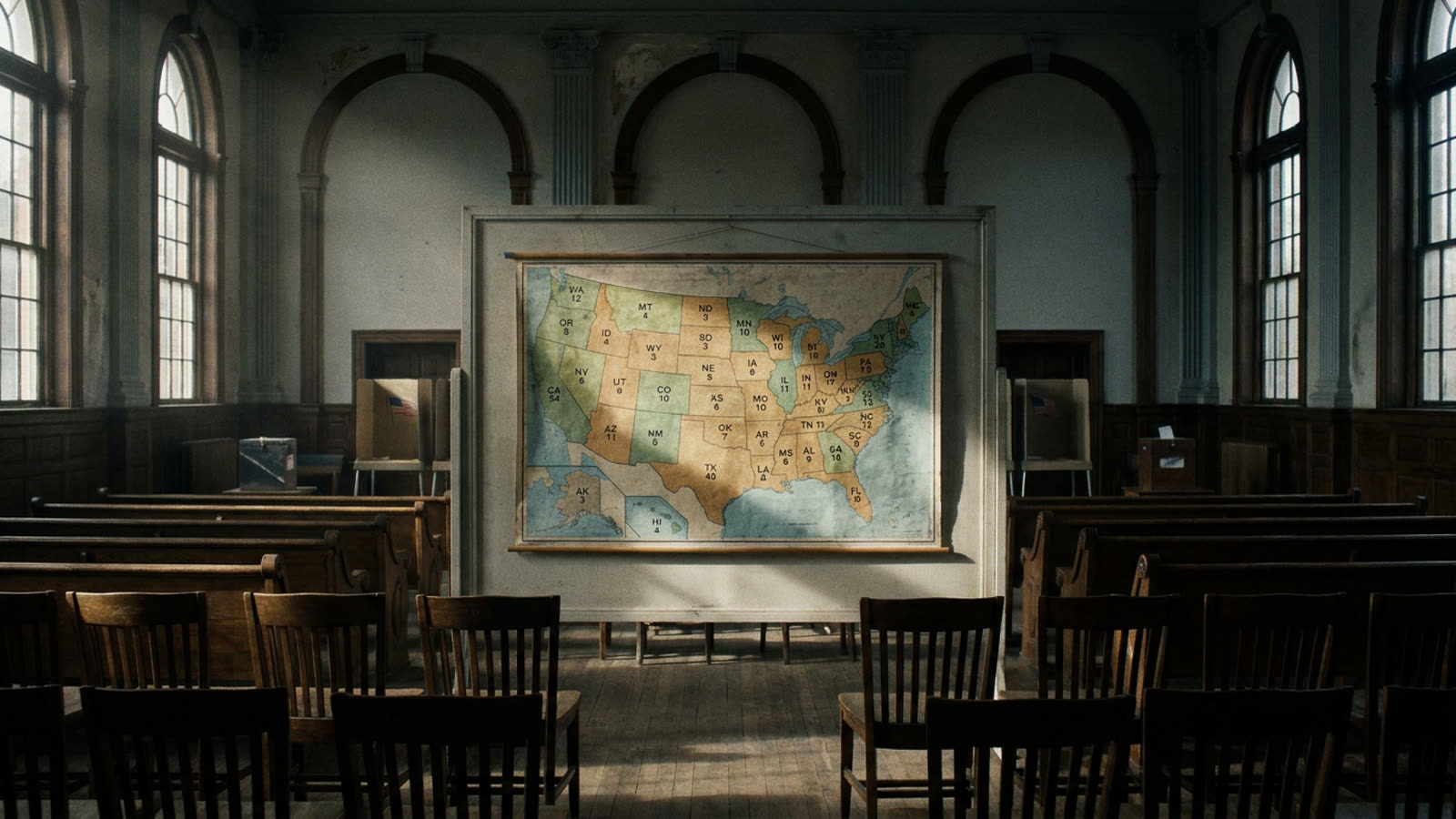
The sequence of state contests matters as much as their outcomes. Iowa and New Hampshire, neither remotely representative of the national electorate, have for decades winnowed fields before most Americans cast a vote. A candidate who finishes third in Iowa often cannot raise money for Nevada; one who wins New Hampshire may ride weeks of favorable coverage into Super Tuesday. The parties have periodically reshuffled the calendar, but the fundamental dynamic persists: early states possess influence wildly disproportionate to their delegate counts.
This front-loading creates a paradox. Candidates must appeal to the most engaged primary voters—who tend toward ideological poles—while positioning for a general electorate that is more moderate. The result is a rhetorical two-step that voters have learned to decode but that nevertheless shapes which candidates survive.
Delegates, bound and unbound
The delegate math is where primaries become genuinely arcane. Most states award delegates proportionally above a threshold, meaning a candidate who consistently wins with plurality support can accumulate an insurmountable lead even without majority backing. The Republican Party's 2016 contest illustrated this vividly: a fragmented field allowed a plurality winner to capture the nomination despite significant intra-party opposition.
Democrats add another layer: superdelegates, party officials and elected leaders who can vote at the convention. Their role has been reduced in recent cycles, but they remain a backstop—or, depending on your view, a thumb on the scale. The existence of unbound delegates preserves a vestige of the old convention system within the new primary architecture.
The turnout problem
Primary electorates are small, old, and ideologically sorted. Turnout in competitive presidential primaries rarely exceeds a third of general-election levels; in uncompetitive years, it can fall below ten percent. This means nominees are chosen by a sliver of the population, one that looks and thinks differently from the broader electorate that will decide November's outcome.
Reformers have proposed everything from a single national primary day to rotating regional contests to ranked-choice voting. Each solution creates new distortions. A national primary would advantage candidates with early name recognition and money; regional primaries might entrench geographic factions; ranked-choice could produce consensus nominees who inspire no one.
Our take
The primary system is a Rube Goldberg machine that occasionally produces excellent candidates and occasionally produces catastrophic ones, with little predictability about which outcome will obtain. Its greatest virtue—openness—is also its greatest vulnerability, inviting participation from voters with no long-term stake in a party's success. Americans have grown so accustomed to this arrangement that they forget it is historically aberrant. The rest of the democratic world watches with a mixture of fascination and horror, unsure whether the experiment represents the future of party politics or a cautionary tale about what happens when you let the inmates design the asylum.