The veto is the most misunderstood word in international relations. When diplomats and commentators lament that the United Nations is "blocked" on some crisis—Syria, Gaza, Ukraine—they are describing the exercise of a power that was never meant to produce consensus but to prevent it. The Security Council's veto exists not as a bug in the system but as its central operating feature, a deliberate mechanism to keep great powers inside the tent by guaranteeing they can never be outvoted on matters they consider vital.
The five permanent members—the United States, Russia, China, France, and the United Kingdom—each hold this absolute power. A single negative vote from any of them kills any substantive resolution, regardless of how the other fourteen council members vote. This arithmetic has remained unchanged since the UN Charter was signed in San Francisco in 1945, a bargain struck when the victors of the Second World War decided that an imperfect organization with great-power buy-in was preferable to a pure one that the powerful would simply ignore.
The procedural mechanics
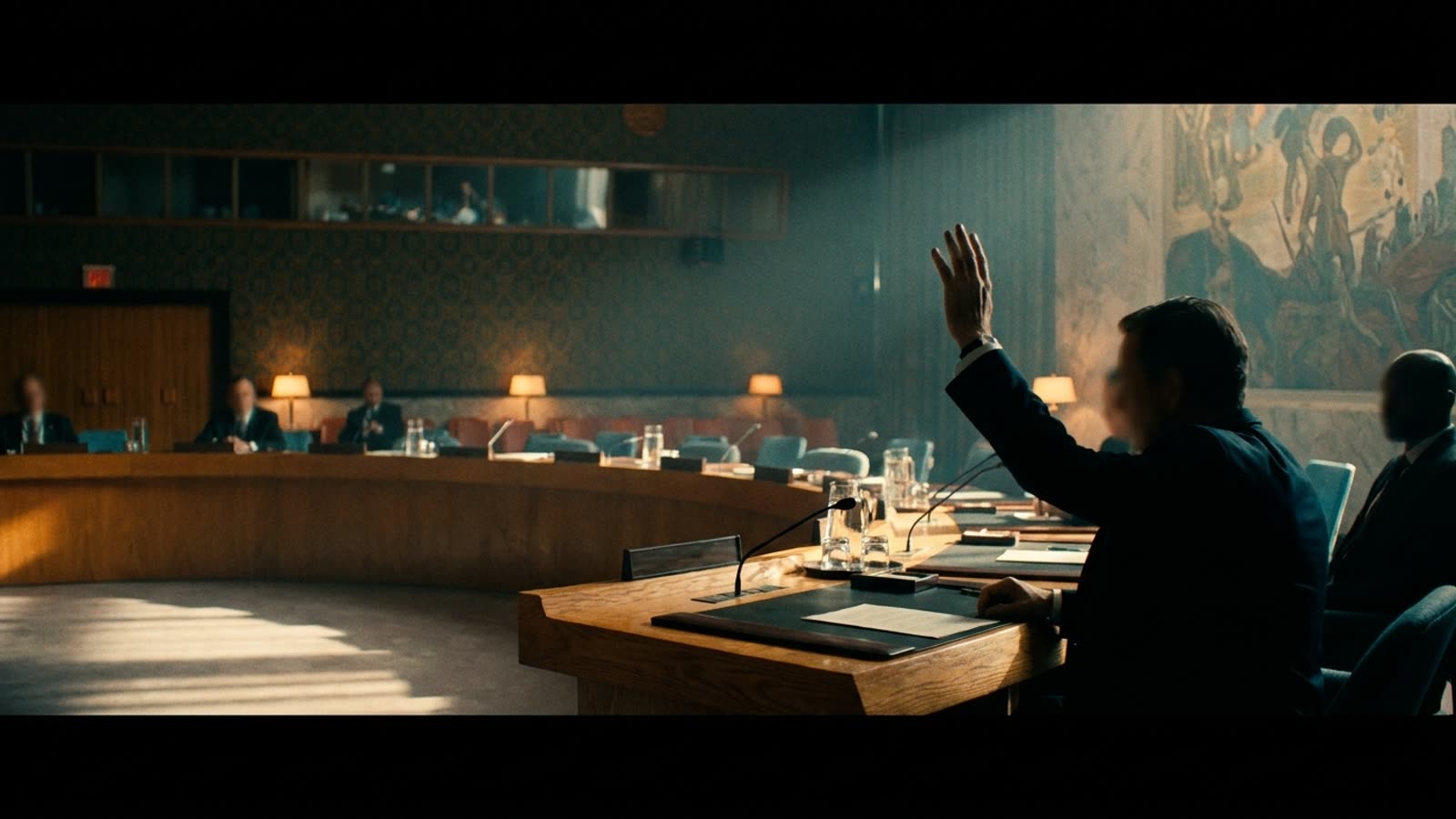
The veto applies only to "substantive" matters, not procedural ones—a distinction that sounds cleaner than it is. Whether a question is procedural is itself a substantive question, subject to veto, creating what scholars call the "double veto." In practice, this means the P5 control not just outcomes but the terms of debate. A draft resolution condemning an invasion, authorizing peacekeepers, or imposing sanctions can be negotiated for months, watered down through countless revisions, and still die in seconds when an ambassador raises a hand.
The threat of the veto often matters more than its actual use. Resolutions are frequently withdrawn or never introduced because sponsors know they cannot survive. This shadow veto is invisible in the official tally but shapes the council's agenda as powerfully as any recorded vote. Diplomats call this "negotiating to the veto"—crafting language not to achieve the strongest possible action but to avoid triggering a block.
The historical pattern
During the Cold War, the Soviet Union cast vetoes with abandon—over a hundred in the body's first two decades—while the United States rarely needed to, commanding comfortable majorities. That pattern reversed as decolonization swelled UN membership and shifted the General Assembly leftward. Since the 1970s, the United States has been the most frequent user, predominantly to shield Israel from censure. Russia has deployed the veto extensively on Syria and, more recently, on resolutions concerning its own military actions. China historically abstained rather than vetoed, preserving its image as a non-interventionist power, though its willingness to block has grown.
France and Britain veto rarely now, their permanent seats an artifact of a world order that no longer exists. Proposals to expand the P5—adding India, Brazil, Germany, Japan, or an African representative—have circulated for decades but founder on the same logic that created the veto: those who have it will not dilute it, and any reform requires their unanimous consent.
Why reform remains elusive
Critics argue the veto renders the UN impotent precisely when action is most needed, turning the council into a theatre of geopolitical performance rather than a forum for collective security. Defenders counter that without the veto, major powers would simply bypass the UN entirely, as they did the League of Nations. The veto, in this view, is the price of keeping the nuclear-armed states at the table.
Some modest procedural reforms have been floated: requiring veto-wielders to explain their vote publicly, or triggering an automatic General Assembly session after a veto. France has proposed that P5 members voluntarily refrain from vetoing resolutions on mass atrocities. None of these alter the fundamental power structure; they merely add friction or shame to its exercise.
Our take
The veto is not a flaw to be fixed but a mirror reflecting the world as it is: a place where power remains concentrated and the strong retain the final word. Lamenting UN paralysis without understanding this mechanism is like complaining that a car won't fly. The Security Council was built to manage great-power rivalry, not to transcend it. Until the distribution of global power changes—or until the P5 collectively decide their interests align with constraint—the veto will endure, the elegant and infuriating keystone of an order designed by victors who trusted no one, least of all each other.