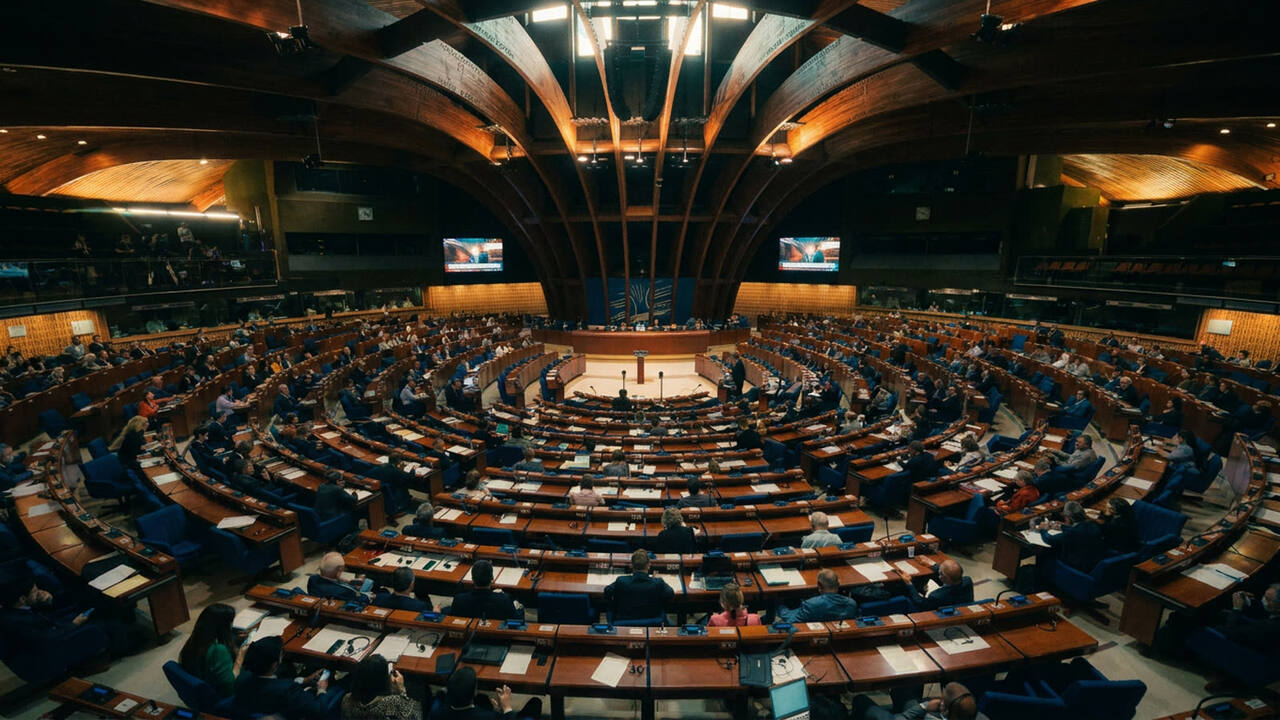
When historians look back at the European Union's major turning points — the eurozone crisis response, the pandemic recovery fund, the energy embargo on Russian gas — they will find no roll-call votes, no recorded debates, no minority opinions filed for the record. They will find only conclusions, issued after marathon sessions in Brussels, attributed to no individual leader and opposed by none. This is the European Council at work, and its deliberate opacity is not a bug but the central feature of how Europe governs itself.
The Council brings together the heads of state or government of all EU member nations, plus the Presidents of the European Commission and the European Council itself. It meets at least four times a year, though crisis has made additional summits routine. Unlike the European Parliament, which votes in public, or the Council of the EU, which has qualified majority procedures, the European Council operates almost entirely by consensus. Nothing is formally decided until everyone agrees — or at least until no one objects loudly enough to block.
The architecture of exhaustion
The physical setup matters more than most observers realize. Leaders sit around a large table in the Europa building's egg-shaped summit room, each with only one advisor permitted behind them. Translation flows through earpieces. The seating rotates by presidency, ensuring no permanent hierarchy of position. But the real negotiations happen elsewhere: in bilateral pull-asides, in the "confessional" meetings where the European Council President shuttles between delegations, and crucially, over dinner.
The working dinner is not ceremonial. It is where the most sensitive topics — migration quotas, treaty changes, sanctions packages — get their first genuine airing. No notes are taken. No staff are present. Leaders speak in whatever language they share, often English or French, without interpretation. The combination of fatigue, food, and enforced intimacy is designed to produce movement. Summits routinely extend past midnight, sometimes into the following afternoon, because the consensus model requires wearing down opposition through sheer duration.
Consensus as veto, veto as leverage
The consensus requirement gives every member state, regardless of size, an effective veto on the Union's strategic direction. Malta, with fewer than half a million citizens, carries the same blocking power as Germany, with eighty-three million. This arithmetic explains why small states defend the European Council's prerogatives so fiercely and why large states increasingly push for qualified majority voting to be extended into foreign policy and taxation.
But the veto is rarely exercised explicitly. Instead, it functions as leverage in the pre-summit negotiations. A country threatening to block a sanctions package might extract concessions on agricultural subsidies. A state reluctant to accept refugee redistribution might secure infrastructure funding. The conclusions that emerge are therefore not compromises in the parliamentary sense but package deals, where unrelated issues get bundled until every leader can claim a win for domestic audiences.
Why it persists
Critics have long argued that the European Council's opacity undermines democratic accountability. Voters cannot know which leader fought for what, which tradeoffs were made, or whether their representative capitulated at three in the morning over cognac. The conclusions are written in careful bureaucratic prose that obscures rather than illuminates.
Yet the system persists because it serves the leaders themselves. Presidents and prime ministers can return home having "defended national interests" without ever being contradicted by the public record. They can blame Brussels for unpopular outcomes while claiming credit for popular ones. The European Council is, in this sense, a collective alibi machine — and its members have no incentive to dismantle it.
Our take
The European Council is often described as a talking shop, but that misunderstands its function. It is a decision-making body that has chosen to disguise its decisions as conversations. The absence of formal rules is itself a rule: nothing happens without unanimity, and unanimity requires that no one ever be seen to lose. This makes the EU slow, opaque, and frustrating — but also remarkably durable. In a continent that spent centuries resolving disagreements through war, a system that resolves them through dinner and exhaustion is, perhaps, exactly the institution Europe deserves.