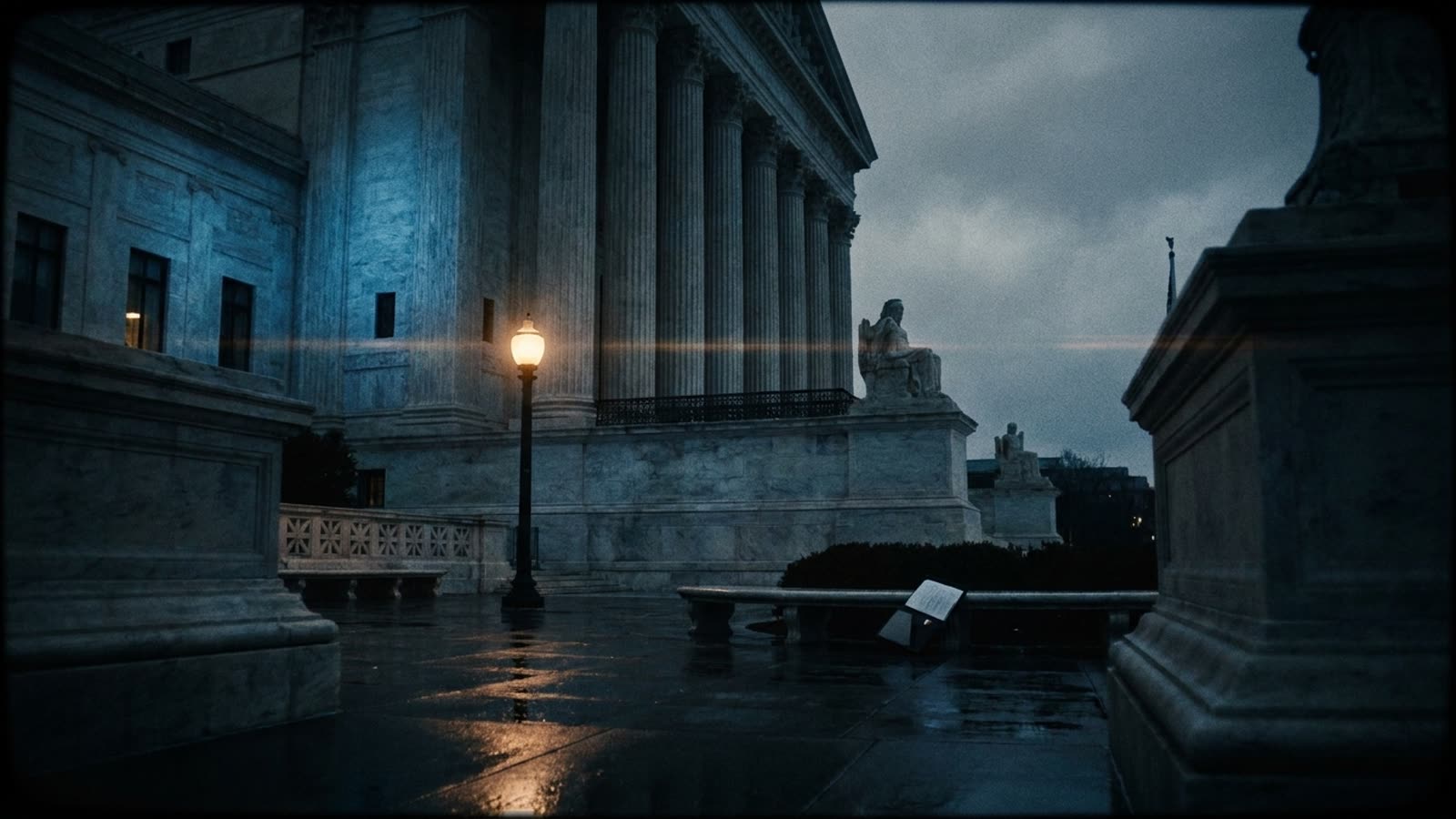
The Supreme Court's most consequential decisions increasingly arrive not through oral arguments and lengthy opinions, but through terse, unsigned orders issued in the middle of the night. This procedural transformation — what legal scholars call the "shadow docket" — has fundamentally altered how constitutional law gets made in America, and most citizens have no idea it's happening.
The term itself is relatively new, coined by University of Chicago law professor William Baude in 2015, but the practice has ancient roots. Emergency applications, stays of execution, and procedural housekeeping have always constituted a significant portion of the Court's work. What has changed is the substantive weight these orders now carry.
From housekeeping to high stakes
Traditionally, the Court's emergency docket handled genuinely urgent matters: a death-row inmate seeking a last-minute stay, a party requesting more time to file a brief. The merits docket — with its oral arguments, amicus briefs, and signed opinions — handled the big questions. That division has collapsed.
In recent years, shadow docket orders have blocked vaccine mandates, reinstated execution protocols, allowed construction of border barriers, and altered election procedures in multiple states. These decisions arrive without full briefing, without oral argument, and often without any explanation of the Court's reasoning. A single paragraph, sometimes a single sentence, can reshape policy affecting millions.
The asymmetry is striking. A lower court might issue a detailed hundred-page opinion after months of litigation. The Supreme Court can reverse it with an unexplained order in a matter of days, sometimes hours.
Why the shadows lengthened
Several factors explain the shadow docket's expansion. Litigants have learned that emergency applications can achieve outcomes that might take years through normal channels. If you can convince five justices that irreparable harm is imminent, you can effectively win your case before it's technically decided.
The Court itself has grown more willing to grant these applications. Where previous Courts treated emergency relief as genuinely exceptional, the current Court has normalized it as a strategic tool. Some justices have raised alarms about this trajectory in dissenting statements, warning that the Court is deciding major questions "on a short fuse without full briefing."
The political branches have contributed too. When administrations change, incoming officials often seek immediate reversals of their predecessors' policies. Emergency applications offer a shortcut past the ordinary judicial process.
The accountability deficit
The shadow docket's most troubling feature is its opacity. Unsigned orders provide no precedent for lower courts to follow, no reasoning for scholars to analyze, no accountability for individual justices. The public cannot evaluate what the Court is doing because the Court does not explain itself.
This matters beyond legal technicalities. The Supreme Court's legitimacy has always rested partly on its deliberative process — the sense that even when people disagree with outcomes, they can see that serious minds engaged seriously with difficult questions. Shadow docket orders offer no such reassurance. They look, to critics, like raw exercises of power.
Our take
The shadow docket is not inherently illegitimate; genuine emergencies require expedited procedures. But the current Court has stretched "emergency" beyond recognition, using procedural shortcuts to make substantive law while avoiding the scrutiny that comes with full opinions. This is governance by asterisk, and it corrodes the very deliberation that distinguishes courts from legislatures. If the justices want their decisions respected, they might start by explaining them.