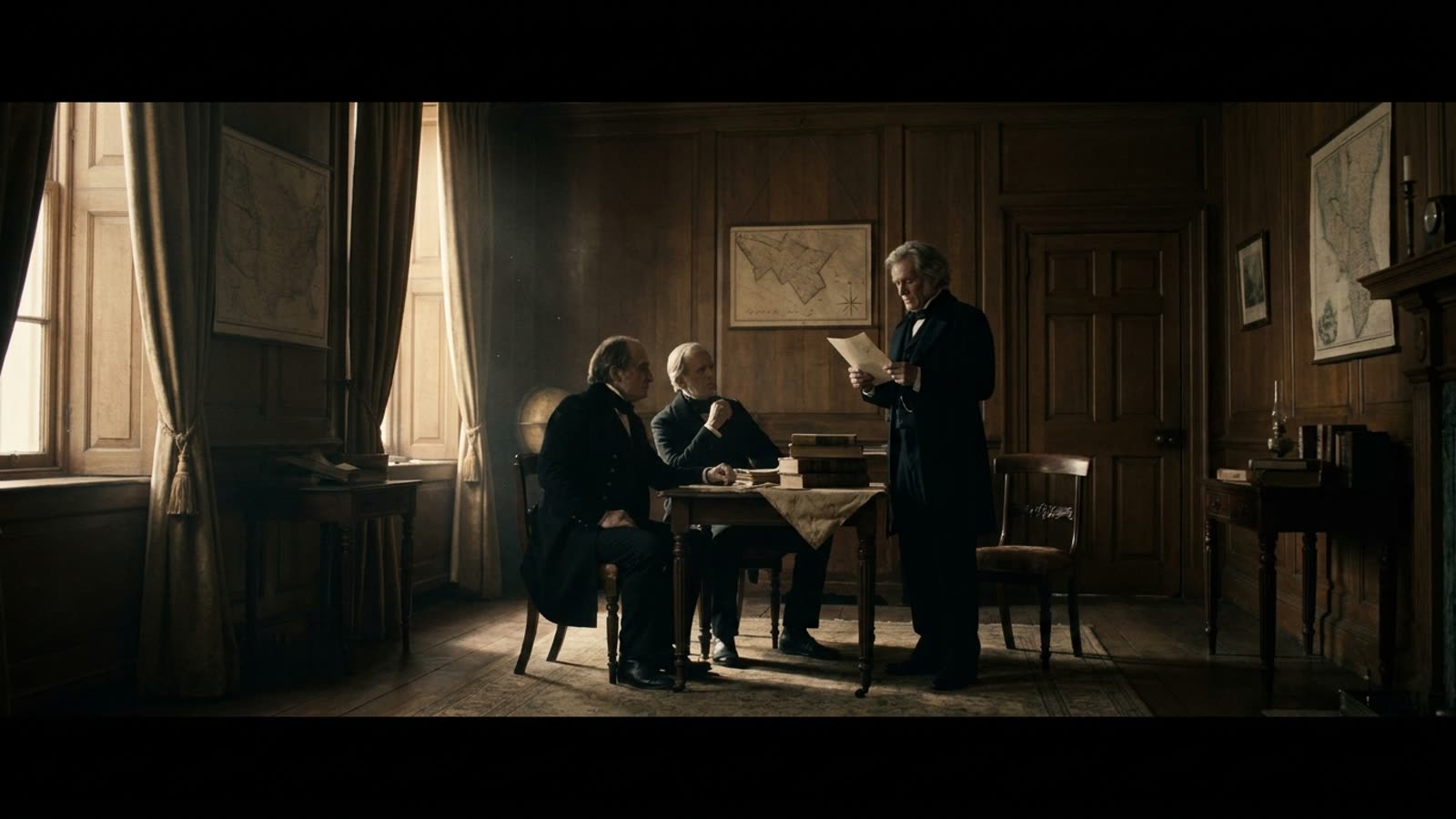
The Whig Party of the United States held the presidency, controlled Congress, and seemed as permanent a fixture of American politics as the Constitution itself. Within four years of winning the White House in 1852, the party had ceased to exist. Not diminished. Not reformed. Gone.
This is the paradox of party death: major political parties appear invincible right up until the moment they aren't. They command vast fundraising networks, loyal voter bases, and institutional machinery that took generations to build. And yet history shows that when the conditions align, all of it can evaporate with shocking speed. Understanding how parties actually die—not how they lose elections, but how they disappear entirely—reveals something essential about how democratic systems evolve.
The anatomy of collapse
Political scientists who study party realignment have identified a consistent pattern. Parties don't die from external competition; they die from internal contradiction. The Whigs collapsed not because the Democrats outmaneuvered them, but because the slavery question made it impossible for Northern and Southern Whigs to remain in the same coalition. The party's leaders spent years papering over the divide with procedural compromises and studied ambiguity. It worked until it didn't.
The same dynamic destroyed Britain's Liberal Party in the early twentieth century. Once the dominant force in British politics, the Liberals found themselves unable to reconcile their industrial working-class voters with their upper-middle-class leadership as the Labour Party offered a clearer class-based identity. The Liberals didn't lose a single catastrophic election; they slowly bled supporters in both directions until they became a rump faction.
What distinguishes a party crisis from a party death is whether the internal contradiction touches the party's core identity. Parties survive policy defeats, scandals, and even landslide losses routinely. They do not survive the moment when their own voters can no longer explain what the party stands for.
The realignment trigger
Party deaths require a catalyst—typically a new issue that cuts across existing coalitions in ways the old party structure cannot accommodate. For the Whigs, it was slavery's expansion into new territories. For the Liberals, it was the rise of organized labor as a political force. In each case, the fatal issue was not new, but it reached a threshold where it could no longer be managed through coalition maintenance.
The trigger also requires an alternative destination for defecting voters. Parties rarely die into a vacuum. The Whigs collapsed as the Republican Party emerged to absorb their anti-slavery faction. The Liberals faded as Labour consolidated the working-class vote. A party can survive internal contradiction indefinitely if its voters have nowhere else to go; the moment a credible alternative appears, the exodus begins.
This is why party deaths cluster in certain historical moments. They require both the internal rot and the external opportunity to align simultaneously—a conjunction that happens perhaps once or twice per century in stable democracies.
Why it matters now
Modern party systems in established democracies have proven remarkably durable. The same two parties have dominated American politics since the 1850s; the same basic left-right structure has organized European politics for over a century. But durability is not immortality. The parties that exist today are not the same parties that bore those names decades ago—they have repeatedly reinvented their coalitions, ideologies, and voter bases while maintaining institutional continuity.
The question is whether that reinvention can continue indefinitely, or whether certain contradictions eventually become unmanageable. Scholars of realignment watch for the warning signs: rising intra-party conflict, increasing ticket-splitting, the emergence of factional leaders who seem more loyal to their faction than to the party, and most critically, voters who struggle to articulate what their party stands for beyond opposition to the other side.
Our take
The death of a major party is not a bug in democratic systems; it's a feature. Parties are supposed to be vehicles for translating public preferences into governance, and when they stop performing that function—when they become purely tribal markers or vehicles for elite coordination—their obsolescence is a sign the system is working. The Whigs deserved to die; they had become incapable of addressing the defining question of their era. The interesting question is never whether a party can survive, but whether it should.