The obituaries always blame the electorate. When a major political party collapses, the standard narrative frames voters as executioners who finally lost patience with an out-of-touch establishment. This story is comforting, democratic, and almost entirely wrong. Parties die from internal hemorrhaging long before the public administers the coup de grâce.
The pattern is remarkably consistent across eras and continents. A dominant party begins to fracture over an issue its leadership cannot resolve. Factional warfare consumes energy that should be directed outward. Talented politicians defect or retire in disgust. The organization hollows out while the brand persists, a zombie institution stumbling toward an election it cannot win. By the time voters render their verdict, they are merely certifying a death that occurred months or years earlier in back rooms and caucus meetings.
The Whig template
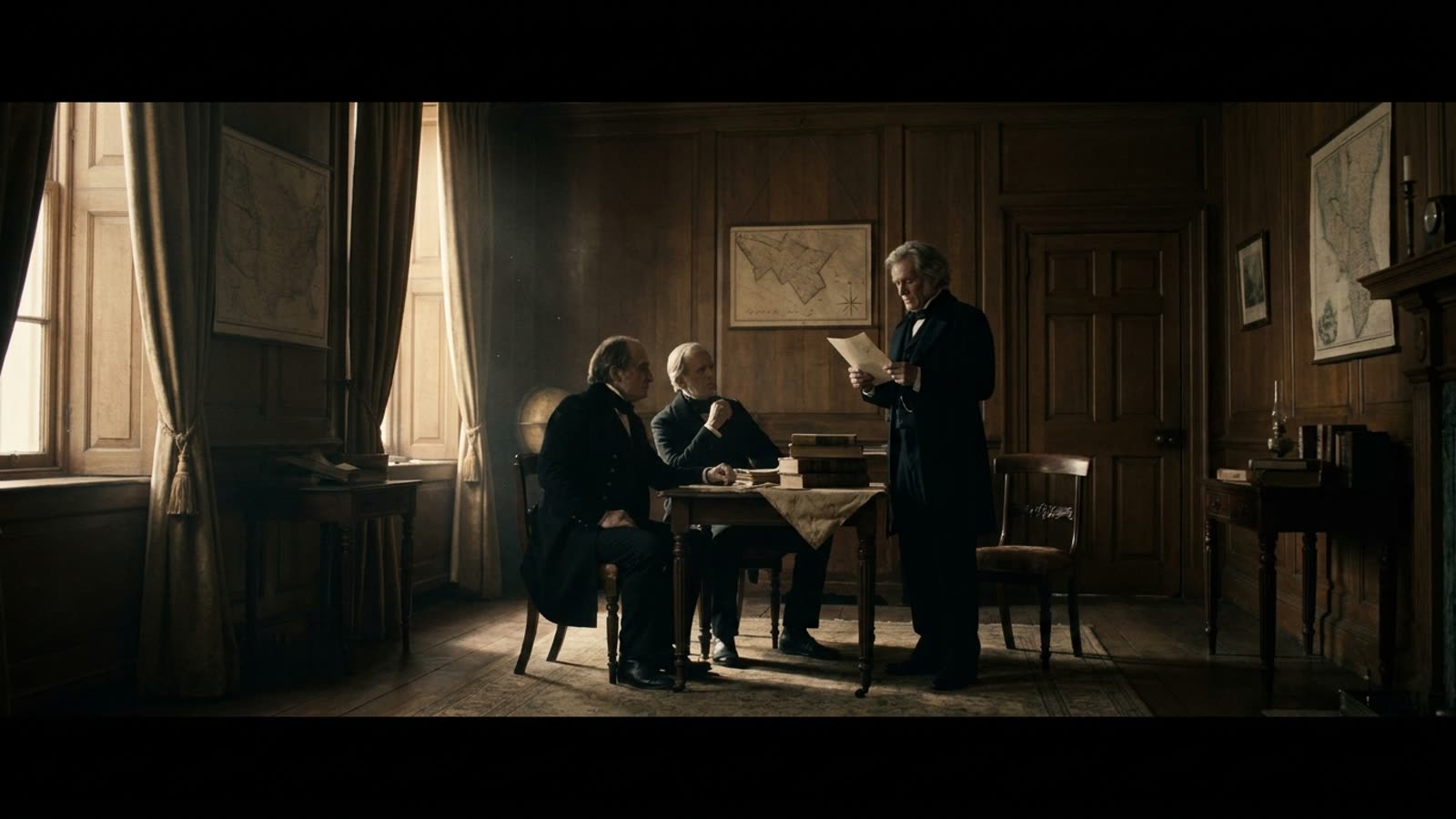
America's Whig Party offers the clearest case study. In the early 1850s, the Whigs held the presidency and remained competitive in most states. Within four years, the party had effectively ceased to exist. The proximate cause was slavery — specifically, the Kansas-Nebraska Act of 1854, which reopened the question of slavery's expansion into western territories. But slavery had been a fault line for decades. What killed the Whigs was their leadership's inability to choose a side.
Northern Whigs demanded opposition to slavery's expansion. Southern Whigs required at minimum neutrality. Party elders attempted to satisfy both factions by saying as little as possible, a strategy that succeeded only in convincing everyone that the Whigs stood for nothing. The party's most capable politicians — Abraham Lincoln among them — began looking for new vehicles. The Republican Party emerged not because voters demanded it, but because ambitious Whig politicians needed somewhere to go.
The Italian variation
Italy's Christian Democracy party dominated postwar politics for nearly half a century, leading every government from 1946 until its dissolution in 1994. The party survived scandal after scandal, coalition crisis after coalition crisis. What it could not survive was the end of the Cold War.
The Christian Democrats had positioned themselves as the essential bulwark against Italian Communism. When the Soviet Union collapsed and the Italian Communist Party reinvented itself as a moderate social-democratic force, the Christian Democrats lost their raison d'être. More critically, they lost the glue that held together their fractious coalition of northern industrialists, southern clientelist networks, and Vatican-aligned social conservatives. The Tangentopoli corruption investigations that swept away the party in the early 1990s merely exposed rot that had been spreading for years.
The mechanics of collapse
Certain conditions recur in nearly every party death. First, an unresolvable internal contradiction — usually ideological but sometimes regional or generational — reaches a breaking point. Second, the party's institutional machinery proves incapable of managing the conflict, often because the machinery was designed for an earlier era. Third, external shocks remove whatever was papering over the divisions. Fourth, elite defection accelerates as ambitious politicians calculate that the party brand has become a liability rather than an asset.
The timeline from apparent health to extinction can be shockingly brief. Canada's Progressive Conservatives won a historic majority in 1984 and were reduced to two seats less than a decade later. The speed reflects a truth about party strength: much of it is illusory, dependent on network effects and self-fulfilling expectations that can reverse with terrifying speed.
Our take
The lesson for today's anxious partisans is counterintuitive. Parties rarely die from being too extreme or too moderate, too old-fashioned or too trendy. They die from being unable to make a decision and stick with it. The Whigs perished not because they chose the wrong side on slavery but because they refused to choose at all. Internal coherence, even around unpopular positions, tends to outlast studied ambiguity. Voters can forgive many things, but they cannot support an organization that no longer knows what it believes.