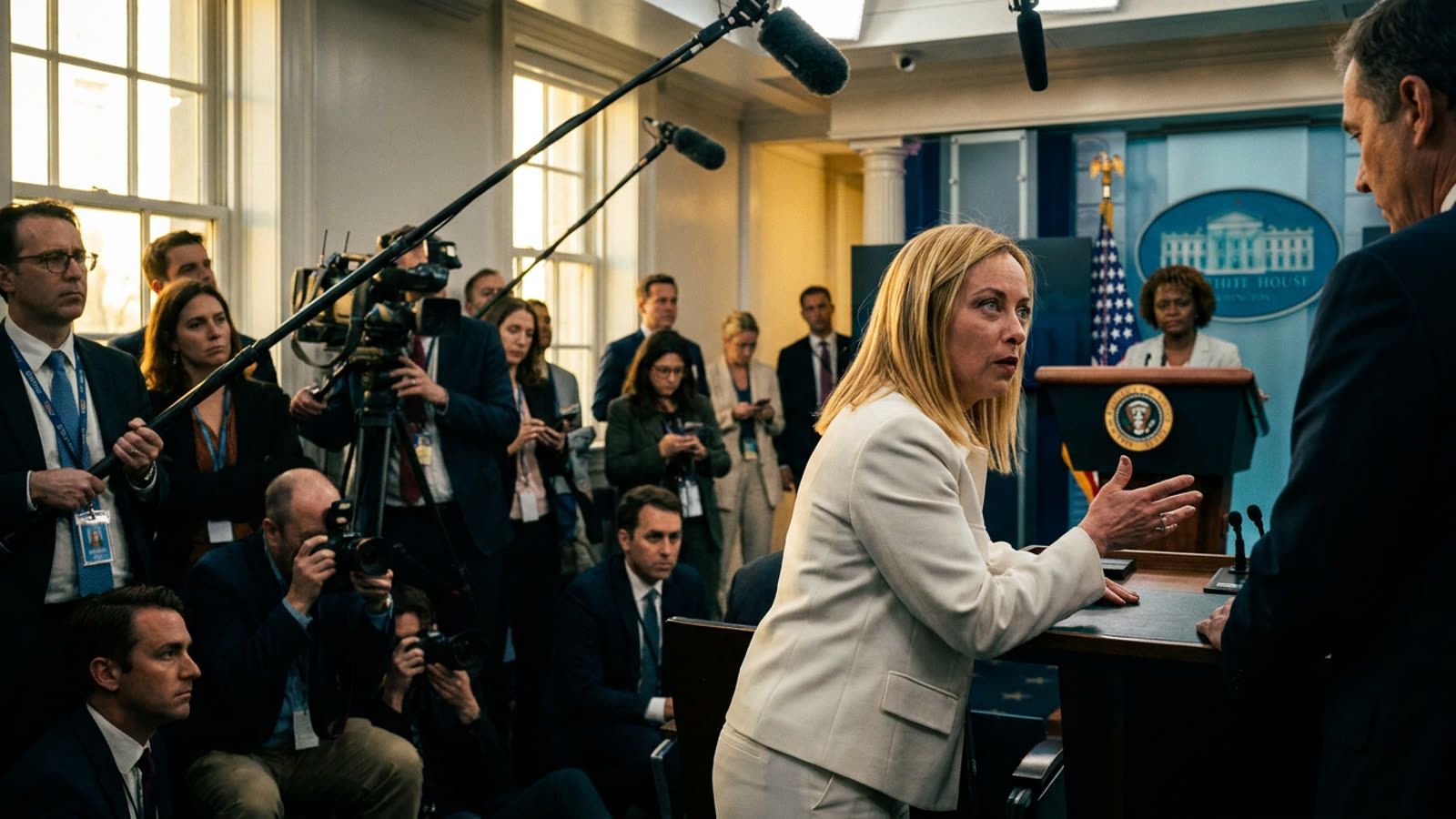
The most reliable friend Donald Trump had in Europe has decided she no longer needs the job.
Giorgia Meloni spent the first months of Trump's second term cultivating a relationship that seemed to defy ideological gravity. Here was a nationalist who could speak Trump's language, a leader who understood the appeal of border walls and cultural grievance, yet who also needed to keep Italy tethered to the European project. She visited Mar-a-Lago. She laughed at his jokes. She was, by most accounts, the only European leader who could get him on the phone.
That was then. This week, Meloni emerged as one of the sharpest critics of American trade policy, publicly accusing the Trump administration of treating allies like adversaries and warning that Europe must prepare for economic confrontation. The transformation has been swift, deliberate, and—for anyone watching European politics—deeply instructive.
The breaking point
The proximate cause is tariffs. Trump's escalating duties on European goods, including Italian wine, automotive parts, and luxury textiles, have hit Meloni's coalition where it hurts: the northern industrial base that keeps her government afloat. But the deeper issue is trust. Meloni reportedly believed her personal rapport with Trump would shield Italy from the worst of his protectionist instincts. It did not.
The miscalculation was understandable. Trump has always valued personal loyalty over institutional relationships, and Meloni had invested heavily in the former. What she failed to account for was that Trump's transactional worldview cuts both ways. When the political calculus shifted—when hitting Europe became more useful than sparing a friend—the friendship became expendable.
What Meloni's pivot reveals
The Italian prime minister's repositioning is not merely tactical. It reflects a structural shift in how European leaders understand the current American administration. The lesson of the past eighteen months is that there is no special relationship to be had, no exemption to be earned. Trump's America deals with Europe as a bloc to be pressured, not as a collection of bilateral friendships to be cultivated.
This realization has produced strange bedfellows. Meloni now finds herself aligned with Emmanuel Macron, a leader she once dismissed as the embodiment of out-of-touch Brussels liberalism. The two have begun coordinating on trade retaliation and defense spending, a partnership that would have seemed absurd two years ago. Ideology, it turns out, matters less than shared exposure to American unpredictability.
Our take
Meloni's evolution from Trump whisperer to Trump critic is less a betrayal than a recognition of reality. She played the hand she was dealt, and when the cards changed, she adapted. The more interesting question is what comes next. If Europe's most pro-American nationalist has concluded that Washington cannot be trusted, the political space for transatlantic cooperation shrinks considerably. Meloni did not want this fight. But she appears ready to have it, and that tells you everything about where the relationship now stands.