Few legal concepts are more misunderstood than diplomatic immunity. In popular imagination, it conjures images of parking-ticket-immune ambassadors and villains who cannot be touched. The reality is a baroque system of negotiated privileges that tells us more about the architecture of international relations than any treaty text.
The foundation is the 1961 Vienna Convention on Diplomatic Relations, one of the most universally ratified agreements in existence. Nearly every country on earth has signed it, including nations that agree on almost nothing else. This near-unanimity is not idealism; it is mutual self-interest. Every state sends diplomats abroad and receives them at home. A world without immunity protections would be one where envoys become hostages to local politics, where a shift in bilateral relations could land an ambassador in prison on fabricated charges.
The hierarchy of protection
Not all diplomats are created equal under the Vienna framework. Ambassadors and their families enjoy the broadest shield: they cannot be arrested, detained, or prosecuted by the host country for any offense, from murder to unpaid rent. This is not a loophole; it is the explicit design. The sending state retains exclusive jurisdiction over its envoy.
Below this tier, consular officers and administrative staff receive graduated protections. A visa clerk can be prosecuted for serious crimes committed outside official duties. A local hire at an embassy may have no immunity at all. The system creates a careful calibration: enough protection to let diplomacy function, not so much that embassies become lawless enclaves.
The host country is not powerless, however. It can declare any diplomat persona non grata at any time, for any reason, without explanation. This is the system's pressure valve. When a protected individual commits an offense the host cannot stomach, expulsion is the remedy. The diplomat goes home; justice, in the conventional sense, does not follow.
When immunity collides with tragedy
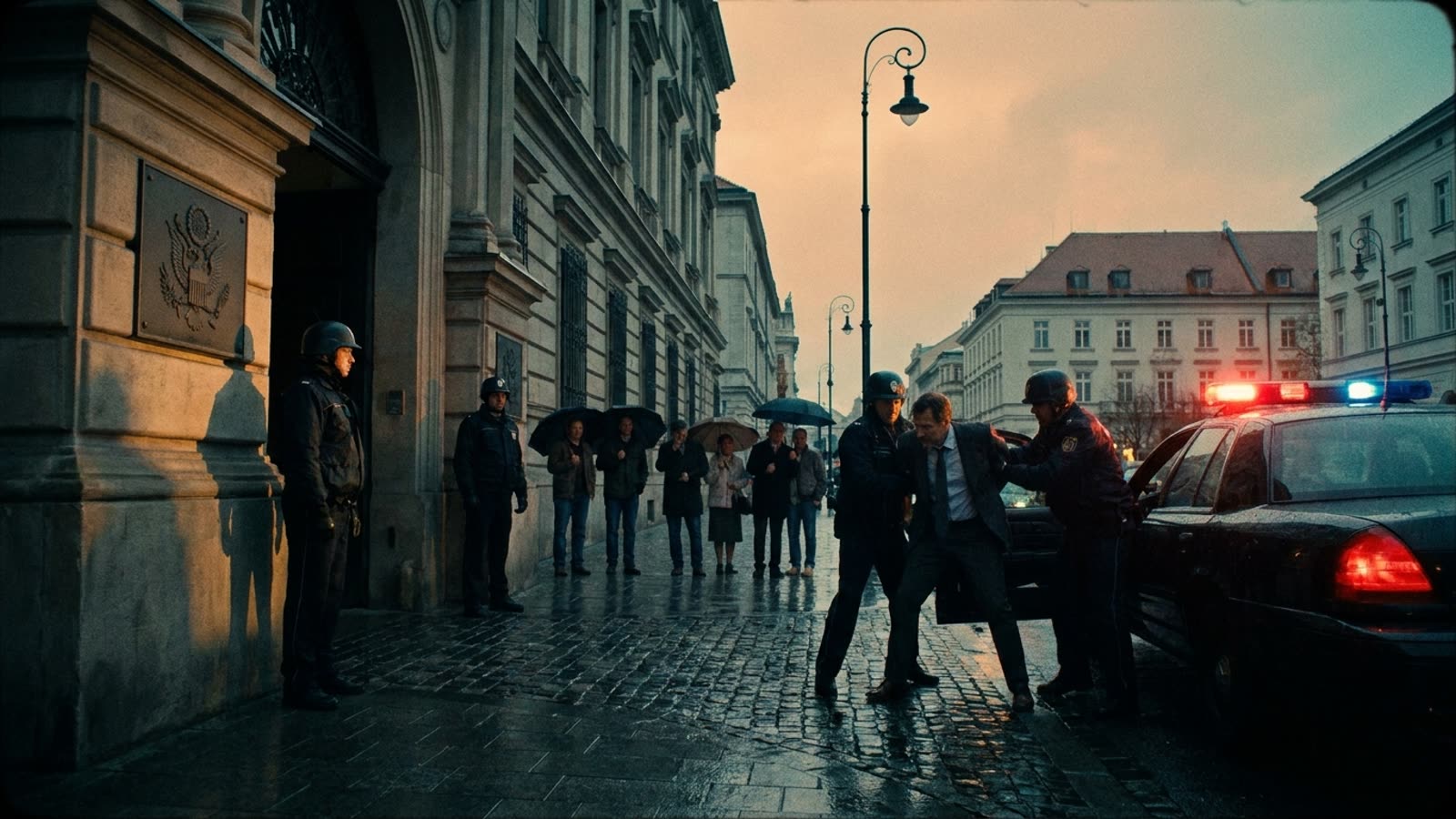
The cases that make headlines tend to involve deaths. A diplomat's family member strikes a pedestrian and departs the country before charges can be filed. A foreign security detail injures protesters outside an embassy. In these moments, the Vienna Convention's logic feels monstrous to victims' families and publics alike.
Yet the alternative—allowing host countries to prosecute foreign diplomats—would be worse. Authoritarian regimes would imprison Western envoys on espionage pretexts. Democracies would face pressure to detain diplomats from countries their populations dislike. The entire system of resident embassies, which enables everything from visa processing to back-channel negotiations during crises, depends on the mutual fiction that embassy grounds and personnel exist partially outside local law.
Some sending states do prosecute their own diplomats upon return. Others quietly compensate victims. Many do neither. The Vienna Convention imposes no obligation to act, only to recall the offender if asked.
Our take
Diplomatic immunity is not a bug in international law; it is a feature that reveals an uncomfortable truth. The global order runs on reciprocity and reputation, not justice in any domestic sense. Nations tolerate occasional outrages because the alternative—a world where diplomats are fair game—would be far more dangerous. The system protects the guilty precisely because it must also protect the innocent, and no country trusts another's courts enough to gamble its envoys on foreign due process. It is cynical, asymmetric, and indispensable.