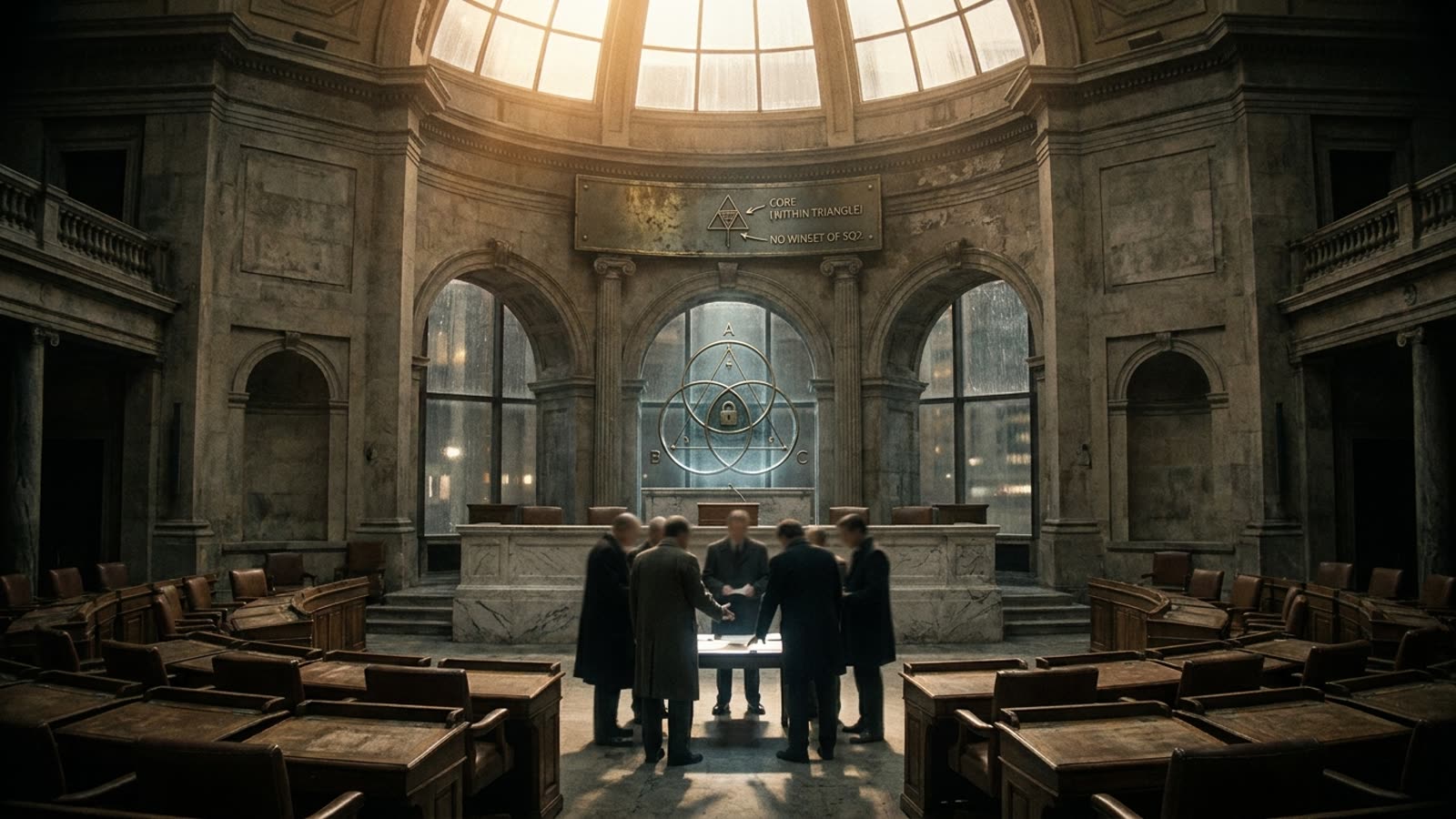
The most consequential economic decisions in the developed world are made by small committees meeting roughly eight times a year, voting on numbers that ripple through every mortgage, car loan, and government bond on the planet. The Federal Reserve's Federal Open Market Committee has twelve voting members. The European Central Bank's Governing Council has twenty-six. The Bank of England's Monetary Policy Committee has nine. These bodies operate with a peculiar combination of radical transparency and deliberate mystification that would strike any student of democratic governance as deeply odd.
The theater of consensus
Monetary policy committees emerged in their modern form only in the 1990s, when central banks began shifting from single-governor decision-making to collective deliberation. The Bank of England's MPC was created in 1997; before that, the Chancellor of the Exchequer simply told the Bank what to do. The shift reflected a belief that committees would be less prone to individual error and more legitimate in democracies that had grown suspicious of unelected technocrats wielding enormous power.
The voting itself follows elaborate choreography. Members receive briefing books weeks in advance. Staff economists present forecasts. Discussion proceeds around the table, often in predetermined order to prevent senior members from anchoring debate. The Fed's chair speaks last during deliberations, a norm established to encourage genuine disagreement. Dissents are recorded and published, creating a permanent record of who stood where when history rendered its verdict.
The information asymmetry by design
Central bankers have developed a sophisticated vocabulary specifically designed to move markets without saying anything definitive. When a Fed chair says the committee is "data dependent," this communicates almost nothing while appearing to communicate something. When the ECB says it will act "meeting by meeting," it preserves optionality while suggesting vigilance. This deliberate ambiguity serves a purpose: if markets knew exactly what central banks would do, they would front-run every decision, potentially amplifying the very volatility policymakers seek to dampen.
The minutes released weeks after each meeting are themselves curated performances. They describe "some participants" favoring one view and "several members" preferring another, without attribution. The Fed began publishing transcripts with a five-year delay only after a 1993 leak revealed they existed at all. Even now, the lag ensures that by the time the public learns who said what, the economic context has shifted entirely.
Our take
There is something genuinely unsettling about the gap between the power these committees wield and the public's understanding of how they function. A mortgage holder whose monthly payment jumps by hundreds of dollars because nine people in London or Washington voted a certain way has no meaningful input into that decision and often no clear understanding of why it happened. Central bank independence is defended as necessary for credibility, and the evidence largely supports this. But independence has drifted into insularity, and the ritualized opacity that once served to prevent market manipulation now also serves to prevent democratic accountability. The committees work. Whether they should work quite this way is a question their members are structurally incapable of asking.