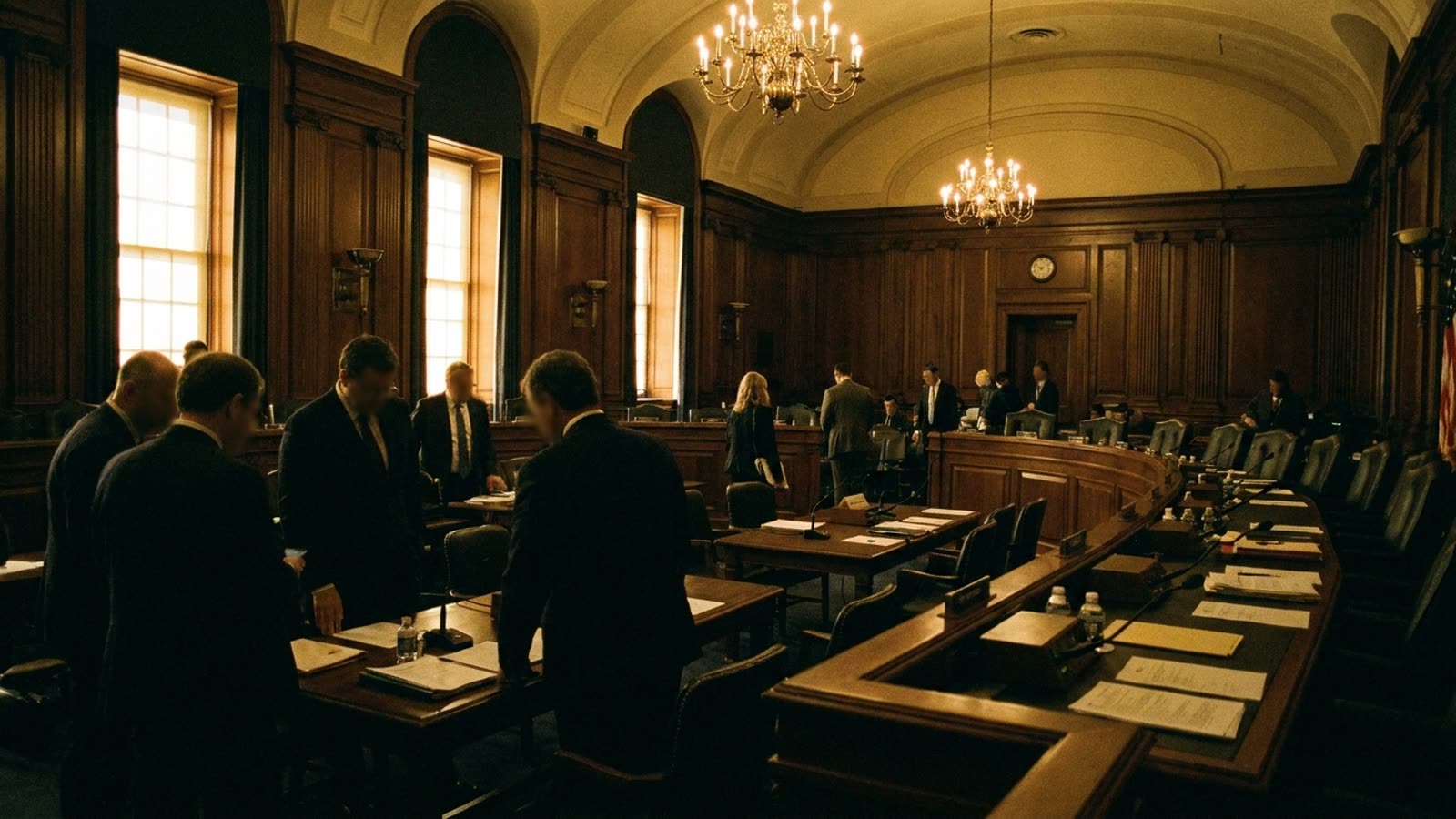
Every six weeks or so, a small group of economists, former bankers, and appointed technocrats files into a conference room and makes a decision that will ripple through every mortgage payment, car loan, and credit card bill in their jurisdiction. They are not elected. They cannot be fired for making unpopular choices. And yet their influence over household finances dwarfs that of most legislators.
This is the peculiar arrangement democracies have settled on for managing money: outsource the hardest calls to people insulated from political pressure, trust them to act in the public interest, and hope the arrangement holds when things get difficult.
The architecture of independence
The modern rate-setting committee emerged from hard experience. When politicians controlled monetary policy directly, they tended to juice the economy before elections and worry about inflation later. The result was boom-bust cycles that punished savers and destabilized currencies. By the 1990s, a consensus formed: central banks should be operationally independent, with mandates focused on price stability and, in some cases, employment.
The Federal Reserve's Federal Open Market Committee includes twelve voting members—seven governors appointed by the president and confirmed by the Senate, plus five rotating regional bank presidents. The European Central Bank's Governing Council is larger, with six executive board members and the governors of all eurozone national central banks. The Bank of England's Monetary Policy Committee is more compact, with nine members, four of whom are external appointees meant to bring outside perspectives.
These structural differences matter. Larger committees tend toward consensus and slower policy shifts. Smaller ones can pivot faster but risk groupthink. External members theoretically inject dissent, though in practice they often align with staff forecasts.
What actually happens in the room
The meetings follow ritualized formats. Staff economists present forecasts. Members discuss risks. Then comes the vote. At the Fed, the chair traditionally speaks last to avoid anchoring the discussion. At the Bank of England, members submit votes simultaneously to prevent herding. The ECB does not publish individual votes at all, preferring to project unity.
The real action often happens before the formal meeting. Staff briefings, bilateral conversations, and draft statements circulate in advance. By the time members sit down, the broad contours of the decision are usually settled. The meeting itself is partly theater—a structured conversation that will be scrutinized in minutes released weeks later.
Markets hang on every word. A single adjective change—"some" inflation concerns versus "modest" concerns—can move billions. This has made central bankers exquisitely careful communicators, deploying what former Fed chair Alan Greenspan once called "mumbling with great incoherence."
The accountability gap
Independence comes with a democratic cost. These officials face no voters. Their tenure often spans multiple administrations. When their decisions cause pain—higher unemployment, crushed housing markets—citizens have no direct recourse.
The counterargument is that this insulation is precisely the point. Monetary policy operates on long lags; a rate hike today affects inflation eighteen months from now. Politicians optimizing for the next election cycle would systematically underweight future costs. Better to have patient technocrats than impatient populists.
But this bargain depends on trust. When central banks are perceived as favoring financial elites or misjudging inflation, their legitimacy erodes. The post-pandemic inflation surge tested that trust severely. Many citizens concluded that the experts had failed, even if the counterfactual—no stimulus, deeper recession—might have been worse.
Our take
Central bank independence is a genuinely strange arrangement when you stop to think about it: democracies deliberately limiting their own power over a tool that shapes every economic transaction. It works, mostly, because the alternative has historically been worse. But the social contract underlying it requires central bankers to be humble about their models, transparent about their reasoning, and honest when they get things wrong. The technocratic bargain survives only as long as the technocrats remember they serve the public, not the other way around.