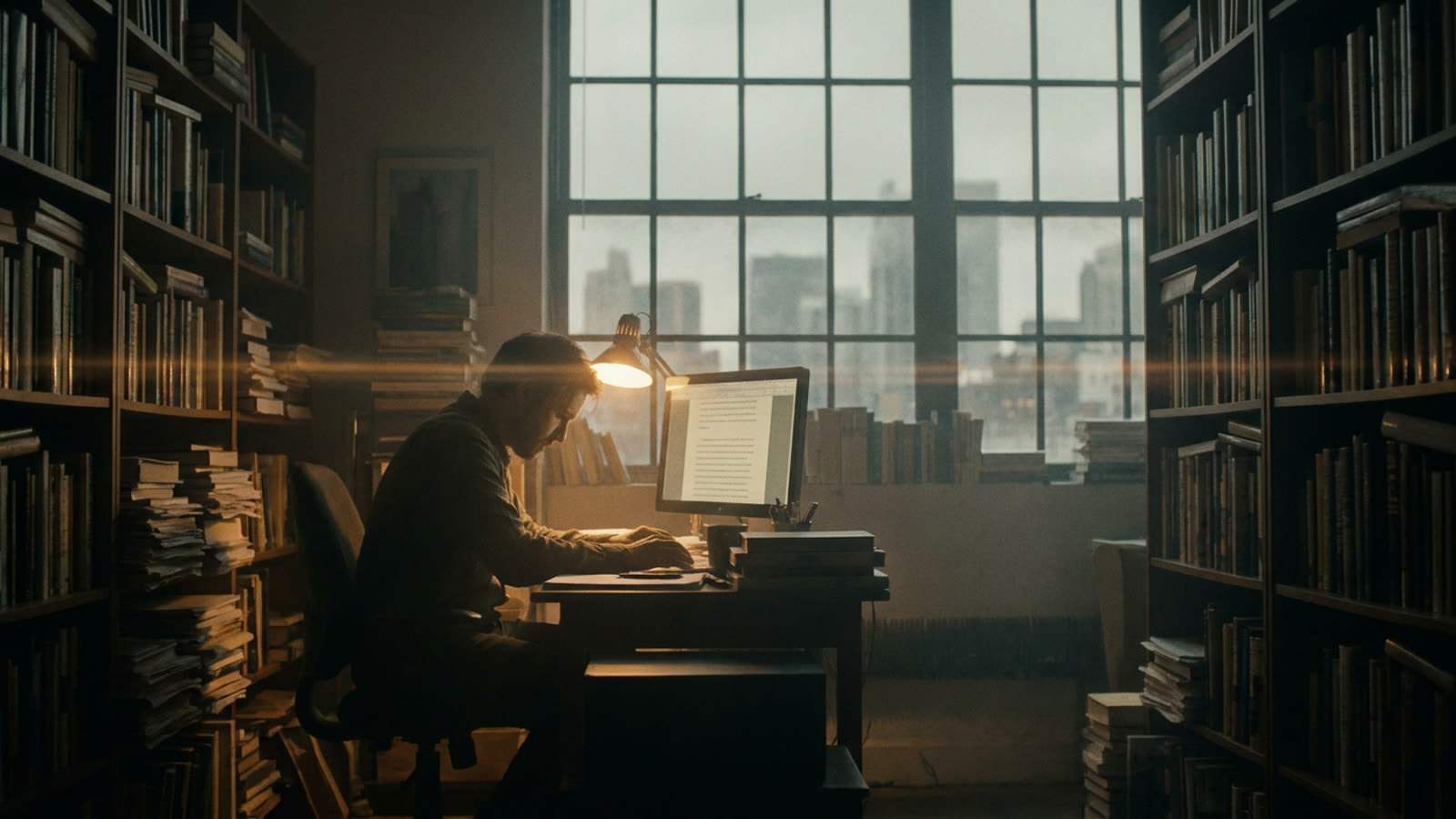
The modern literary translator sits before two screens. On one, the source text—a novel, a contract, a medical trial protocol. On the other, a machine-generated draft that is, infuriatingly, about eighty percent correct. The remaining twenty percent is where careers now live.
This is the quiet revolution reshaping one of humanity's oldest intellectual trades. Translation predates most professions we consider essential; the Rosetta Stone was, at its core, a translation project. Yet the field's practitioners now find themselves in an uncanny position: not obsolete, but fundamentally altered in ways that resist easy categorization.
The post-edit economy
The industry calls it MTPE—machine translation post-editing. A client sends a document, a neural network produces a first pass, and a human translator refines the output. Rates have compressed accordingly. Where a translator might once have charged by the word for original work, many agencies now pay a fraction for post-editing, on the theory that less labor is involved.
The theory is wrong, but in a complicated way. Post-editing is not easier than translating from scratch; it is differently difficult. The translator must now maintain two simultaneous mental states: understanding what the source text actually means, and understanding what the machine thought it meant. When these diverge subtly—and they often do—the cognitive load can exceed that of simply starting fresh.
Consider the problem of register. A machine trained on billions of sentences develops a kind of average voice, competent but tonally flat. It cannot reliably distinguish between a character's ironic formality and genuine pomposity, between a legal document's deliberate ambiguity and accidental vagueness. The human post-editor must catch these failures while resisting the hypnotic pull of fluent-sounding output.
What machines cannot see
The deepest challenge is not grammatical but cultural. Translation has always been an act of interpretation, a negotiation between what the author wrote and what readers in another language can receive. This negotiation requires knowledge that no training corpus fully captures: the associations a word carries, the historical weight of a phrase, the way a sentence rhythm signals class or region or era.
Japanese honorifics, for instance, encode social relationships that English simply does not grammaticalize. A machine can learn to drop them or approximate them, but it cannot feel the loss. Arabic's rich morphology allows wordplay that depends on root patterns invisible to readers of the Roman alphabet. Spanish distinguishes between states and events in ways that force translators into constant micro-decisions about aspect. These are not edge cases; they are the substance of the work.
The translators who thrive in this environment tend to specialize narrowly—legal, medical, literary—and to cultivate the expertise that makes them irreplaceable arbiters of domain-specific meaning. Generalists face the harshest pressure, competing against machines on terrain where the machine's breadth is an advantage.
A profession in metamorphosis
Younger translators entering the field inherit a different job than their predecessors held. They must master the technology—understanding how neural models fail, learning to prompt them effectively, developing workflows that integrate machine output without being captured by it. They must also make peace with a certain loss of authorship; the first draft is no longer theirs.
Some find this liberating. Freed from the mechanical labor of producing a baseline rendering, they can focus on the genuinely creative work: voice, rhythm, the impossible choices that define great translation. Others experience it as alienation, a severing from the craft's traditional satisfactions.
Our take
The translator's predicament is a preview of what awaits many knowledge workers: not replacement but transformation into something hybrid and harder to name. The machine handles volume; the human handles meaning. This division sounds clean until you realize that meaning is not a residue left after volume is subtracted—it is woven through every sentence, every word choice, every silence. The translators who survive will be those who can articulate why that weaving matters, and who can demonstrate it in work the machines cannot match. The rest will become, in effect, quality-control technicians for an algorithm's approximations. Neither fate is inevitable; both are already happening.