For more than a century, the insurance claims adjuster occupied a peculiar position in American commerce: part detective, part diplomat, part accountant. They drove to accident scenes, climbed onto storm-damaged roofs, and rendered verdicts that determined whether families could rebuild or policyholders could replace their cars. The job required a specific temperament—someone comfortable with confrontation, capable of spotting fraud, and willing to spend long hours in rental cars. That job still exists, but its essential nature is changing. The adjuster increasingly reviews what machines have already seen.
The shift began quietly. Major insurers started experimenting with computer-vision systems that could analyze photographs of vehicle damage and estimate repair costs. Early versions were crude, often requiring human correction. But the technology improved with remarkable speed. Today, when a policyholder submits photos of a dented bumper through a mobile app, an AI system typically processes those images before any human sees them. The machine identifies the make and model, catalogs visible damage, cross-references parts databases, and generates a preliminary estimate—often within seconds.
The new workflow
What adjusters do now looks fundamentally different from what they did a decade ago. Rather than conducting initial assessments, many spend their days reviewing AI-generated reports, handling escalated cases the system flagged as complex, and managing the human relationships that machines cannot. A veteran adjuster at a regional carrier described the change bluntly: the job has shifted from investigation to quality control.
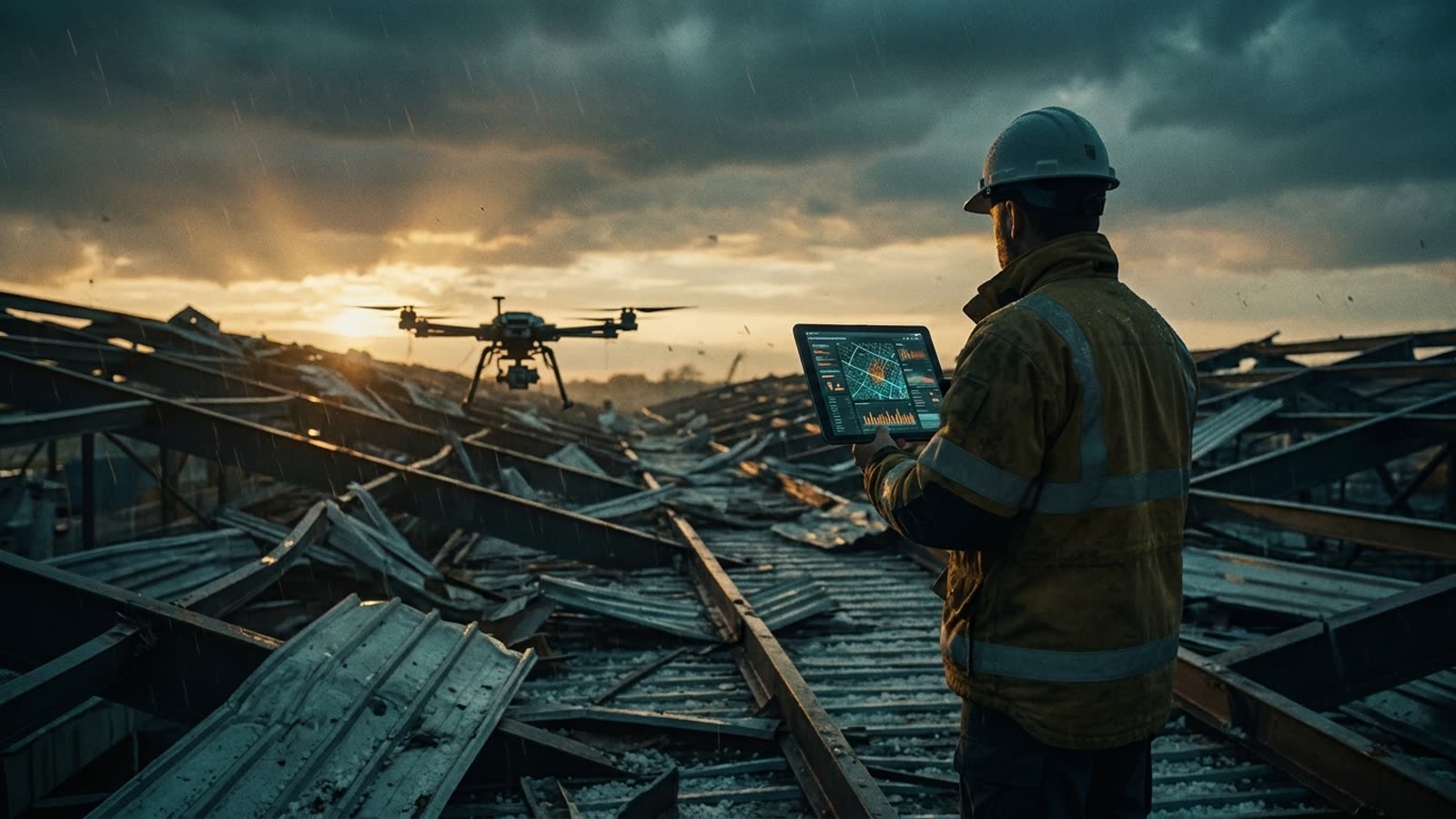
This transformation extends beyond auto claims. Satellite imagery combined with machine learning now enables insurers to assess roof damage from hurricanes without sending anyone to the property. Drones capture footage that AI systems analyze for hail damage patterns. Even in commercial insurance, where claims can involve intricate questions of business interruption and liability, AI tools now perform preliminary document review and flag inconsistencies.
What machines miss
The technology's limitations remain significant, and experienced adjusters know them well. AI systems excel at pattern recognition but struggle with context. They can identify that a roof has damage but cannot always determine whether that damage predates the claimed storm. They can estimate repair costs but cannot read the body language of a policyholder who seems nervous. Fraud detection—long considered the adjuster's dark art—still relies heavily on human intuition, though AI increasingly provides the data that triggers suspicion.
There is also the matter of catastrophe response. When a hurricane devastates a region, insurers still need people on the ground—not just to assess damage, but to represent the company to traumatized policyholders. No algorithm can sit at a kitchen table with a family who has lost everything and explain what happens next. The human adjuster, in these moments, performs a function that transcends claims processing.
Our take
The claims adjuster is not disappearing, but the profession is bifurcating. Routine claims increasingly flow through automated pipelines with minimal human involvement, while complex and emotionally charged cases concentrate in the hands of experienced professionals. This is neither the dystopian job-destruction that critics feared nor the frictionless efficiency that technologists promised. It is something more mundane and more interesting: a white-collar profession slowly reorganizing itself around what machines do well and what they cannot yet do at all. The adjusters who thrive will be those who embrace the review function while cultivating the irreducibly human skills that no vision model can replicate.