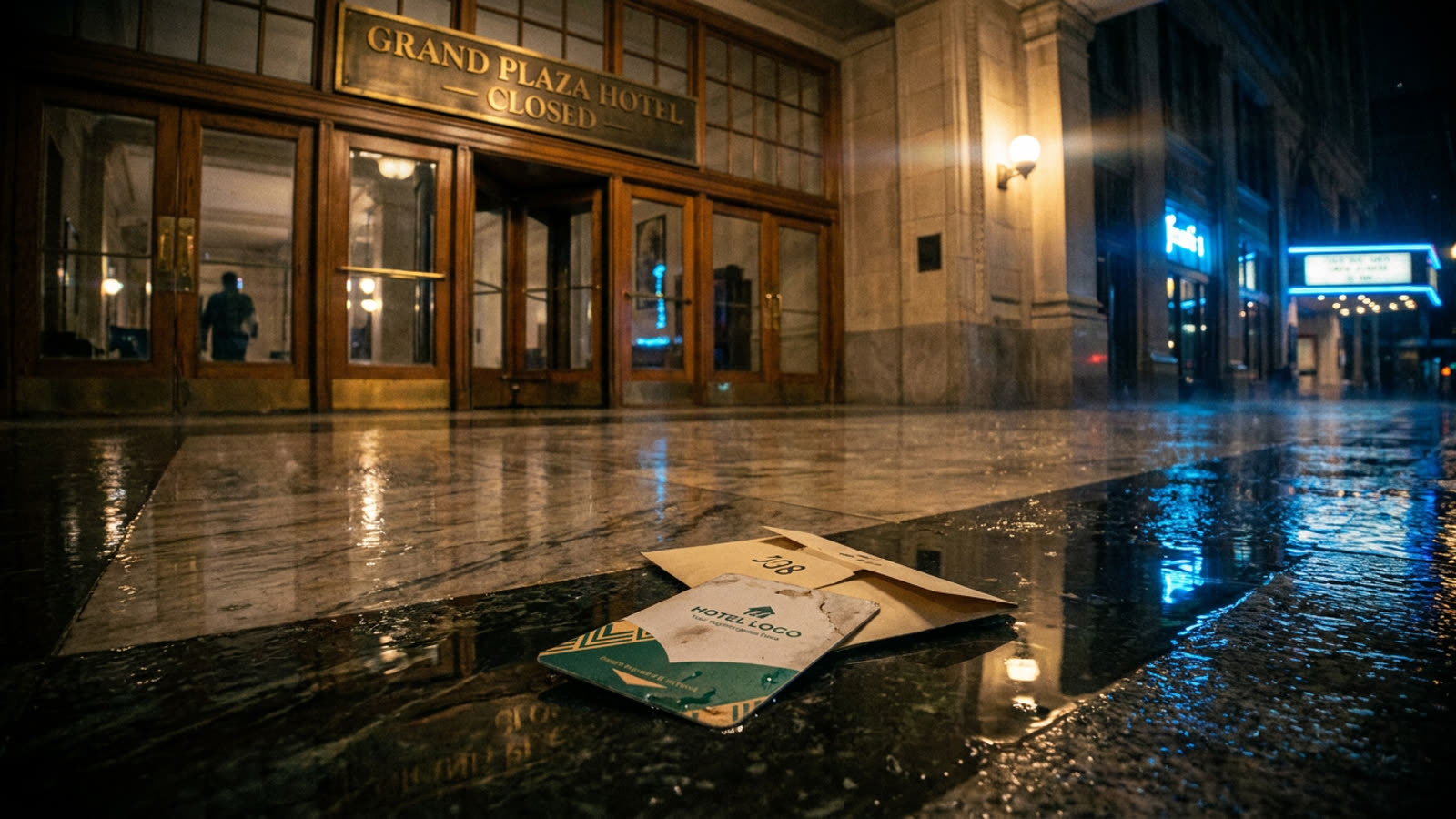
The key card you slip into your back pocket at check-in was never really about opening doors. It was about being seen holding the right one.
Long before influencers staged poolside content, the hotel key card served as a portable credential—a flash of embossed gold or matte black that whispered your taste to anyone paying attention. The Aman resorts understood this early, issuing cards so minimal they bordered on monastic. The Edition hotels countered with stark geometry. Even Holiday Inn eventually redesigned theirs, recognizing that the card guests carried to dinner said something about the trip they were having.
The accidental accessory
The modern magnetic stripe key card emerged in the 1970s as a security improvement over metal keys, which guests lost constantly and which required expensive lock changes. The technology was purely functional. But by the 1990s, luxury properties had discovered that the card doubled as a branding surface—and, crucially, as something guests took home. A well-designed key card became a souvenir that sat on nightstands and in desk drawers, a small advertisement for aspiration.
The design arms race that followed produced genuine objects of desire. The Standard hotels embraced irreverence, printing provocative phrases. Ace Hotels leaned into their creative-class positioning with artist collaborations. At the extreme end, certain palace hotels in Europe issued cards so heavy and ornate they required their own leather sleeves.
The phone in your pocket
Mobile check-in has been eroding the key card's reign for years, but the shift accelerated dramatically after 2020, when touchless everything became a selling point. Marriott, Hilton, and Hyatt now offer digital keys across most of their portfolios. For the hotels, the savings are meaningful—no card stock, no encoding machines, no front desk bottleneck. For guests, the convenience is genuine.
Yet something is lost when your room access lives in the same app as your boarding pass and your coffee loyalty points. The digital key is frictionless but anonymous. It cannot be left casually visible at a restaurant table. It does not accumulate in a drawer as evidence of places you have been.
Our take
The hotel key card was always a minor luxury, but minor luxuries are often how we mark the texture of experience. The best independent hotels seem to understand this—they are holding onto physical keys precisely because the gesture of handing one over creates a moment, a small ceremony of arrival. In a hospitality industry increasingly optimized for efficiency, that ceremony may be worth more than the plastic it is printed on.