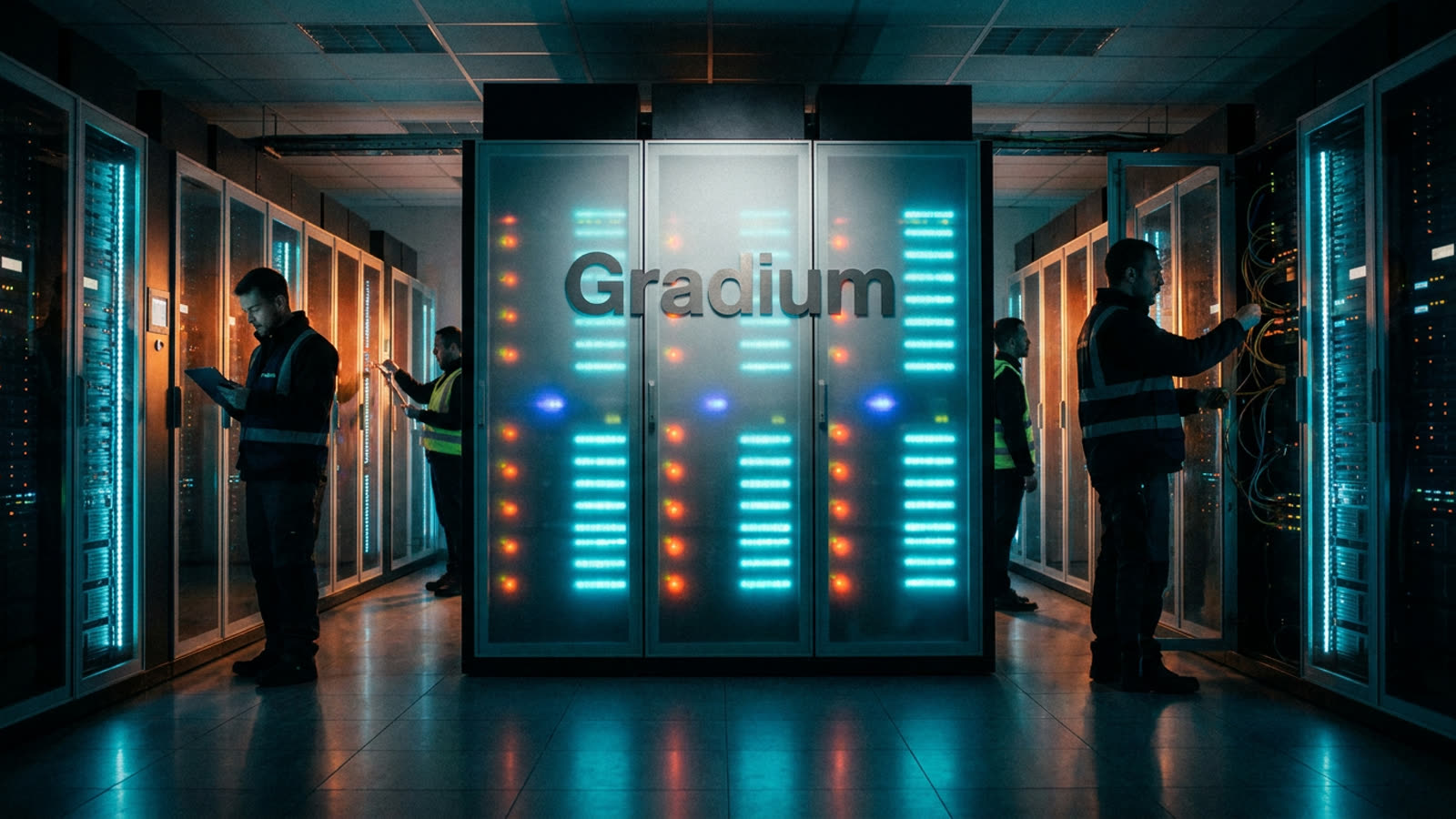
Seed rounds are supposed to be small. They exist to prove a concept, hire a few engineers, and survive long enough to build something worth funding properly. Gradium, a Paris-based AI voice startup, has instead raised $100 million at the seed stage, with Nvidia among the backers—a sum that would have constituted a respectable Series C not long ago and now apparently qualifies as a company's first institutional check.
The inflation is instructive. Voice AI has become the next frontier after text and image generation proved commercially viable, and investors are scrambling to secure positions before the market consolidates. Gradium is betting that its technology can power everything from customer service automation to real-time translation, and Nvidia's involvement suggests the chipmaker sees voice as a growth vector for its inference hardware. The location matters too: Paris has quietly accumulated AI talent, and European policymakers have made clear they want homegrown champions rather than American subsidiaries.
Why voice, why now
Text-based AI has matured faster than most predicted, which means the competitive moat has narrowed. Voice represents a harder technical problem—latency, accent recognition, emotional nuance—and therefore a potential differentiation opportunity. Gradium claims proprietary approaches to low-latency synthesis that could make AI phone agents indistinguishable from humans within seconds of a call starting. If true, the applications span call centers, healthcare triage, and accessibility tools. If overstated, the company joins a long list of startups that confused demo magic with production readiness.
The Nvidia factor
Nvidia's participation is not purely financial. The company has been building an ecosystem of AI startups dependent on its hardware, creating demand for GPUs while also gathering intelligence on where inference workloads are heading. Voice models require different computational profiles than large language models—more real-time, more latency-sensitive—and Nvidia presumably wants Gradium's engineers stress-testing its inference chips. The relationship is symbiotic but asymmetric: Gradium needs Nvidia more than Nvidia needs any single startup.
European AI's moment, or mirage
France has been positioning itself as Europe's AI capital, with President Macron hosting summits and offering tax incentives. Mistral AI's rise demonstrated that credible foundation-model companies could emerge outside Silicon Valley. Yet the talent pipeline remains thinner than in the United States, and regulatory uncertainty around the EU AI Act continues to spook some founders. Gradium's raise is a vote of confidence, but whether it reflects genuine capability or investor FOMO remains to be seen.
Our take
A $100 million seed round is not a seed round; it is a bet that the company will become important enough to justify skipping the normal fundraising ladder. Gradium may prove worthy of the wager, but the check size reveals more about market psychology than company fundamentals. Voice AI is real, European ambition is real, and Nvidia's strategic interest is real. Whether Gradium specifically will matter in five years is a question no seed investor can honestly answer—which is precisely why they wrote the check anyway.