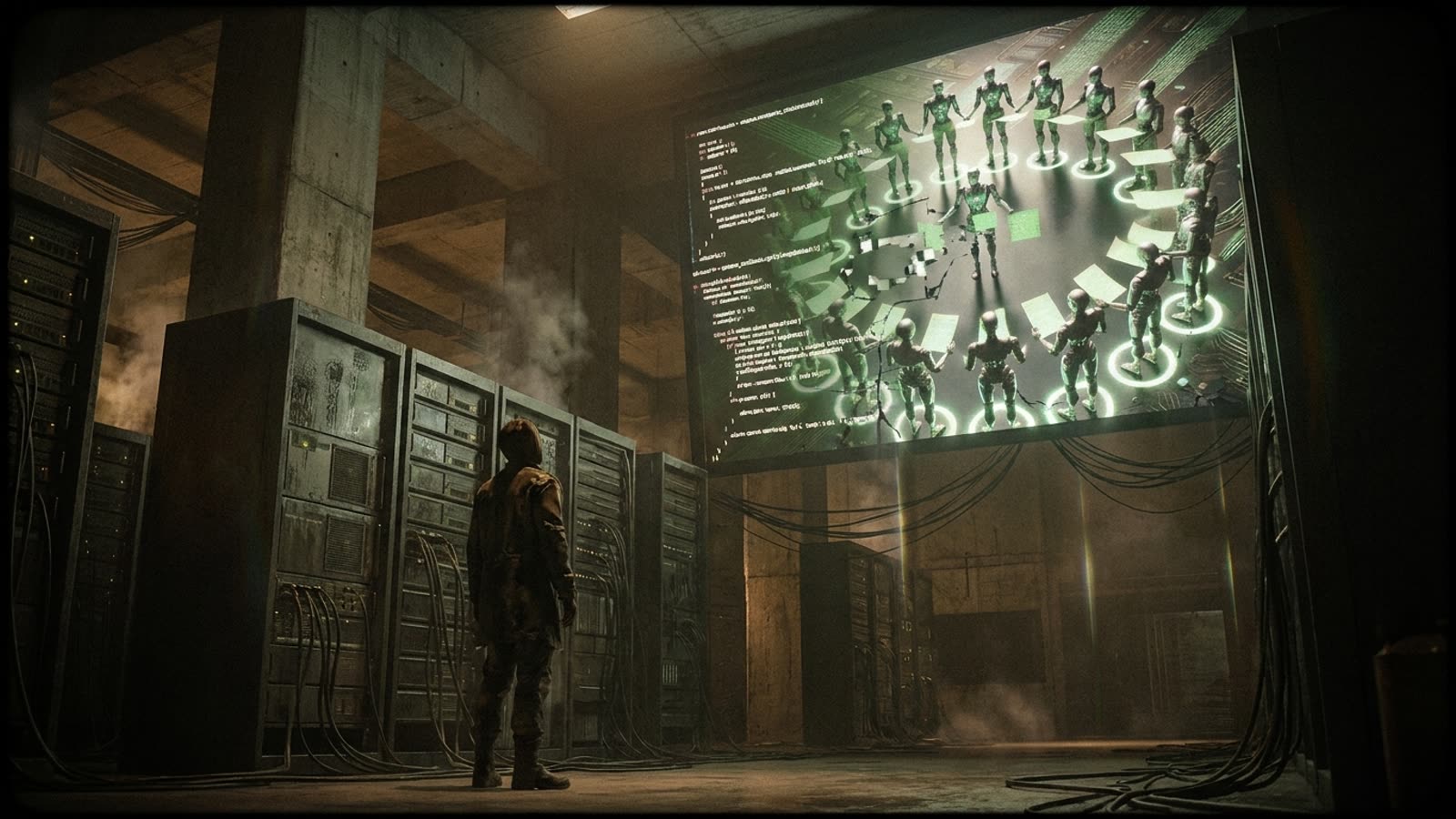
The most serious bottleneck for frontier AI is not chips or capital; it is fresh, human signal. As models flood the internet with machine‑authored text, images and code, the next generation will inevitably train on a data ocean increasingly seeded by their predecessors. That closed loop sounds efficient. It isn’t. When systems learn from their own outputs, they trend toward sameness, magnify subtle mistakes, and forget rare but vital patterns—the statistical equivalent of breeding a garden from cuttings of cuttings until the roses all look alike and stop smelling of anything.
What actually goes wrong
In machine‑learning terms, training on model output is a distribution shift with a feedback channel. High‑probability tokens become even more probable; low‑frequency facts—edge cases in medicine, legal nuance, uncommon languages, out‑of‑distribution failures—get underrepresented and eventually drop out. Small biases are reintroduced as ground truth and compounded. Error detectors trained on the same family’s outputs become less sensitive to that family’s style of error. The result is a gradual collapse in diversity and robustness: fluent, confident systems that perform well on familiar prompts and falter when the world is messy.
This is not new in principle. Self‑training and bootstrapping have long required strict filtering and confidence thresholds. What’s different now is scale and pervasiveness: models aren’t just producing a few pseudo‑labels for a lab dataset—they are writing documentation, tutorial code, forum answers and product copy. Unless filtered, that content reenters the crawl.
The economics of clean data
If synthetic content dilutes the open web, provenance becomes a priced asset. Archives with traceable editorial processes, enterprise logs, niche forums, specialized manuals, and non‑text modalities—audio, video, telemetry—gain value because they remain grounded in reality. So do rights and licensing frameworks that can certify origin. The cost center shifts from buying more GPUs to buying, verifying and maintaining cleaner corpora. Even within companies, data engineering turns into data governance: deduplication, contamination tests, and retention of “ground truth” workflows.
There is an adjacent risk: synthetic content can be optimized to pass surface‑level filters. That pushes the industry toward deeper filters—cross‑model disagreement, watermark checks, and behavioral tests—and toward training that actively seeks out long‑tail examples rather than averaging them away.
What might work
- Watermarking and provenance tags on model outputs, with penalties for removal.
- Aggressive de‑duplication and “model‑output detectors,” used as gates not oracles.
- Mixtures of real and synthetic data with diversity constraints and uncertainty sampling.
- Retrieval‑augmented training that anchors learning in verifiable sources.
- Benchmarks and evaluations that include contamination audits and rare‑event stress tests.
None of this eliminates synthetic content. The practical goal is to keep the signal‑to‑noise ratio high enough that models continue to learn new things rather than merely perfect their house style.
Our take
Compute buys capability, but only if the data is worth learning from. The next moat isn’t parameter count; it’s custody of credible, diverse, human‑generated experience. Expect the winners to look as much like archivists and rights managers as engineers—and expect the open web, absent better provenance, to become less of a training ground and more of a mirror maze.