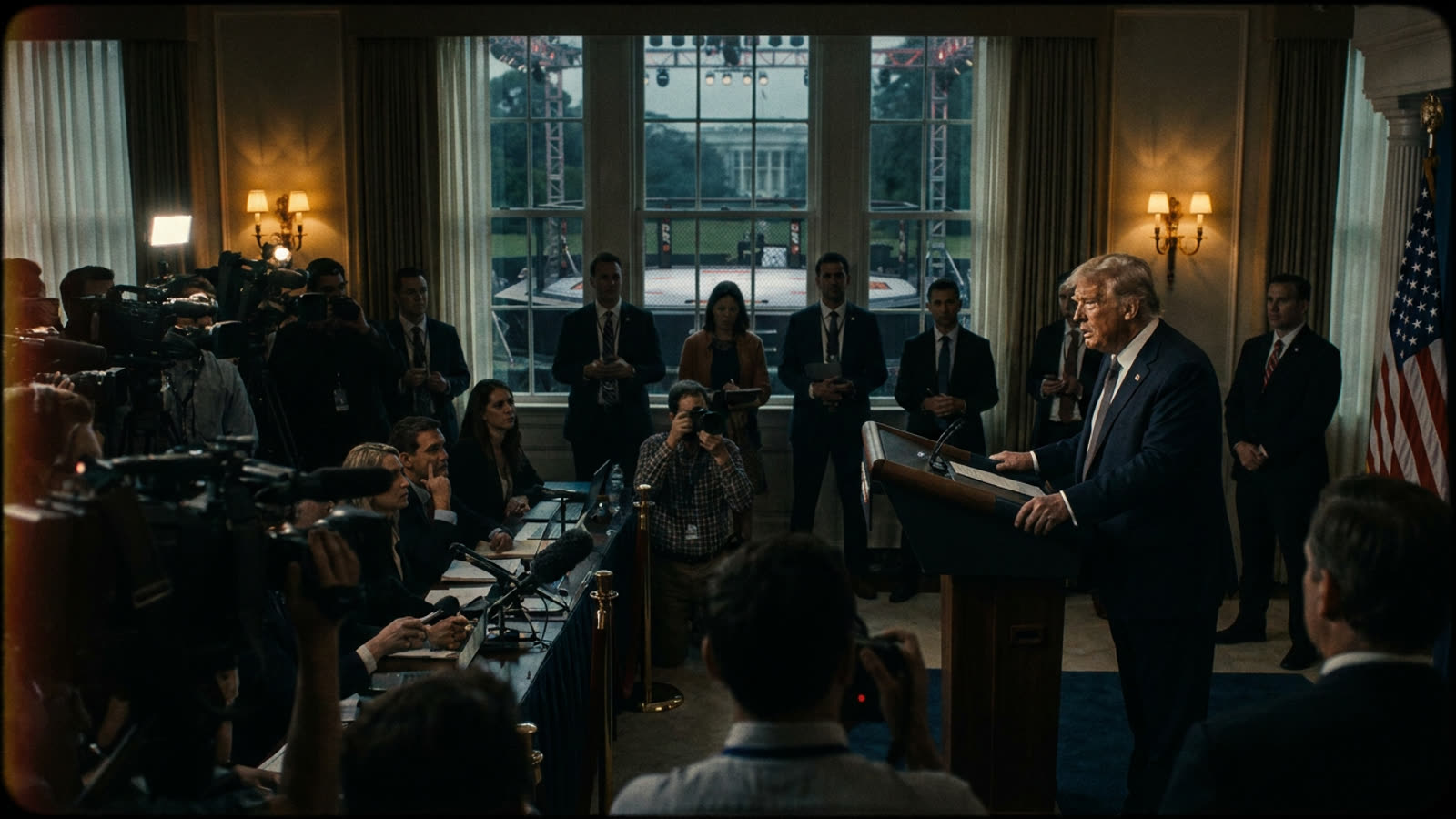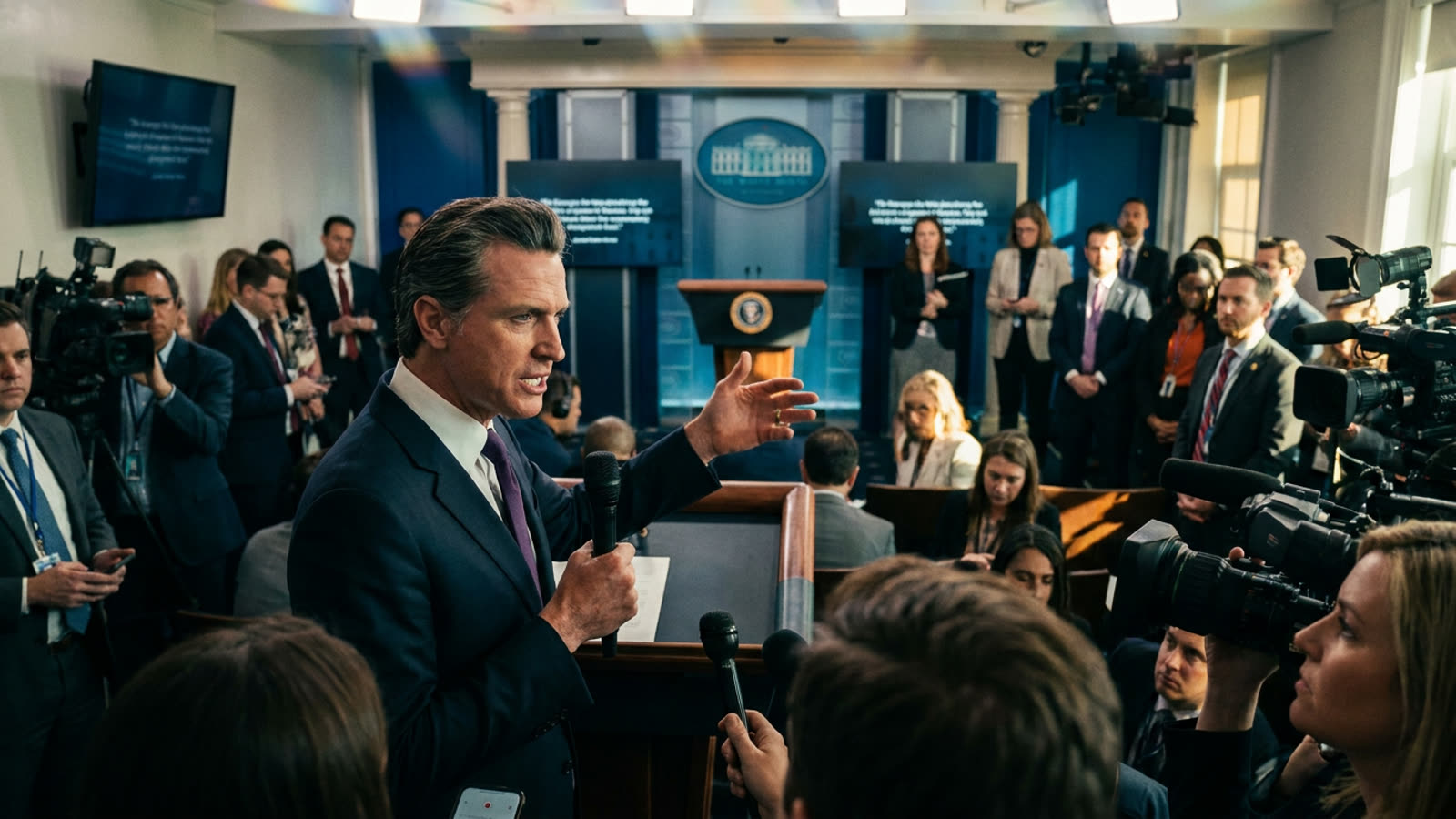
The surest sign that Gavin Newsom is the presumptive 2028 Democratic nominee is that Donald Trump's Justice Department has decided to investigate him now, three years before the election.
Newsom announced Sunday that federal prosecutors have opened an inquiry into both him and his wife, Jennifer Siebel Newsom, though he declined to specify the subject matter. The California governor called it "a dangerous escalation" and "political retribution," framing the probe as punishment for his vocal opposition to the administration. The Justice Department has not commented publicly.
The move lands at a peculiar moment. Trump is riding high after securing the Iran nuclear deal, his approval numbers ticking upward, and the Democratic Party remains leaderless following its 2024 defeat. Newsom has spent the past eighteen months positioning himself as the party's most aggressive Trump critic, launching a political action committee, barnstorming swing states, and perfecting his cable-news pugilism. He has done everything short of filing paperwork.
The California question
Newsom's vulnerability has always been California itself. The state's homelessness crisis, budget deficits, and population exodus provide endless opposition-research fodder. His 2021 recall survived comfortably, but the campaign exposed how easily his record could be nationalized as a cautionary tale. A federal investigation—regardless of its merits—adds a new dimension: the specter of legal jeopardy that can freeze donors, spook endorsers, and dominate news cycles.
The involvement of Jennifer Siebel Newsom is notable. A documentary filmmaker and founder of a gender-equity nonprofit, she has maintained a lower profile than many political spouses. Her inclusion suggests prosecutors are casting a wide net, or that the investigation touches on the couple's finances or foundation work. Either way, it transforms a political story into a family one.
The DOJ's credibility problem
Trump's Justice Department has already drawn criticism for what critics call selective enforcement—investigations into Democratic officials and media organizations that coincide suspiciously with the president's public grievances. The department insists it operates independently, but the pattern has eroded institutional trust. An investigation into the most prominent Democratic governor, announced as Trump consolidates his second-term agenda, will deepen that skepticism regardless of what evidence emerges.
Newsom's response was calibrated for the moment: defiant but not dismissive, invoking democratic norms without claiming victimhood. "I will not be intimidated," he said, "and neither will California." The statement reads like a campaign ad because, functionally, it is one.
The 2028 calculus
The shadow primary has been underway for months. Governors Gretchen Whitmer and Josh Shapiro have made their own moves; Transportation Secretary Pete Buttigieg remains a factor. But Newsom has been the loudest, the most willing to engage Trump directly, the most obviously running. This investigation confirms what everyone suspected: the White House noticed.
Whether the probe produces charges, embarrassing disclosures, or nothing at all, it achieves an immediate political objective. Newsom must now spend resources on lawyers rather than organizers. He must answer questions about subpoenas rather than policy. He must defend his integrity before he can define his candidacy.
Our take
Investigating your likely 2028 opponent in 2026 is not subtle, but subtlety has never been this administration's style. Newsom may emerge legally unscathed and politically strengthened—nothing rallies a base like perceived persecution. But the gambit reveals how seriously Trump's team takes the California governor as a threat. In politics, being investigated by your enemies is sometimes a compliment. Newsom will have to decide whether to wear it as a badge or a burden.