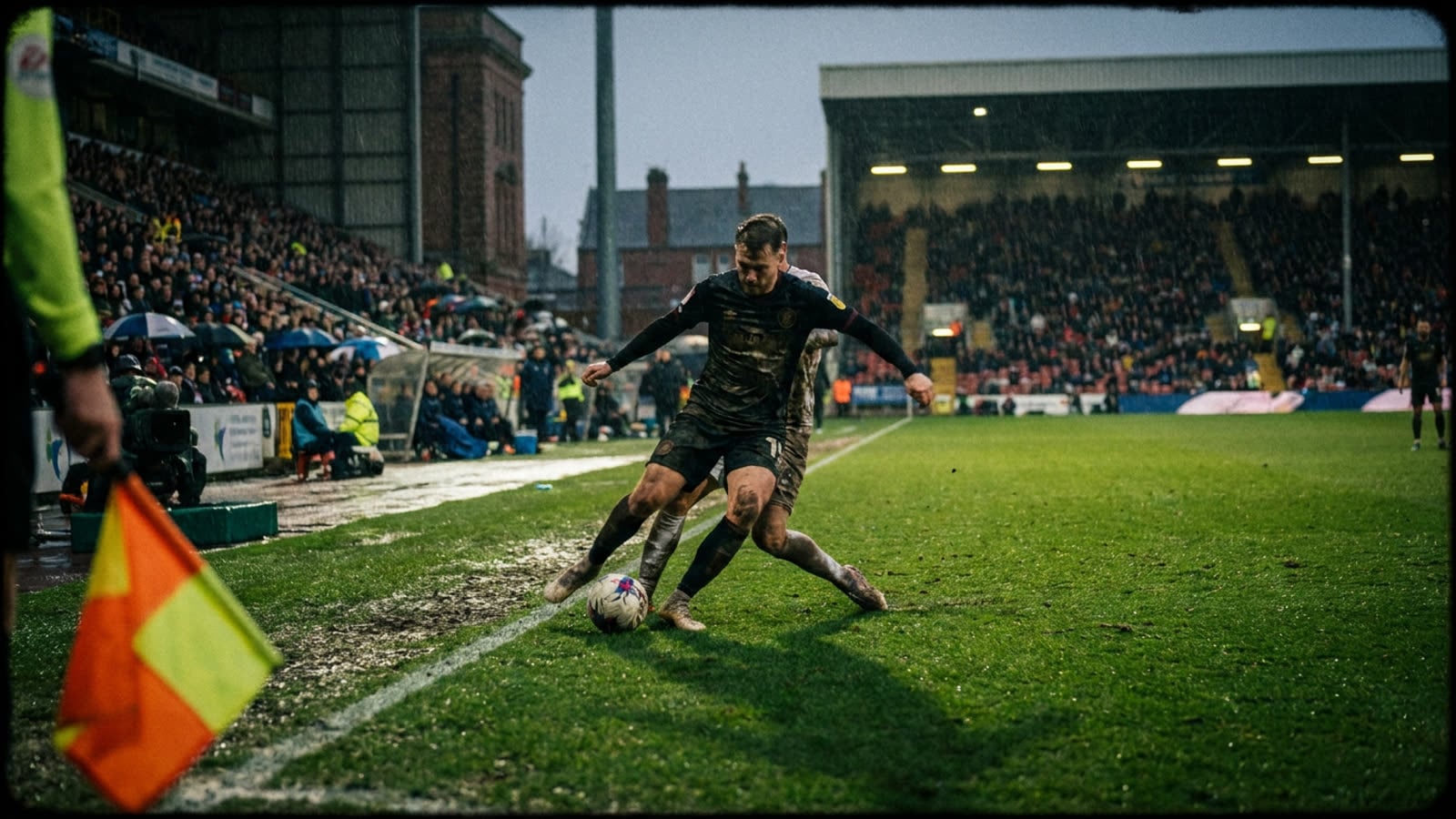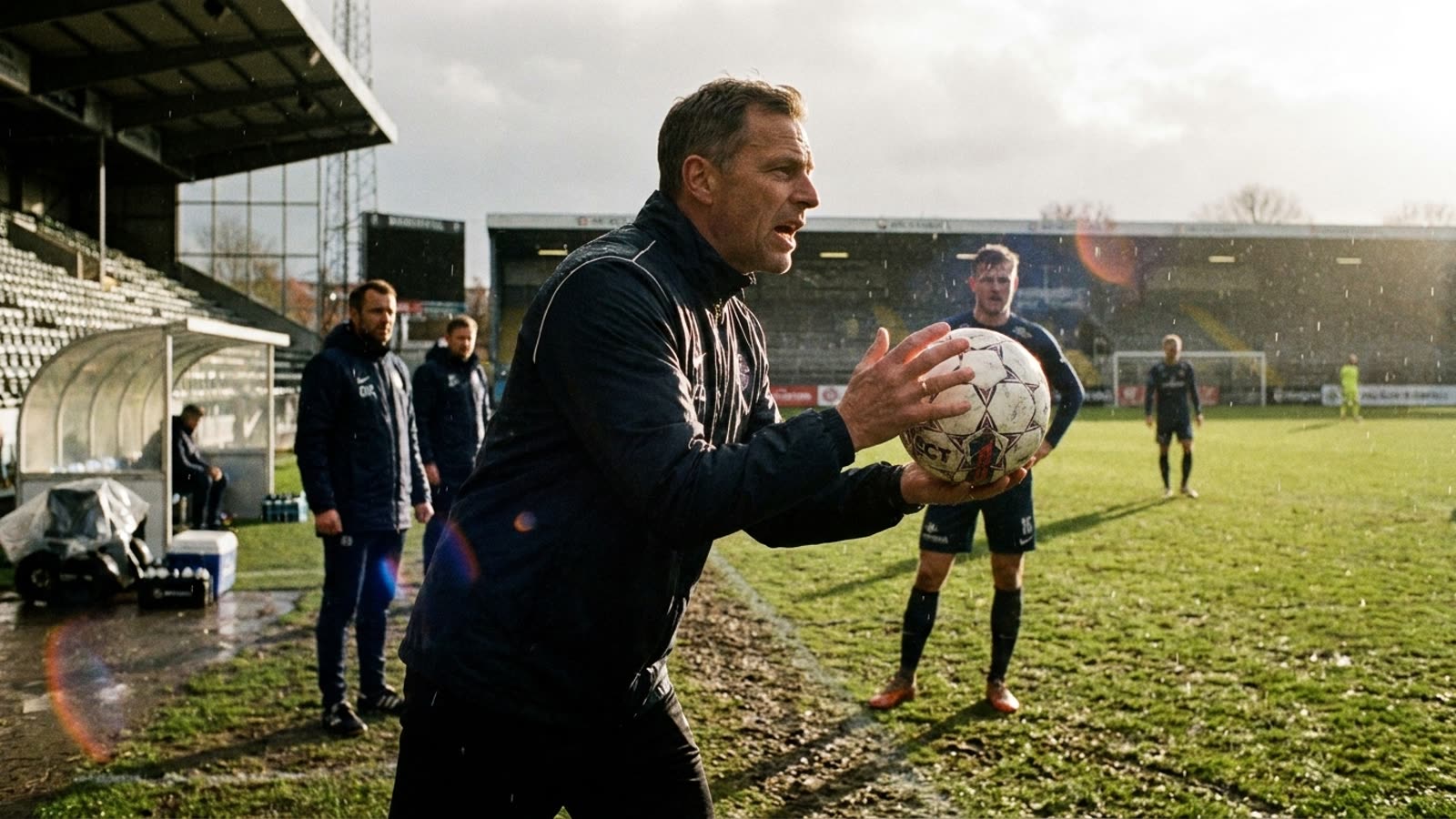
Football's analytics revolution has transformed how clubs think about corners, free kicks, and penalties. Expected-goals models dissect every cross; set-piece coaches command six-figure salaries. Yet the throw-in, the game's most frequent restart, remains an afterthought—a curious blind spot in a sport that otherwise monetizes every blade of grass.
The numbers suggest this neglect is irrational. A typical match produces between forty and fifty throw-ins, roughly double the number of corners. Most are wasted: a lateral pass to a fullback under pressure, a hopeful long ball contested and lost. Possession retention from throw-ins hovers around sixty percent in most leagues, meaning teams surrender the ball four out of every ten times they should have a structural advantage. For a sport obsessed with marginal gains, this is a remarkable inefficiency.
The Danish experiment
The modern throw-in revolution traces to Thomas Grønnemark, a Danish coach who built an entire consultancy around the restart. His thesis was simple: clubs drill corners for hours but spend almost no training time on throw-ins, despite their frequency. Grønnemark developed a taxonomy of throw-in types—long, quick, delayed, dummy runs—and began selling his services to top-flight clubs. Liverpool under Jürgen Klopp became his most prominent client, and the club's throw-in retention rate reportedly climbed above ninety percent during their title-winning campaigns. The correlation between throw-in efficiency and league position, Grønnemark argued, was stronger than most managers assumed.
His methods are deceptively basic. Players practice receiving angles. Throwers learn to vary pace and trajectory. Movement patterns are choreographed to create two-on-one situations in tight spaces. The innovation is not physical but organizational: treating the throw-in as a genuine set piece rather than a pause in play.
Why resistance persists
If the gains are real, why haven't more clubs adopted throw-in specialization? Several factors explain the inertia. First, throw-ins lack the obvious goal-scoring potential of corners, making them harder to sell to boards focused on highlight-reel metrics. Second, the benefits are diffuse—better retention, smoother transitions—rather than discrete events that analytics dashboards capture cleanly. Third, training time is finite, and managers face pressure to prioritize more visible tactical work.
There is also a cultural dimension. Football's coaching orthodoxy was forged in an era when throw-ins were genuinely trivial—a moment to catch breath, not a tactical opportunity. Older coaches often dismiss throw-in specialization as gimmickry, a symptom of analytics overreach. Younger coaches, raised on data, are more receptive but still face institutional skepticism.
The long throw as spectacle and strategy
The long throw represents a different philosophy: turning the throw-in into a quasi-corner, launching the ball into the penalty area to create aerial chaos. Stoke City under Tony Pulis made this approach famous, with Rory Delap's javelin-like deliveries terrorizing Premier League defenses in the late 2000s. The tactic fell out of fashion as possession-based football became dominant, but it never disappeared entirely. Lower-league clubs and international minnows still deploy long-throw specialists as an equalizer against technically superior opponents.
The long throw's persistence reveals something about football's tactical ecosystem: brute-force solutions survive because they work often enough to justify the aesthetic cost. A well-executed long throw converts at rates comparable to corners, and defending against it requires specific preparation that many clubs neglect.
Our take
The throw-in's neglect is a case study in how football's conservatism leaves value on the table. The sport has embraced expected goals, pressing metrics, and positional-play theory, yet it treats its most common restart as beneath serious attention. This will change, slowly, as data-literate coaches rise through the ranks and consultants like Grønnemark normalize specialization. But the transition will take years, perhaps a decade. In the meantime, the clubs willing to look foolish—drilling throw-in patterns while rivals scoff—will quietly accumulate the small advantages that decide tight matches.