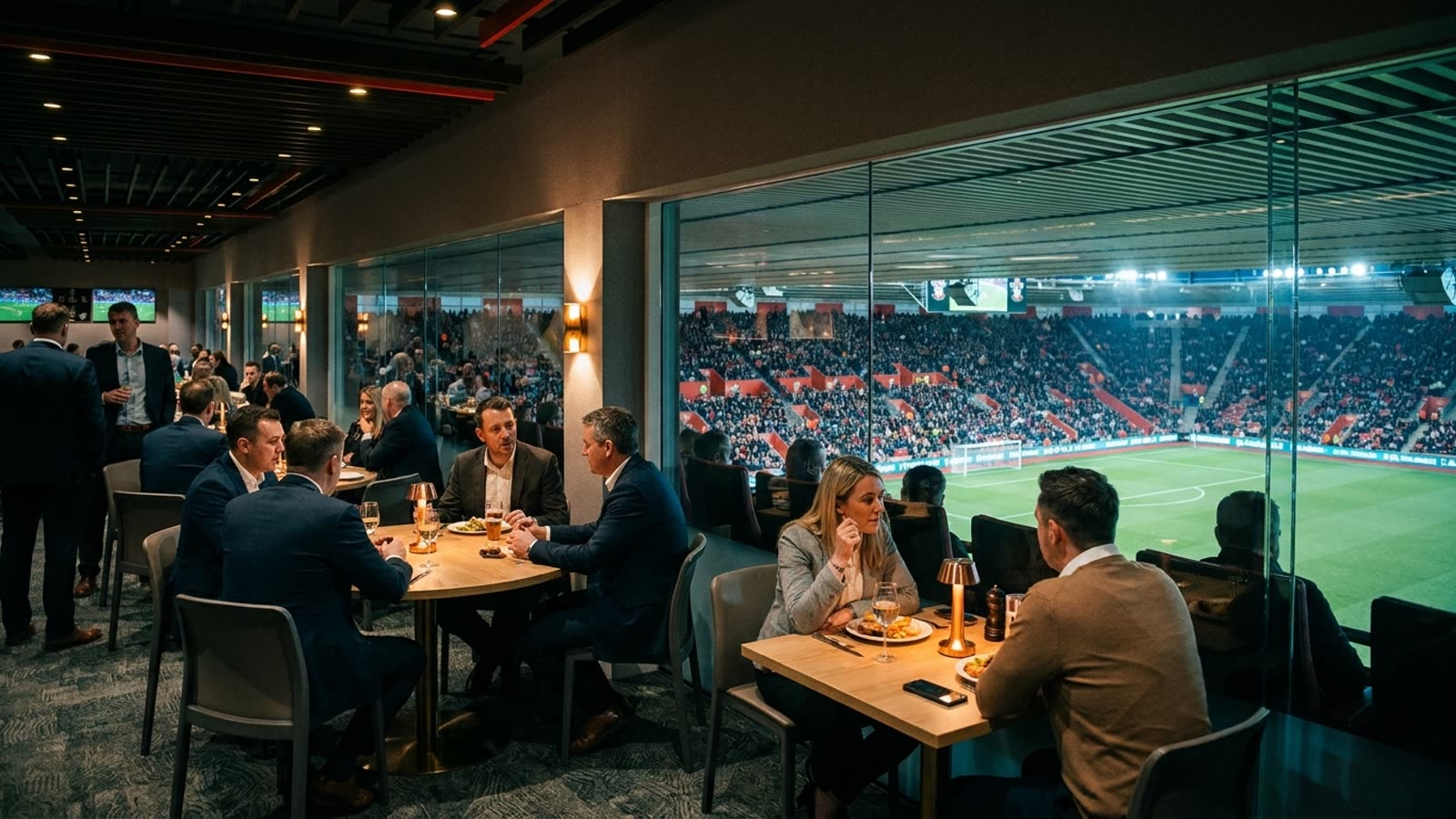
The most consequential ninety minutes at a major football stadium often occur before kickoff, in rooms the television cameras never show. In the hospitality suites and executive boxes that ring modern arenas like gilded halos, deals are struck, relationships cemented, and sums exchanged that dwarf what happens on the pitch below. This parallel economy—call it the third half—has quietly become one of football's most important revenue streams, reshaping everything from stadium architecture to the competitive balance of leagues.
The numbers, where clubs disclose them, are striking. Premium seating and hospitality can account for a quarter or more of matchday revenue at elite venues, despite representing a tiny fraction of total capacity. A single corporate box at a top Premier League ground might generate annual fees equivalent to hundreds of regular season tickets. The arithmetic is brutal but clarifying: a few thousand wealthy guests can matter more to a club's finances than tens of thousands of ordinary supporters.
The architecture of exclusion
Modern stadium design reflects this reality with uncomfortable honesty. The trend toward enclosed, climate-controlled arenas owes as much to hospitality requirements as to supporter comfort. Corporate clients expect year-round functionality—the same space that hosts Champions League nights must accommodate product launches, wedding receptions, and shareholder meetings. This explains the proliferation of retractable roofs, modular seating, and catering facilities that would embarrass many hotels.
The physical separation has grown more elaborate over decades. Where once a director's box meant slightly better sightlines and access to a bar, today's premium offerings include private entrances, dedicated parking, fine dining, and increasingly, experiences designed to minimize any contact with the general admission crowd. The message is architectural: these guests are not merely watching the same match from better seats, they are attending an entirely different event.
Why sponsors pay for proximity
The appeal to corporations extends beyond the obvious entertainment value. A hospitality box offers something increasingly rare in the digital age: captive attention. For ninety minutes plus intervals, clients and prospects cannot check email, take calls, or escape to other meetings. The shared emotional experience of live sport—the tension, the release, the tribal belonging—creates a psychological intimacy that no conference room can replicate.
This explains why hospitality spending often survives corporate budget cuts that eliminate other entertainment expenses. The return on investment, while difficult to quantify precisely, is understood intuitively by anyone who has closed a deal over half-time champagne. Football provides the pretext; the relationship is the product.
The competitive implications
The hospitality economy advantages certain clubs structurally. Teams in global financial centers—London, Madrid, Munich, Milan—can charge premiums that provincial rivals cannot match regardless of on-pitch success. A newly promoted club might fill its stadium with passionate supporters yet generate a fraction of the hospitality revenue of an established metropolitan giant playing before half-empty executive tiers.
This dynamic reinforces existing hierarchies. Hospitality income funds transfer budgets, which produce success, which attracts more corporate interest. The feedback loop is difficult to break. Financial fair play regulations, whatever their other effects, do nothing to address this particular inequality.
Our take
There is something faintly absurd about a sport that generates billions from working-class passion while its most profitable customers are insulated from that passion entirely. Yet the third half is not going away. If anything, the trend toward American-style stadium experiences—with their emphasis on comfort, consumption, and corporate access—suggests hospitality will only grow more central to football's economics. The beautiful game has always been a business. The hospitality box simply makes that truth impossible to ignore.