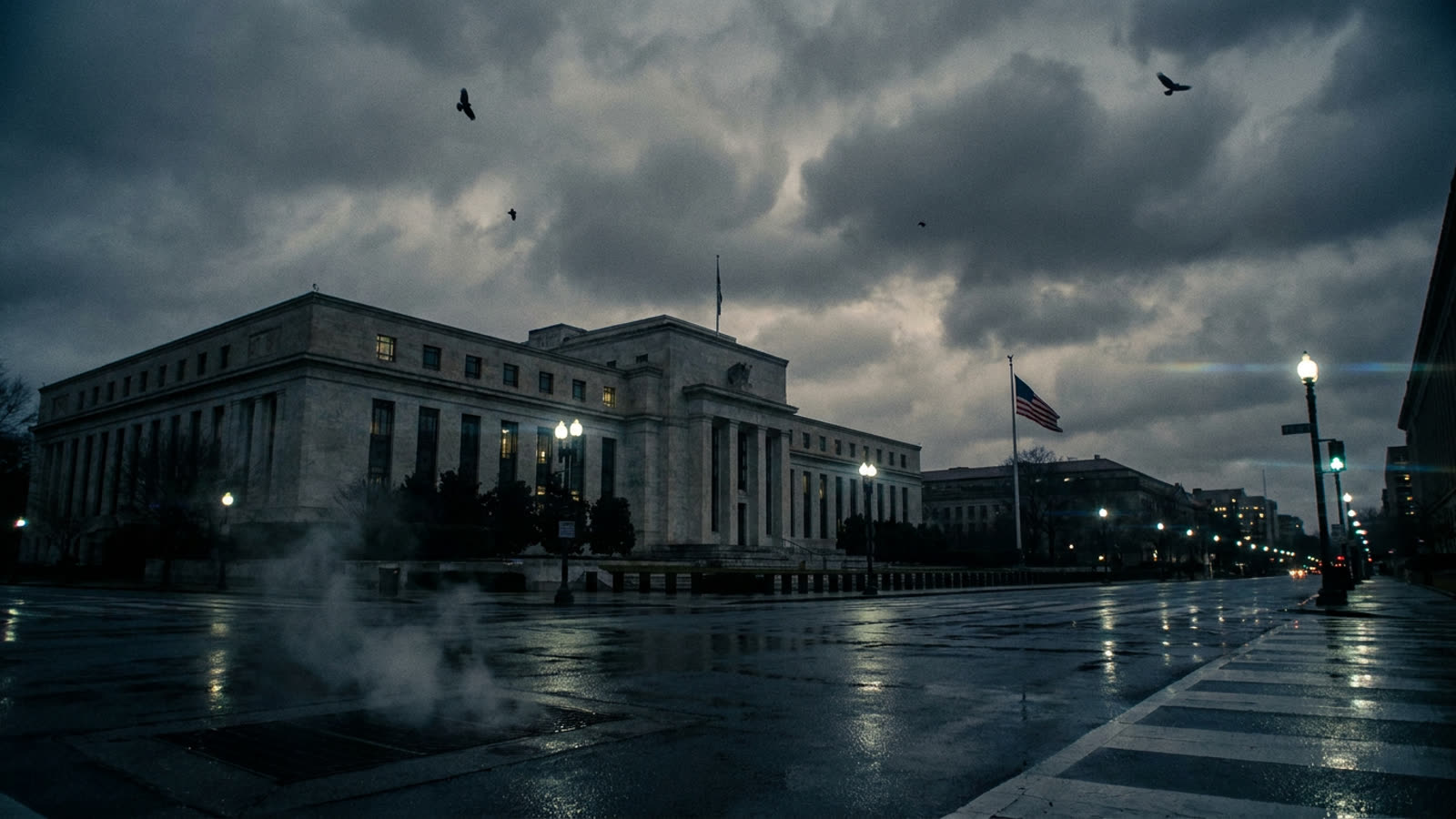
The Federal Reserve has spent the better part of two years convincing markets that the inflation dragon was slain and that patience would eventually be rewarded with rate cuts. The minutes from the central bank's most recent policy meeting, released this week, suggest a meaningful contingent of officials never fully bought that narrative—and are now openly gaming out scenarios in which rates go higher, not lower.
This is not the Fed pivot traders have been waiting for.
The hawkish undercurrent
The minutes show that "several" participants flagged circumstances under which additional tightening might become appropriate, a notable escalation from previous meetings where such language was confined to the margins. The concern centers on sticky services inflation, a labor market that refuses to crack, and the risk that prolonged fiscal deficits keep demand elevated regardless of what monetary policy does. For officials who spent 2022 and 2023 racing to catch up with inflation they initially dismissed as transitory, the institutional memory is fresh and the appetite for a repeat is nil.
What makes this hawkish tilt consequential is timing. Markets have largely priced in a "higher for longer" stance but have not seriously entertained "higher still." The two-year Treasury yield, the instrument most sensitive to near-term Fed expectations, has been range-bound on the assumption that the next move is down—eventually. If that assumption cracks, the repricing could be swift and painful for portfolios built on the premise of imminent easing.
Warsh's shadow looms
The hawkish signals arrive as Kevin Warsh prepares to take the reins at the Fed, with JPMorgan's David Kelly predicting the incoming chair will hold rates steady in his first vote. Warsh, a critic of the post-2008 easy-money era, has long argued that central banks became too accommodative for too long. His installation at the top of the world's most powerful central bank suggests the institution's center of gravity is shifting—not toward cuts, but toward a tolerance for restrictive policy that outlasts the current business cycle.
For corporate America, the implications are straightforward: the era of cheap refinancing is not returning on any schedule that matters for 2026 capital planning. For consumers, mortgage rates above six percent are the new normal, not an aberration to be waited out.
Our take
The Fed's minutes are often dismissed as stale by the time they hit the tape, but this batch deserves closer reading. The hawks are not merely hedging—they are building an intellectual case for tightening that could gain adherents if inflation data disappoints even modestly. Markets have grown complacent, lulled by the assumption that the Fed's next move is a question of "when," not "which direction." That assumption is now officially contestable, and the cost of being wrong has just gone up.