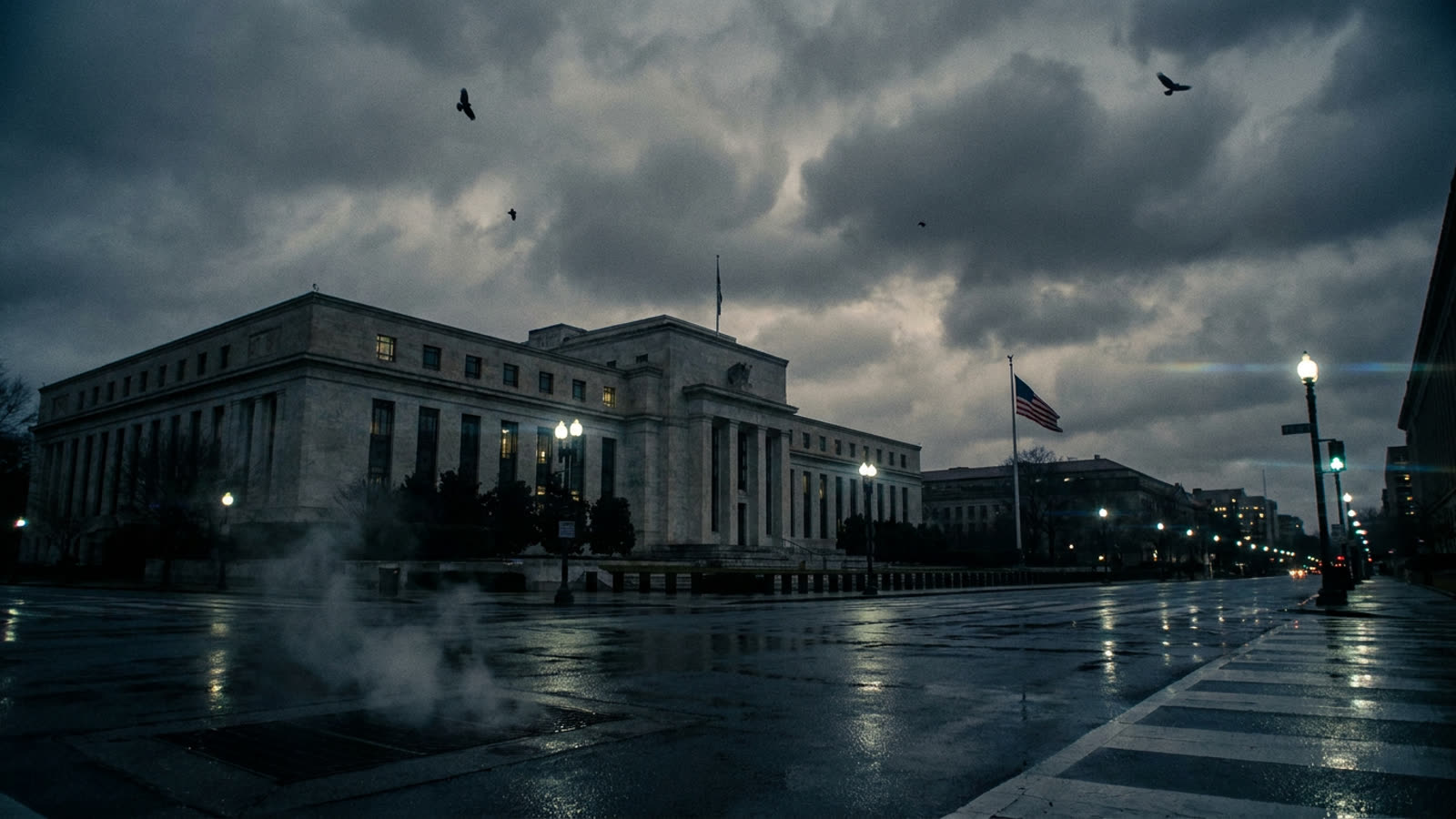
For months, the prevailing consensus among economists and central bankers has been that the global economy successfully threaded the needle—taming inflation without triggering a recession. The bond market, that cold-eyed arbiter of collective financial wisdom, appears to disagree.
Yields on long-dated government debt have been climbing steadily across major economies, while the relationship between short and long-term rates has taken on configurations that historically precede economic contractions. This is not a fringe signal from some obscure indicator; the bond market is the largest, most liquid financial market on Earth, and when it speaks, the smart money pays attention.
What the curves are saying
The yield curve—the spread between short-term and long-term interest rates—has been one of the most reliable recession predictors for half a century. When it inverts (short-term rates exceeding long-term ones), a recession typically follows within 12 to 18 months. The curve inverted in 2022 and 2023, and while it has since normalized in some markets, the manner of that normalization matters enormously.
A "bear steepening," where long-term yields rise faster than short-term ones, often signals that investors expect either persistent inflation, unsustainable fiscal deficits, or both. That is precisely what we are seeing now. Ten-year Treasury yields have pushed higher even as the Federal Reserve has paused its rate-hiking cycle, suggesting the market believes inflation is stickier than central bankers admit, or that the flood of government debt issuance is finally overwhelming demand.
The fiscal elephant
Government borrowing has reached levels that would have seemed fantastical a generation ago. The United States is running deficits exceeding six percent of GDP during what is ostensibly a period of economic expansion—historically, deficits of this magnitude occur during recessions or wars, not peacetime growth. Japan, the United Kingdom, and much of the eurozone face similar dynamics, with aging populations demanding more spending precisely as interest costs consume larger shares of budgets.
Bond investors are not blind to this arithmetic. Higher yields are, in part, a demand for greater compensation to hold debt issued by governments whose fiscal trajectories look increasingly precarious. This creates a feedback loop: higher borrowing costs mean larger deficits, which mean more debt issuance, which pushes yields higher still.
The transmission mechanism
Why should ordinary people care about bond yields? Because they ripple through everything. Mortgage rates, corporate borrowing costs, and equity valuations all take their cues from the bond market. When yields rise, the cost of financing a home, a car, or a business expansion rises with them. Companies that loaded up on cheap debt during the zero-rate era now face refinancing at dramatically higher costs, which means less hiring, less investment, and, eventually, less growth.
The stock market's resilience in the face of rising yields has been remarkable, but it may also be temporary. Equity valuations remain elevated by historical standards, supported partly by the assumption that rates will eventually fall. If the bond market is right and rates stay higher for longer, that assumption will need revisiting.
Our take
The soft-landing narrative has been comforting, and it may yet prove correct. But the bond market's current posture suggests that the risks are skewed to the downside in ways that official forecasts do not fully capture. Investors and households alike would be wise to stress-test their assumptions against a world where borrowing costs remain elevated, growth disappoints, and the fiscal chickens finally come home to roost. The bond market has been wrong before, but its track record commands respect.