For months, the European Union watched the Iran-Israel conflict from the sidelines, issuing statements of concern while Washington and regional powers shaped events. That changed this week when Brussels sanctioned Iranian officials for restricting naval traffic through the Strait of Hormuz—a move that reveals less about European moral clarity than about where the continent's true red lines lie.
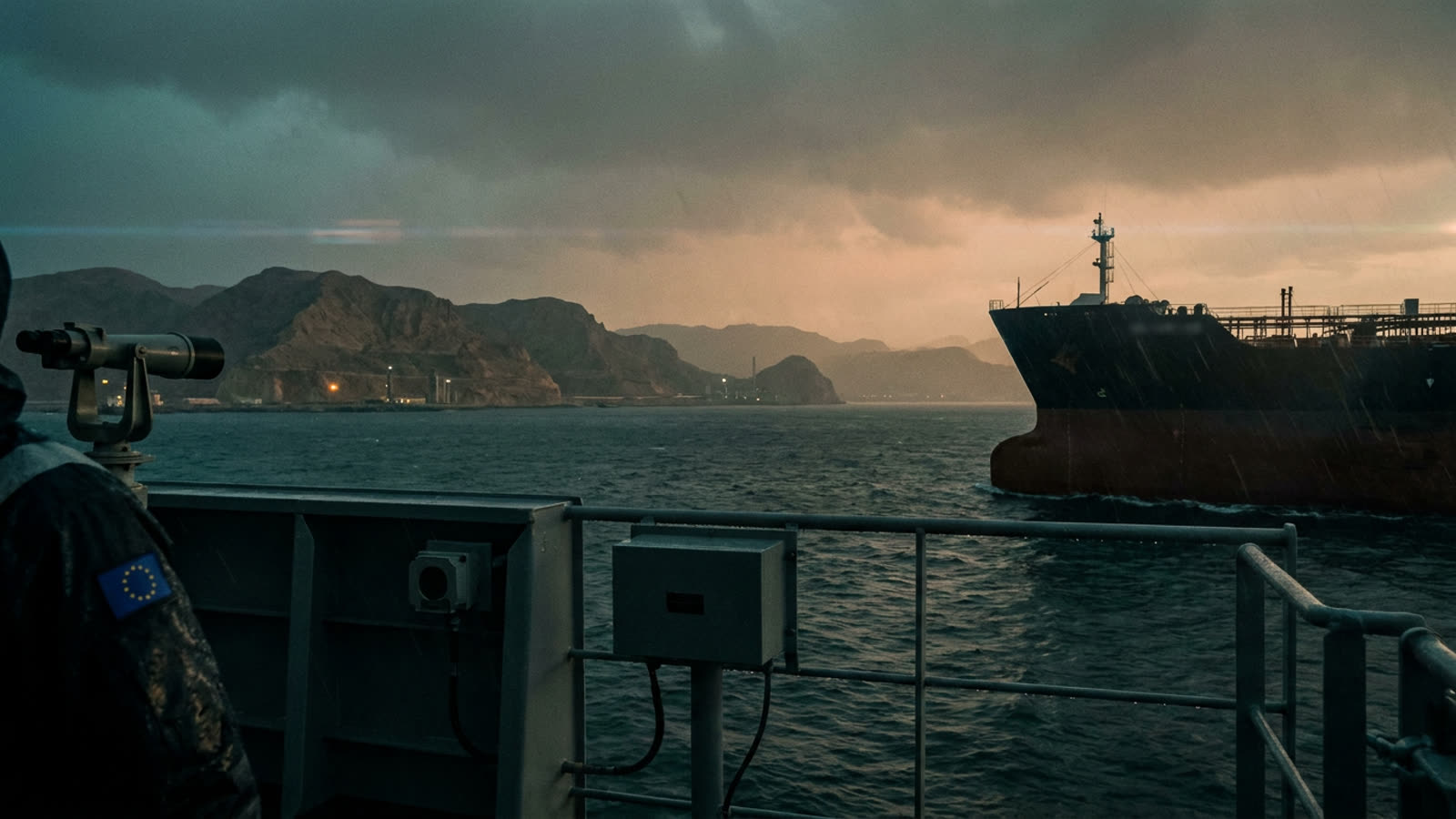
The sanctions target individuals responsible for Iran's increasingly aggressive posture in the narrow waterway through which roughly one-fifth of the world's oil passes daily. Tehran has used the threat of closure as leverage during the current crisis, slowing inspections, harassing commercial vessels, and creating insurance nightmares for tanker operators.
Why Hormuz matters more than headlines
Europe's energy dependence has only intensified since the 2022 break with Russian gas. The continent now relies more heavily on liquefied natural gas shipments, many of which transit or originate near the Persian Gulf. Any sustained disruption to Hormuz traffic would send European energy prices spiraling within days—a political catastrophe for governments already managing inflation-weary electorates.
The sanctions are narrowly crafted: they freeze assets and ban travel for specific Iranian naval and Revolutionary Guard commanders, rather than targeting the broader economy. This precision suggests Brussels wants to signal displeasure without provoking the very escalation it fears.
The limits of European power
What the EU cannot do is enforce freedom of navigation. That remains an American capability, and Washington has been notably restrained about deploying it during the current crisis. European navies lack the force projection to guarantee safe passage through contested waters, leaving Brussels in the awkward position of issuing sanctions it cannot back with hard power.
The timing is also telling. These sanctions arrive after Iran halted its latest strikes on Israel, suggesting Europe is more comfortable acting when immediate escalation risks have receded. Critics will note that Brussels found its voice only when oil prices spiked, not when missiles flew.
Our take
The EU's Hormuz sanctions are better understood as energy policy than foreign policy. Brussels has discovered that it will act decisively when its economic interests are directly threatened, even as it remains largely passive on the broader regional conflict. This is not hypocrisy so much as honesty about European priorities. The continent's leaders have decided that stable energy markets matter more than shaping Middle Eastern outcomes—a defensible position, if not an inspiring one. At least now everyone knows the price of European attention.