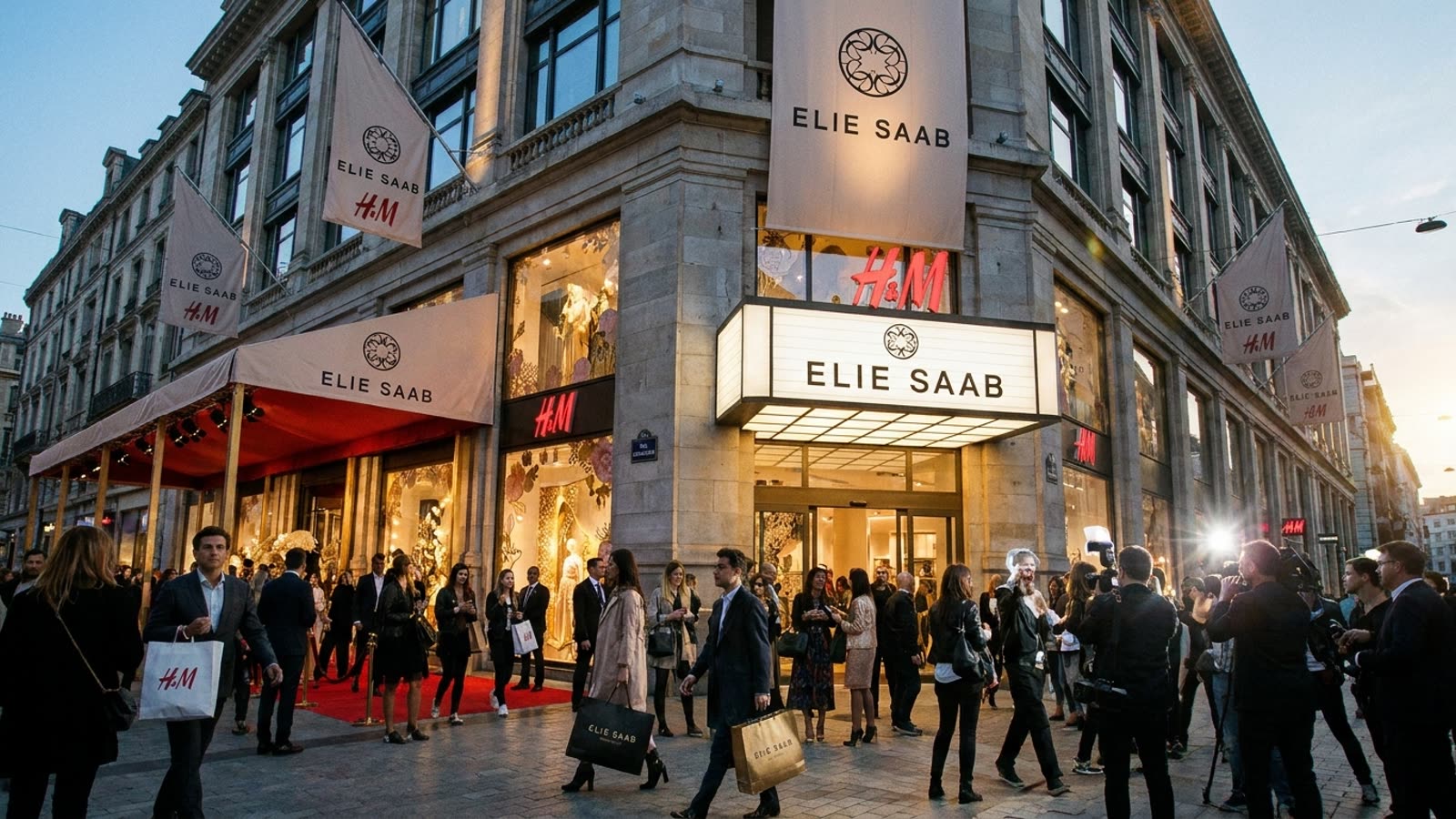
For three decades, Elie Saab has operated as Hollywood's unofficial uniform supplier for women who want to look expensive without looking like they tried. His confections—all cascading tulle, strategic embroidery, and that particular shade of blush that photographs like a dream—have appeared on enough Oscar stages and Met Gala carpets to constitute a visual language unto themselves. Now the Beirut-born designer is doing something his peers have long considered beneath them: making his aesthetic accessible to anyone with an H&M nearby.
The collaboration, announced this week, represents the latest chapter in fast fashion's ongoing courtship of high fashion credibility. But unlike previous H&M partnerships with Balmain or Versace, which traded on logos and attitude, Saab brings something more difficult to replicate at scale: genuine technical virtuosity in eveningwear. The question isn't whether the collection will sell out—it will, within hours—but whether Saab can translate his house's DNA into polyester blends without losing what makes it covetable in the first place.
The Saab formula
What distinguishes Elie Saab from his couture contemporaries is consistency bordering on stubbornness. While other houses chase relevance through creative director roulette and provocative runway statements, Saab has spent decades perfecting a single proposition: make women look like the best possible version of themselves at their most important moments. His client list reads like a casting director's fever dream—Beyoncé's 2024 Renaissance tour, Zendaya at virtually every major premiere, Halle Berry's perpetual red carpet dominance. These women return to Saab because his designs photograph beautifully, move gracefully, and never upstage the wearer.
This restraint has made Saab phenomenally successful but critically underappreciated. Fashion's tastemakers prefer designers who challenge and provoke; Saab simply delivers. His runways are gorgeous but rarely generate the discourse that drives modern fashion coverage. The H&M collaboration might, paradoxically, earn him more cultural conversation than any couture collection.
Fast fashion's credibility play
H&M's designer collaborations have always served a dual purpose: generate publicity through artificial scarcity while borrowing the cultural capital of houses that would never otherwise associate with $49.99 price points. The Swedish retailer has cycled through nearly every major name willing to participate, from Karl Lagerfeld's 2004 debut collaboration to more recent partnerships with Mugler and Rabanne.
Saab represents a strategic pivot. Unlike streetwear-inflected collaborations that appeal to hype-driven younger consumers, an eveningwear-focused partnership targets a different demographic entirely: women who need something to wear to a wedding, a gala, a significant birthday—occasions that demand elevated dressing but don't justify couture prices. This is the market Reformation and Needle & Thread have quietly dominated, and H&M clearly wants in.
Our take
The fashion industry's perpetual anxiety about democratization—that accessibility inevitably degrades desirability—has always been more neurosis than economics. Saab's couture clients aren't shopping at H&M, and H&M's customers aren't suddenly going to start commissioning bespoke gowns. What this collaboration actually accomplishes is simpler: it introduces Saab's visual vocabulary to millions of women who will now recognize his work when they see it on a red carpet, building the kind of cultural awareness that sustains luxury houses across generations. The sparkle trickles down; the prestige, somehow, doesn't.