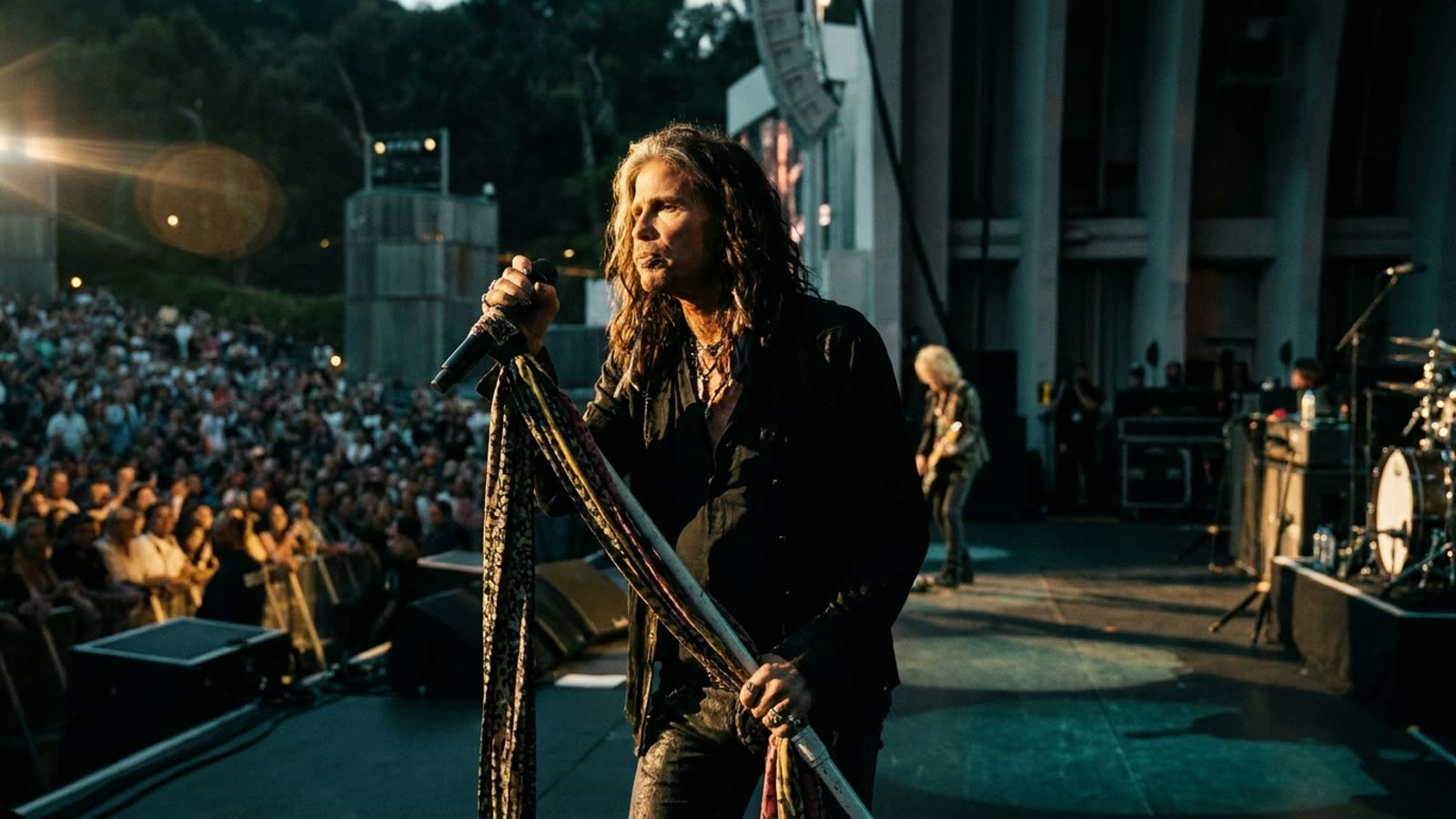
Steven Tyler walked onto the Hollywood Bowl stage Thursday night and the first thing he did was laugh. Not a showman's cackle, not a rock-god sneer—just the bemused chuckle of a man who wasn't entirely sure this moment would ever arrive. Three years after vocal cord damage forced Aerosmith to cancel their farewell tour, the band that defined American hard rock for half a century was back, and they'd assembled a guest list that read like a Rock and Roll Hall of Fame roll call.
Dave Grohl joined for a thunderous "Walk This Way." Johnny Depp, whose Hollywood Vampires project has kept him adjacent to this world, appeared for "Train Kept A-Rollin'." Guns N' Roses and the Black Crowes opened with tribute sets, turning the evening into something between a concert and a coronation.
The medical miracle nobody expected
When Aerosmith announced their retirement in late 2023, the prognosis was grim. Tyler's vocal cord hemorrhage had caused permanent damage, and the band's statement was unequivocal: "Steven's voice is his identity. We've made the heartbreaking decision to retire from touring." What changed remains somewhat opaque—the band has been cagey about specifics—but Tyler's performance Thursday suggested either remarkable recovery or remarkable adaptation. The scream isn't what it was in 1975, or even 2015, but the phrasing, the swagger, the sheer presence remain intact.
A format that acknowledges mortality
These Hollywood Bowl shows—the second runs tonight—represent a new model for legacy acts navigating physical limitations. Rather than grinding through a 40-city tour, Aerosmith has opted for destination events: two nights, maximum production value, guest appearances that justify the pilgrimage. It's the concert-as-experience approach that residencies pioneered, but with the added weight of genuine uncertainty about whether there will be more.
The ticket prices reflected this calculus. Floor seats reportedly exceeded $2,000 on the secondary market, and the venue was packed with the particular intensity of crowds who suspect they're witnessing something unrepeatable.
Our take
Rock nostalgia is usually a melancholy business—watching legends diminish in real time, pretending the magic still works. Thursday's show was something rarer: an acknowledgment that bodies fail but bands don't have to die badly. Tyler and company have found a way to be present without being pathetic, to celebrate their catalog without becoming a museum exhibit. Whether this becomes a template for other aging acts or remains a one-off triumph depends on variables nobody can predict. But for one night in Hollywood, Aerosmith proved that knowing when to stop doesn't mean knowing how to quit.