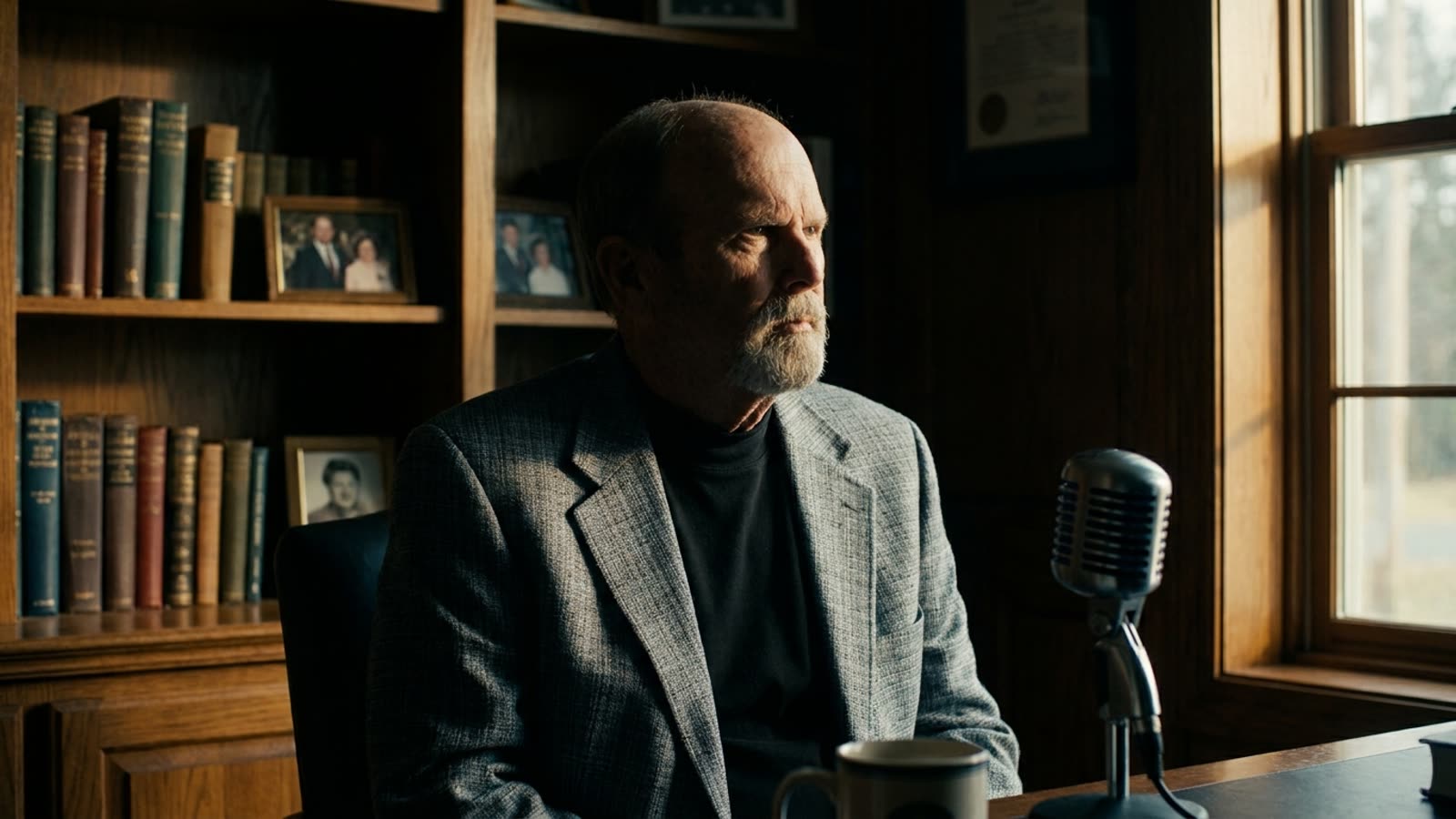
The children of American political dynasties have always occupied an awkward middle ground between public service and public curiosity, but Doug McCain—son of the late Senator John McCain—appears to be charting a distinctly 2026 path through that territory. Rather than seeking office or retreating into private life, the younger McCain has been cultivating a media presence that trades on family name recognition while steering clear of the partisan trenches that defined his father's career.
This is not, strictly speaking, new. The Kennedy offspring have been tabloid fixtures for generations; the Bush daughters wrote memoirs; Chelsea Clinton became a network correspondent. But Doug McCain's approach feels calibrated for an era when political celebrity and entertainment celebrity have become nearly indistinguishable currencies.
The inheritance question
John McCain died in August 2018, nearly eight years ago now, leaving behind a complicated legacy: war hero, maverick senator, two-time presidential candidate, occasional Trump antagonist. His children inherited varying degrees of public interest. Meghan McCain leveraged hers into a combative stint on The View and a career as a conservative media personality. Doug, by contrast, has operated with a lighter touch—more lifestyle content than political commentary, more personal brand than ideological platform.
The distinction matters. In a media landscape saturated with political rage, there is apparently an audience for political-adjacent figures who decline to engage with politics directly. Doug McCain can invoke his father's name, benefit from the associated gravitas, and sidestep the exhausting discourse that would follow any substantive policy position.
Dynasty economics
The business model here is familiar from other realms of inherited celebrity. The Hadid sisters did not invent modeling, but their mother's fame accelerated their careers. Brooklyn Beckham's photography and cooking ventures trade explicitly on the Beckham brand. What Doug McCain represents is the political equivalent: a second-generation figure whose primary asset is recognizability rather than accomplishment.
This is not a criticism so much as an observation about how fame metabolizes in the content economy. The McCain name carries bipartisan nostalgia—Democrats remember John McCain's thumbs-down vote on Obamacare repeal; Republicans remember his military service and presidential campaigns. That broad-spectrum recognition is valuable precisely because it is not polarizing in the way that, say, the Trump children's brands are polarizing.
Our take
Doug McCain is doing something perfectly rational: converting inherited cultural capital into a sustainable media presence without the psychic costs of actual political engagement. Whether this represents a healthy evolution of American dynasty culture or a depressing commentary on the fungibility of fame is largely a matter of taste. What it definitely represents is the logical endpoint of a system that has always rewarded famous last names—now optimized for the algorithm age.