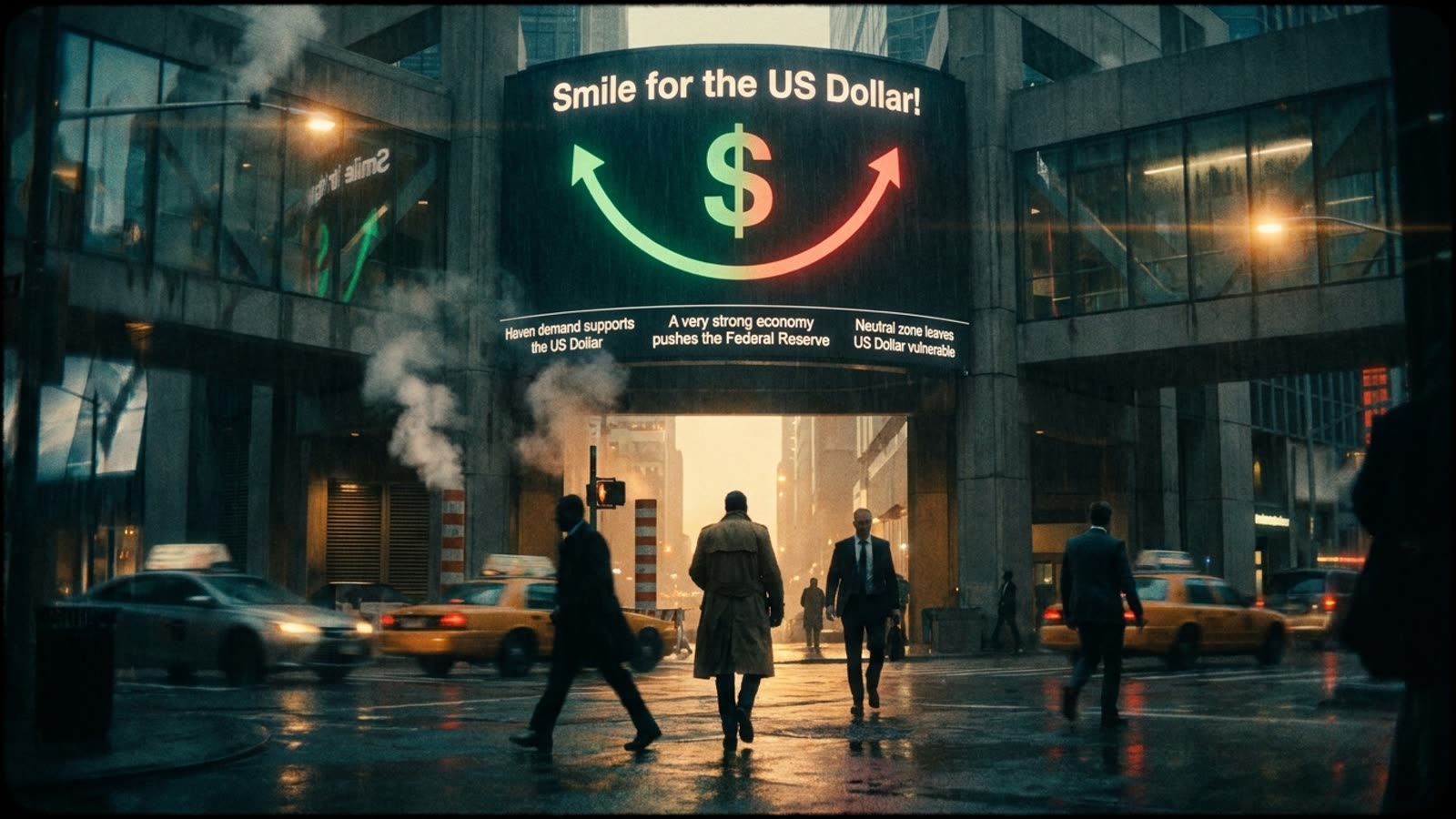
The most counterintuitive idea in macroeconomics right now isn't about inflation or interest rates. It's about why the world's most indebted major economy might see its currency strengthen relentlessly, sucking capital from every corner of the globe like a giant straw drawing up the last drops of a milkshake.
The Dollar Milkshake Theory, popularized by Santiago Capital's Brent Johnson, posits that the structural architecture of the global financial system will force the dollar higher regardless of America's domestic fundamentals. The thesis sounds almost paradoxical: the worse things get globally, the stronger the dollar becomes, precisely because the world has built its financial plumbing around greenback liquidity.
The Plumbing Problem
The theory rests on a simple observation about global debt. Somewhere north of $12 trillion in dollar-denominated debt sits outside the United States, owed by foreign governments, corporations, and financial institutions. When global conditions tighten — whether from a pandemic, a financial crisis, or simply the Federal Reserve raising rates — these borrowers must still service their dollar obligations. They need dollars. Desperately.
This creates a reflexive dynamic. As dollars become scarcer, the currency appreciates. As it appreciates, the real burden of dollar debt increases for foreign borrowers. They scramble harder for dollars, pushing the currency higher still. The straw keeps sucking.
Critics argue this is just a repackaging of familiar concepts about the dollar's reserve status. They're partially right. But the milkshake framing captures something important: the feedback loop between dollar strength and global distress isn't a bug in the system. It's a feature, built into decades of financial architecture that assumed American monetary policy would remain accommodative forever.
Winners and Wreckage
If the theory plays out, the implications are stark. American consumers would enjoy cheaper imports while the rest of the world watches their purchasing power evaporate. Emerging markets with substantial dollar debt — and there are many — would face currency crises and potential defaults. Commodity prices, priced in dollars, would become crushing burdens for importing nations.
The United States wouldn't escape unscathed. A dramatically stronger dollar would devastate American exporters and manufacturers, accelerating the hollowing-out of industrial capacity. Corporate earnings from overseas operations would translate into fewer dollars. The political pressure for intervention would become immense.
Japan and Europe would face particularly acute dilemmas. Their central banks have spent years suppressing interest rates and expanding balance sheets. A dollar surge would force impossible choices: defend their currencies by raising rates into already fragile economies, or accept imported inflation and capital flight.
Our take
The Dollar Milkshake Theory isn't a prediction so much as a stress test. It asks what happens when the assumptions underlying global finance — that liquidity will always be available, that the dollar will remain stable, that American policymakers will prioritize global stability — prove wrong. The honest answer is that nobody knows, because we've never unwound a system this interconnected. What makes the theory valuable isn't its certainty but its clarity about the stakes. The world built a financial system with the dollar at its center and then forgot that centers can become vortexes.