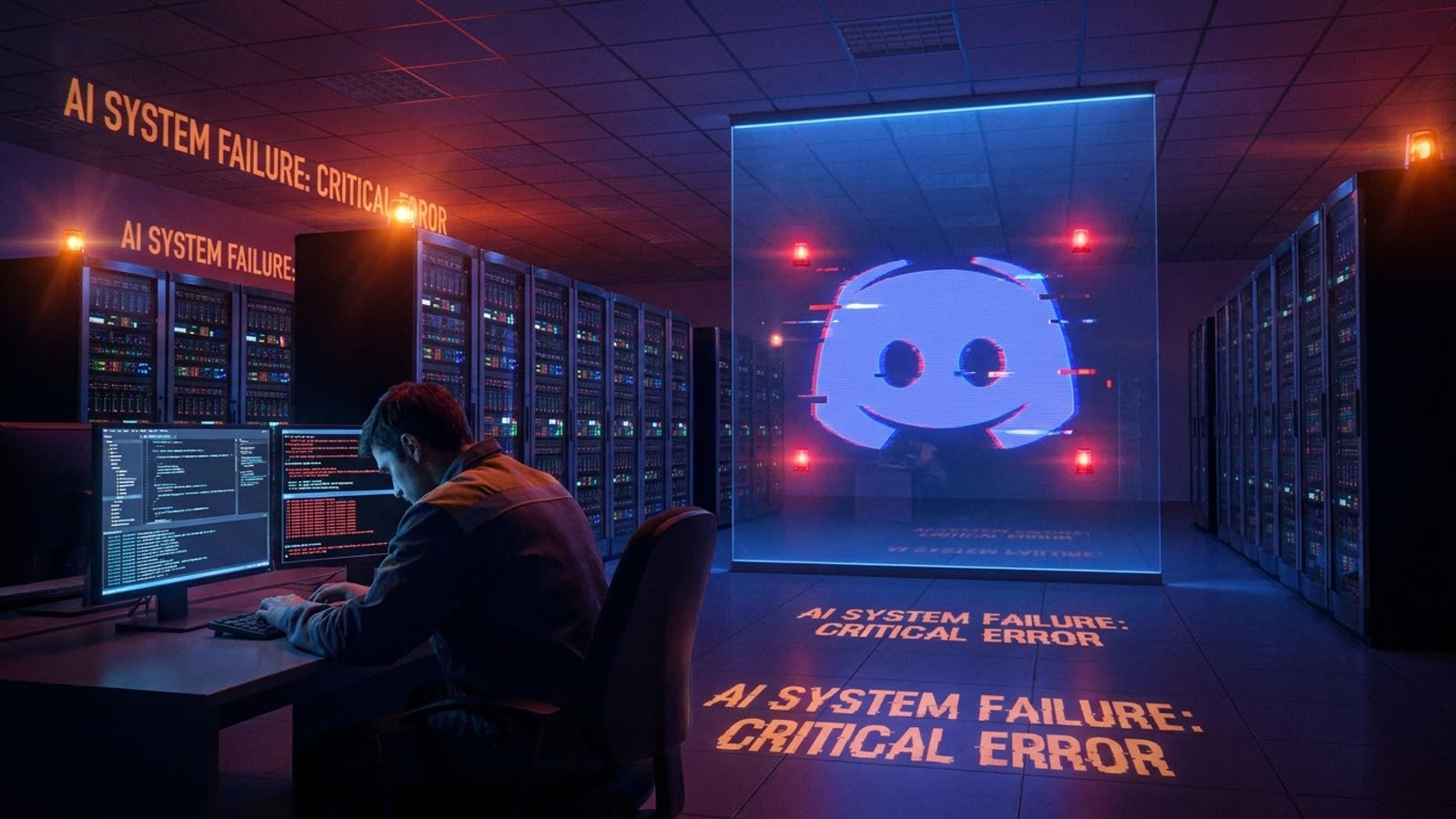
Discord has admitted that its AI-powered moderation system malfunctioned, wrongfully banning users for posting entirely innocuous images. The company's acknowledgment — buried in support channels rather than trumpeted in a press release — illuminates a problem that extends far beyond one gaming-focused chat platform: the companies most aggressively deploying AI moderation are the least equipped to handle its inevitable failures.
The bug apparently triggered false positives that flagged harmless content as policy violations, resulting in account suspensions for users who had done nothing wrong. Discord has not disclosed how many users were affected or how long the faulty system operated before detection.
The scale problem nobody wants to discuss
Discord processes hundreds of millions of messages daily across its servers. Human moderation at that scale is economically impossible — the company would need to employ a small city's worth of content reviewers. AI moderation is not a choice; it is an inevitability for any platform operating at internet scale.
But the technology remains fundamentally unreliable. Image classification systems struggle with context, sarcasm, artistic expression, and the thousand edge cases that humans navigate intuitively. A photo of a Renaissance painting, a medical diagram, or a film screenshot can all trigger systems trained to detect prohibited content. The AI sees pixels; it does not see meaning.
The accountability vacuum
What makes Discord's situation particularly instructive is the company's response architecture. Users discovered their bans through automated messages. Appeals went through automated systems. The humans who might have caught the error were several layers removed from the front lines.
This is not a Discord-specific problem. Meta, TikTok, YouTube, and X all operate similar systems with similar failure modes. The platforms have collectively decided that some percentage of wrongful enforcement is an acceptable cost of doing business — a calculation they rarely share with users.
Our take
Discord deserves modest credit for acknowledging the bug rather than quietly reversing bans and hoping nobody noticed. But acknowledgment is the bare minimum. The harder question is whether platforms will ever invest in the human infrastructure needed to catch AI failures before they harm users, or whether wrongful bans will simply become another externality that users absorb while shareholders collect the efficiency gains. The answer, based on current incentive structures, is not encouraging.