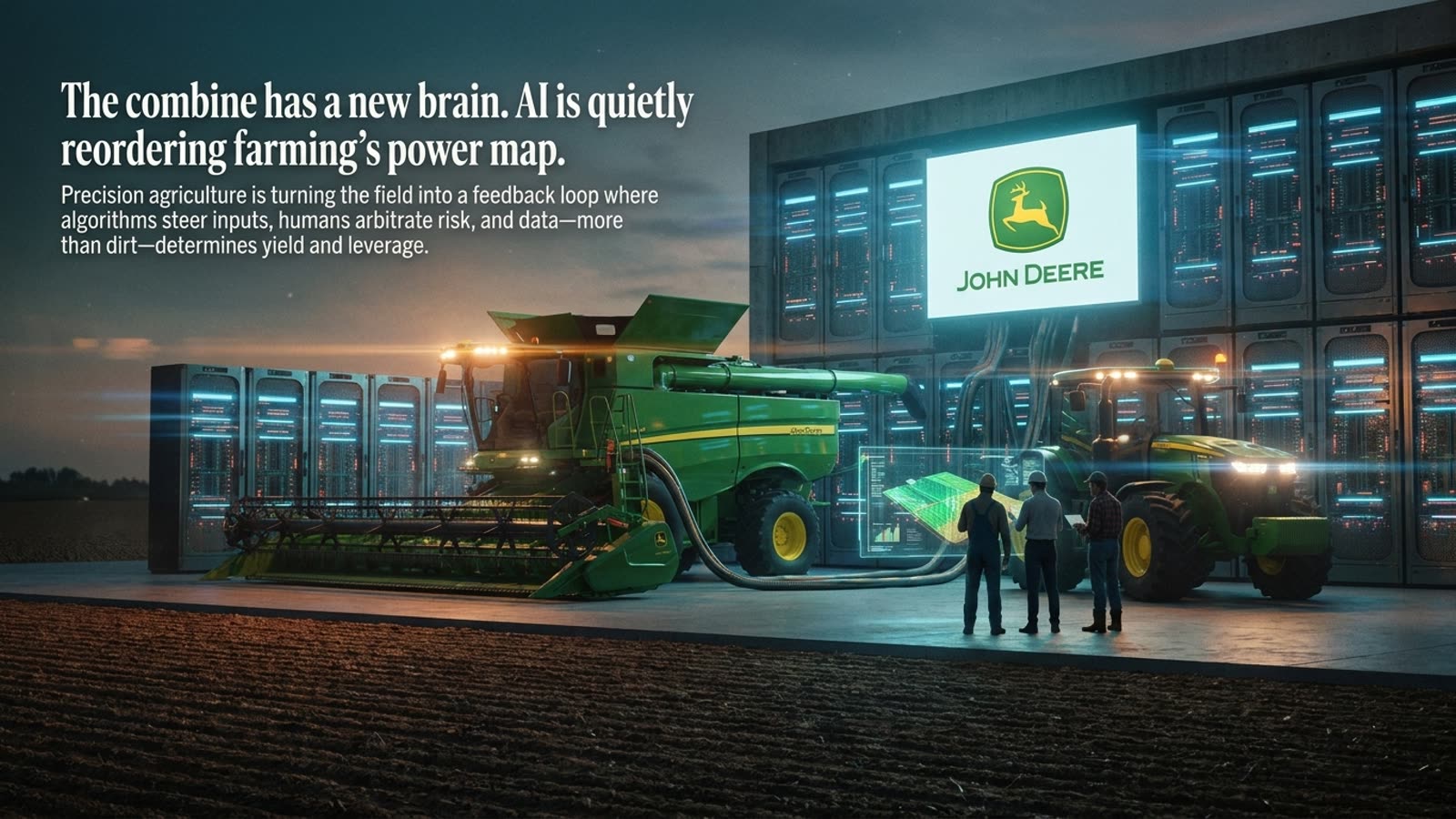
Farming is becoming a software business in muck boots. The point of artificial intelligence in agriculture is not to replace the farmer; it is to arbitrate thousands of small, consequential choices—where to seed densely, when to irrigate, which leaf is a weed—at speeds and spatial resolutions that turn the field into a living spreadsheet. That shift is recoding the industry’s economics: decisions once driven by rules of thumb are moving to models, and value is pooling around those who own the data, the onboard compute, and the interface to the operator.
From steel to silicon: machines that see, predict, and act
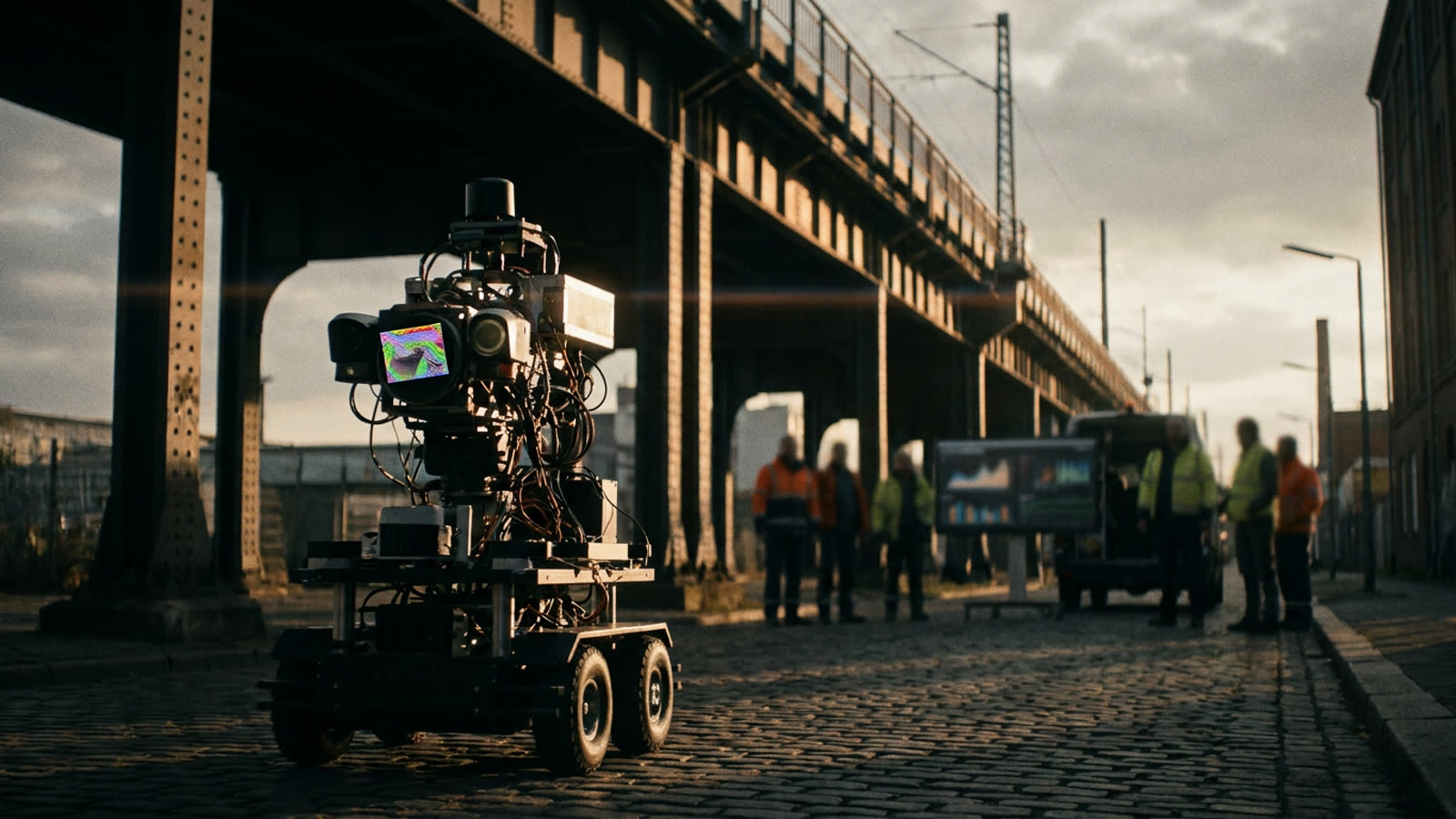
Computer vision now lets implements distinguish crop from weed in real time, cutting chemical use by targeting only what needs to be hit. Variable-rate systems meter seed and fertilizer row by row, guided by yield maps that blend multispectral drone or satellite imagery with weather and soil data. In specialty crops, autonomous or supervised autonomy kits creep through orchards to shuttle bins and mow between trees; in row crops, driver-assist lines up tools with uncanny steadiness. Because connectivity in the countryside is patchy, much of this inference happens at the edge—on a tractor’s compute stack—syncing when a signal appears. The common thread: AI reduces routine labor while raising the premium on calibration and oversight. It is less autopilot than an ultra-attentive co-pilot that never blinks.
Data is the new cash crop—and the fight over who owns it
Every pass across a field now generates telemetry: pass-to-pass overlap, block-by-block yields, machine health, implement settings. Equipment makers and input companies increasingly bundle that stream into cloud platforms and subscription services. The result is a new kind of lock-in: agronomic recommendations become embedded in proprietary dashboards, and diagnostic features can live behind paywalls. Farmers want portability—the ability to move their data, mix tools, and choose analytics without losing history. Cooperatives and independent agronomists are responding with data-sharing agreements and, in some cases, nascent trusts to pool leverage. The unresolved questions are old ones in new clothes: who gets paid for the feedback loop, who is liable when an algorithm misfires, and how transparent the black box must be to win trust.
Labor, risk, and the rural software stack
AI changes the job description more than the job count. The best equipment operator starts to look like a fleet manager and data steward, juggling prescriptions, calibrations, and alerts. Technicians who can debug sensors and firmware are suddenly as critical as diesel mechanics. Extension services and input dealers act as human-in-the-loop translators between models and messy fields. Meanwhile, climate volatility raises both the stakes and the brittleness: models trained on yesterday’s weather and last decade’s hybrids can drift when seasons arrive early or not at all. Seasonality slows learning cycles; you only get so many tries at planting or harvest. That tilts design toward systems that fail safe and explain their confidence, because an edge-case mistake at the wrong week is not a minor bug—it’s a season.
Our take
The biggest winners will pair agronomy with software and consentful data practices. Hardware matters, but the moat is trust: transparent models, clean exits from platforms, and service that shows up when the rain doesn’t. AI in agriculture is not a revolution you notice from the highway; it’s the quiet compounding of better decisions. The power shift is real. Whether it’s equitable depends on who holds the keys to the data layer—and how willing they are to share.