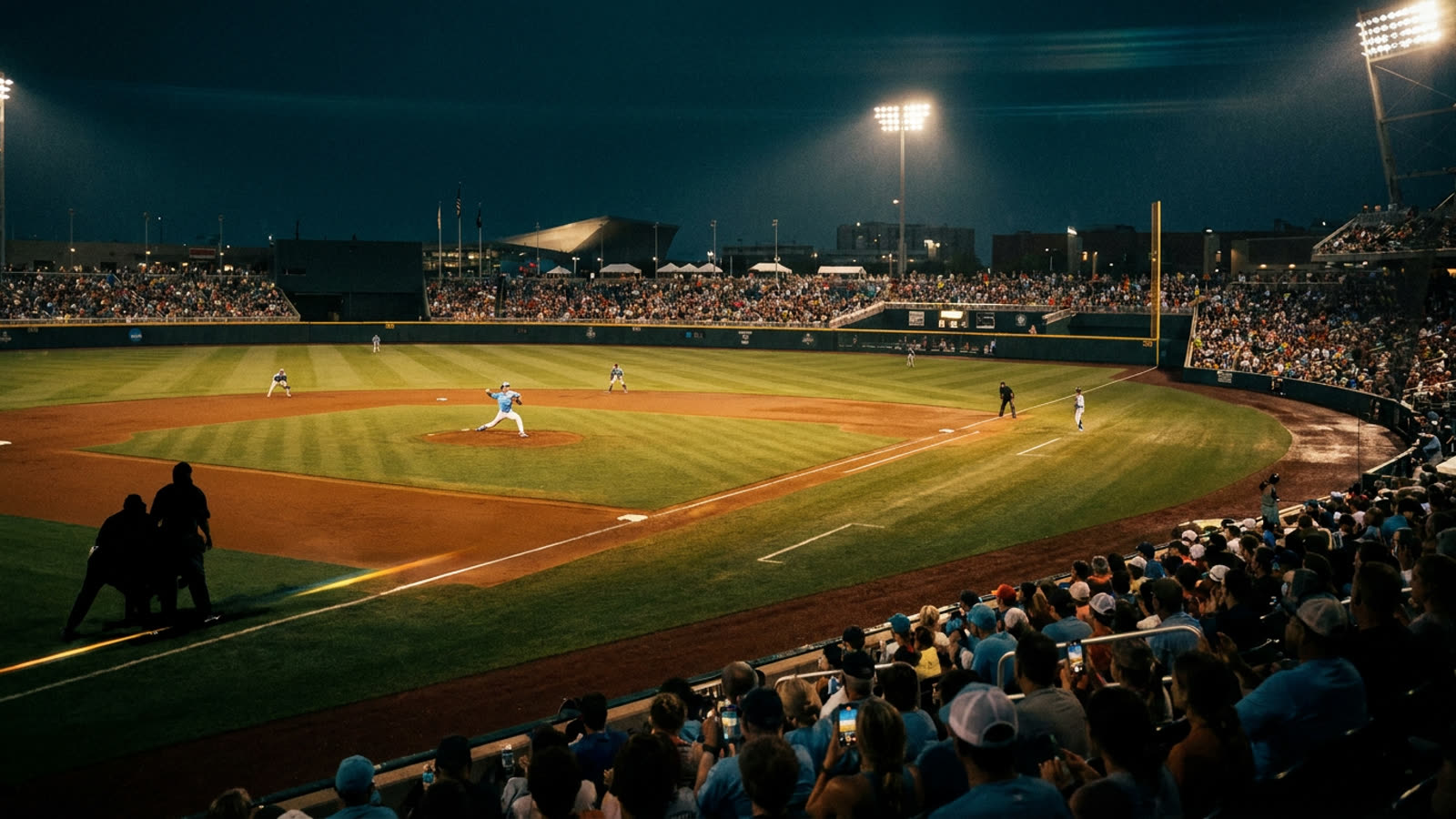
College baseball's championship series has a gift for the theatrical, and the 2026 Men's College World Series finals are proving no exception. North Carolina and Oklahoma traded victories on Father's Day in Omaha, each team seizing a game in what became an emotional showcase of the sport's peculiar intensity—part pastoral Americana, part white-knuckle tournament pressure.
The split means everything now rides on a single elimination game, the format college baseball purists have always argued produces the sport's most compelling theater.
Why the MCWS still captivates
The College World Series occupies a strange position in American sports: beloved by a devoted subset of fans, largely ignored by the casual mainstream, yet consistently delivering drama that rivals anything the professional leagues produce. The tournament's double-elimination format, condensed timeline, and the knowledge that most of these players will never reach the majors creates a now-or-never urgency that professional baseball, with its 162-game slog, cannot replicate.
North Carolina arrived in Omaha as the tournament's hottest team, riding a wave of momentum through the bracket. Oklahoma, meanwhile, has become a fixture in the finals conversation under Skip Johnson, though the Sooners have found championship hardware elusive in recent years. The matchup promised contrast: Carolina's pitching depth against Oklahoma's offensive firepower.
The Father's Day factor
Beyond the tactical chess match, the Father's Day setting added an emotional layer that players from both teams acknowledged. College baseball, perhaps more than any other major American sport, remains a family affair—parents who drove to countless summer showcases, fathers who threw batting practice in backyards, families who sacrificed for the dream of seeing their son play in Omaha. The TD Ameritrade Park crowd reflected this, with the usual mix of school colors punctuated by multigenerational family groups treating the doubleheader as both sporting event and reunion.
The split result means both fanbases endured the particular agony of watching their team lose on the holiday before experiencing the relief of the subsequent victory. Now everyone returns for the rubber match with emotions already wrung out.
Our take
Game Three scenarios are why the College World Series format works. Professional sports have largely abandoned true winner-take-all moments in favor of extended series that maximize television revenue. College baseball still offers the genuine article: two teams, one game, everything on the line. For a sport that struggles for mainstream attention, these finals represent the annual reminder that the product, when the stakes are right, needs no apology. Whoever wins in Omaha will have earned it the old-fashioned way.