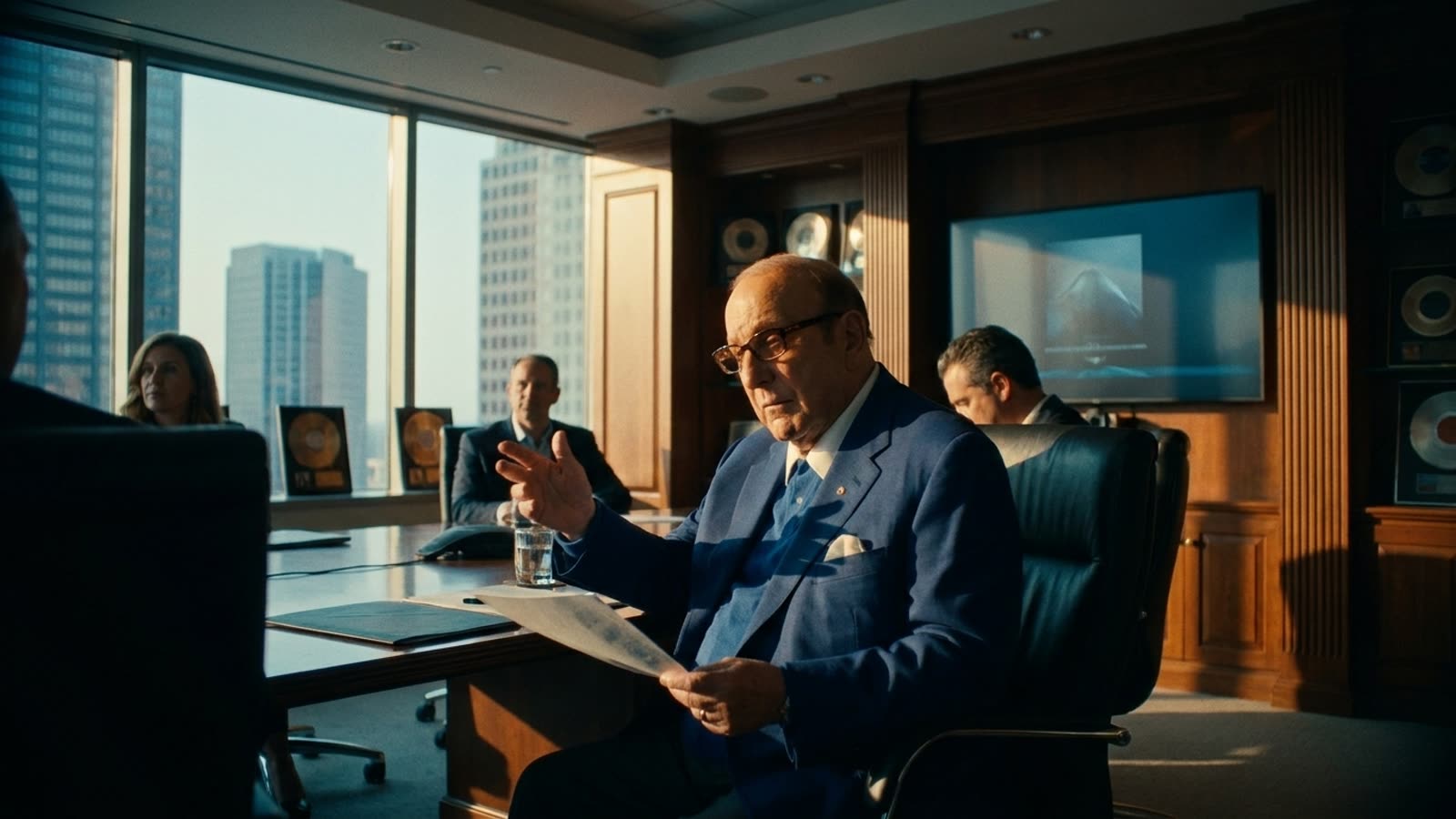
Clive Davis did not discover talent so much as manufacture inevitability. The music executive, who died Sunday at 94, possessed a gift that no algorithm has yet replicated: the ability to hear a voice in a demo tape and see a stadium tour, a fragrance line, a cultural moment that would define a decade. In an industry now ruled by playlist placement and TikTok virality, his death marks the end of something more than a career — it marks the end of a philosophy.
Davis's résumé reads like a history of American popular music. He signed Janis Joplin and Bruce Springsteen at Columbia, resurrected Aretha Franklin's career at Arista, and most famously transformed a Newark church choir singer named Whitney Houston into the best-selling female artist of all time. He did not simply sign artists; he sculpted them, matching voices with songs, images with moments, potential with machinery.
The art of the long game
What distinguished Davis from his contemporaries was patience — a quality the modern music business has systematically eliminated. He spent two years developing Whitney Houston before releasing her debut album, selecting every single, approving every photograph, building anticipation through strategic television appearances. The result was an artist who debuted at the top and stayed there for a generation.
This approach required something the streaming era cannot provide: capital deployed on faith. Davis bet millions on artists before they had proven anything, absorbing years of losses in exchange for decades of returns. Today's music economy, with its emphasis on viral moments and catalog acquisition, has no patience for such investments. Artists are expected to arrive fully formed, preferably with an existing social media following.
The paradox of his legacy
Davis's career also contained contradictions that his admirers prefer to overlook. His artist development model was paternalistic by design — he famously controlled every aspect of his signings' careers, from song selection to wardrobe. Whitney Houston's struggles with addiction and her complicated relationship with her mentor raise uncomfortable questions about the cost of being sculpted into perfection.
His annual pre-Grammy gala, which he hosted for over four decades, became a monument to his own influence, a ritual genuflection that the industry performed each February. Critics called it self-aggrandizing. They were not wrong. But Davis understood something essential: in an industry built on ephemera, longevity requires mythology.
Our take
Clive Davis represented a model of cultural gatekeeping that we have collectively decided to abolish. The democratization of music distribution means anyone can release a song; the collapse of artist development means almost no one gets the sustained investment that transforms raw talent into lasting artistry. We traded his paternalism for the algorithm's indifference. Whether that was a good trade depends entirely on whether you believe Whitney Houston would have found her audience on SoundCloud. She would not have. The question is whether that matters more than all the voices his system never heard.