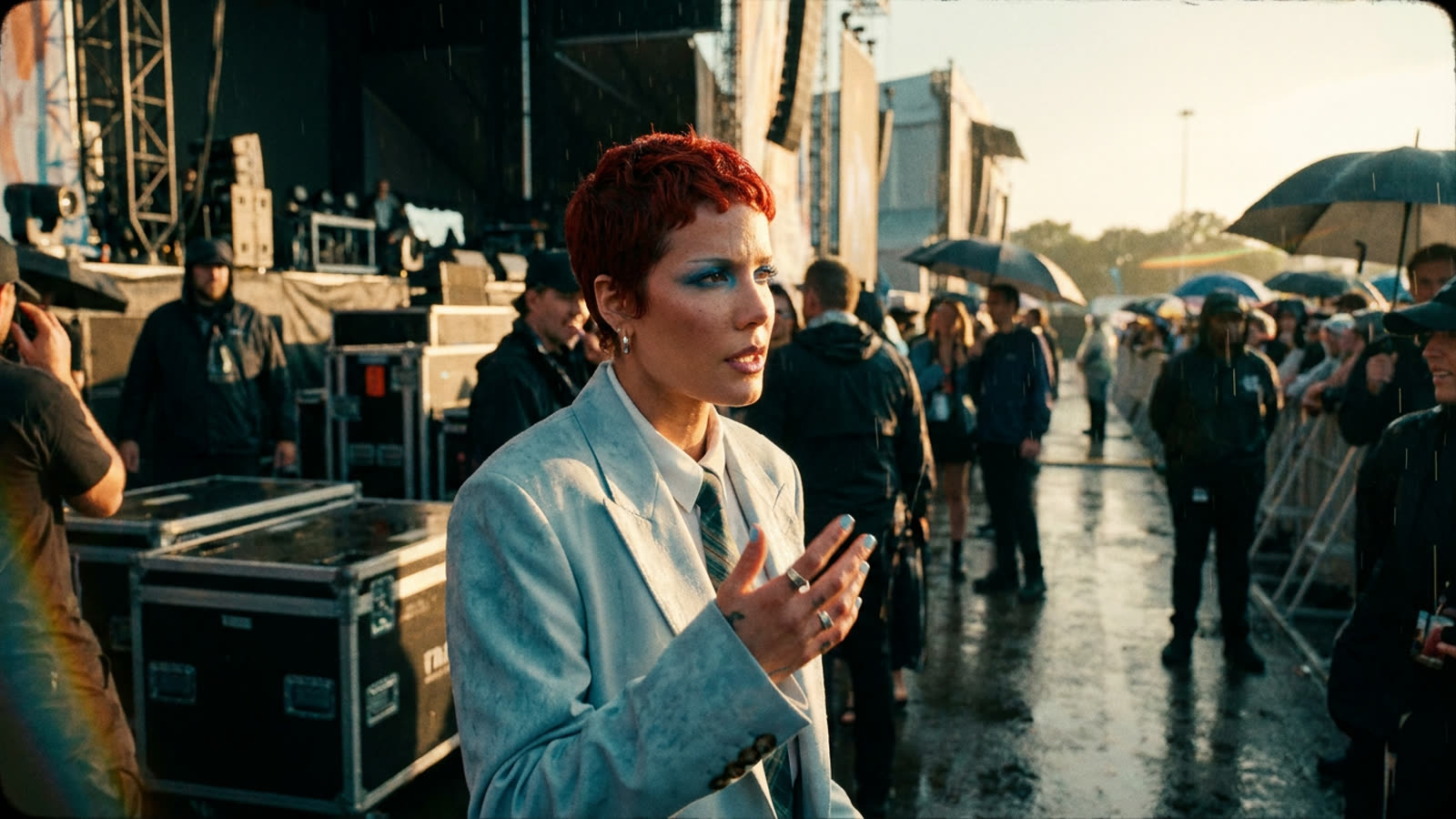
When Halsey fired back at a music critic this week, she wasn't just defending her latest work—she was articulating something artists rarely say aloud: the audience's nostalgia is not the artist's responsibility.
The exchange, which quickly circulated across social media, saw Halsey respond to criticism that her recent material strays too far from the sound that first made her famous. Her reply was measured but unmistakable: she has no interest in being a museum exhibit of her 2015 self.
The Nostalgia Trap
Pop music has always had a complicated relationship with artistic evolution. The industry rewards novelty in newcomers but punishes it in established acts. Fans who discovered an artist during a specific era often expect that era to last indefinitely—a demand that treats musicians less like creative beings and more like jukebox buttons.
Halsey's career illustrates the bind perfectly. She broke through with confessional electropop, pivoted toward rock influences, experimented with concept albums, and has consistently refused to repeat herself. Each shift earns praise from some quarters and accusations of betrayal from others. The critic in question apparently fell into the latter camp.
Why Artists Push Back Now
Social media has changed the power dynamic between artists and critics. A decade ago, a dismissive review lived in its publication and faded. Today, it circulates instantly, inviting pile-ons or defenses in real time. Artists who once maintained dignified silence now recognize that silence can be read as acceptance.
Halsey's response joins a growing tradition of musicians refusing to absorb criticism passively. Taylor Swift has addressed her detractors in lyrics. Billie Eilish has been blunt about the absurdity of expectations placed on young women in music. Chappell Roan set boundaries with aggressive clarity. The common thread: artists asserting that their creative choices are not up for committee approval.
The Broader Cultural Moment
This isn't merely about ego or thin skin. It reflects a genuine tension in how we consume art. Streaming platforms algorithmically serve listeners more of what they already like, reinforcing the expectation that artists should remain sonically static. Meanwhile, the artists themselves—human beings who age, change, and grow—find that expectation suffocating.
The criticism Halsey received wasn't that her new work is bad on its own terms. It was that it doesn't sound enough like her old work. That's not critique; it's a request for artistic stagnation dressed up as aesthetic preference.
Our take
Halsey's clap-back was satisfying precisely because it named something usually left implicit: critics and fans often confuse their personal attachment to a specific album with an objective standard the artist must meet forever. Artists owe audiences their best effort, not their past selves. If you want 2015 Halsey, the albums still exist. The woman, mercifully, has moved on.