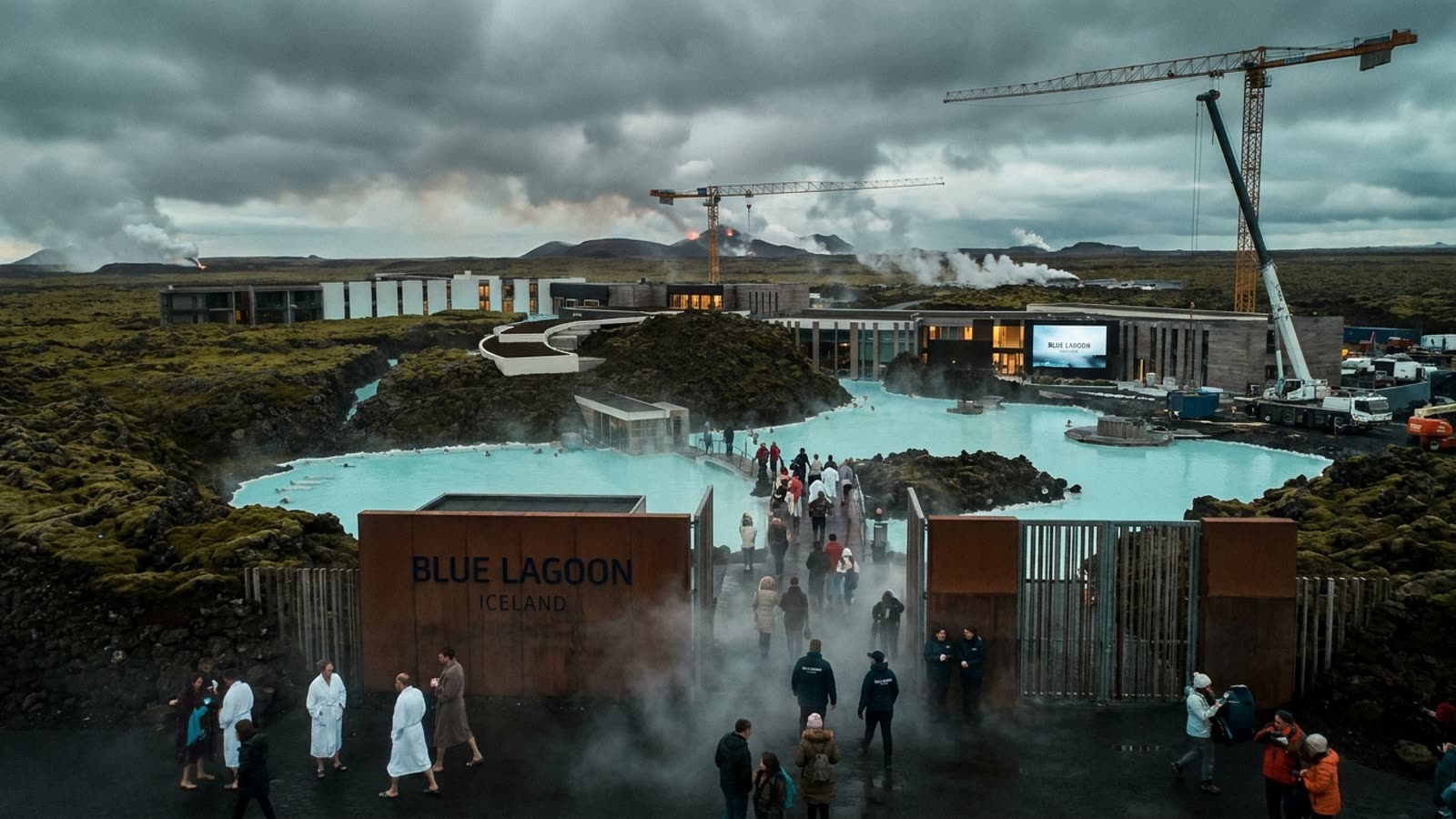
Few businesses have monetised geology quite like Blue Lagoon. The milky-blue geothermal pool, carved from a lava field on Iceland's Reykjanes Peninsula, has evolved from industrial accident—it was originally a waste pond for a nearby power plant—into a pilgrimage site for wellness tourists and a reliable ATM for its private-equity owners. Now those owners want out, and they are betting public-market investors will pay handsomely for the privilege of owning a spa perched on one of the most volcanically active zones in the North Atlantic.
The planned flotation, first reported by the Financial Times, would value the business at a level that reflects Iceland's remarkable tourism recovery. Visitor numbers have surged past pre-pandemic highs, with the country on track to welcome more than three million tourists this year—roughly eight times its population. Blue Lagoon, which charges upwards of €100 for a basic soak and considerably more for its on-site hotel suites, has been a primary beneficiary.
The volcano in the room
The timing is audacious. Since late 2023, the Reykjanes Peninsula has experienced a series of eruptions that have forced Blue Lagoon to close repeatedly, sometimes for weeks at a stretch. The nearby fishing town of Grindavík has been largely evacuated. Lava flows have come within kilometres of the spa's perimeter. Yet management is pressing ahead, arguing that the facility's infrastructure has proven resilient and that volcanic activity, paradoxically, has only heightened global fascination with Iceland's otherworldly landscape.
Investors will need to price that risk. Icelandic geologists have warned that the current eruptive phase could persist for decades, a geological blink but an eternity for equity holders. Insurance costs have climbed, and any future lava incursion would not merely damage property—it would obliterate the brand's core asset.
Growth plans and the overtourism question
Proceeds from the IPO are earmarked for expansion, including a planned mountain retreat in Iceland's interior. The strategy is to diversify revenue streams and reduce dependence on a single, geologically precarious site. But it also raises questions about Iceland's carrying capacity. Local authorities have grown increasingly vocal about infrastructure strain, and a new government formed after last year's elections has signalled a willingness to regulate tourist flows more aggressively.
Blue Lagoon's model—high prices, limited capacity, premium positioning—has insulated it somewhat from the budget-travel crowds that clog Reykjavík's streets each summer. Still, any regulatory tightening on tourism could crimp growth assumptions baked into the IPO valuation.
Our take
This is a fascinating test case for experiential-tourism investing. Blue Lagoon has built something genuinely scarce: a brand so synonymous with a destination that the two are almost interchangeable. But scarcity cuts both ways. The company cannot relocate if the earth decides otherwise, and its growth ambitions depend on a regulatory and geological environment that neither management nor shareholders can control. At the right price, it is a compelling bet on Iceland's enduring appeal. At the wrong price, it is a luxury asset sitting on a fault line—literally.