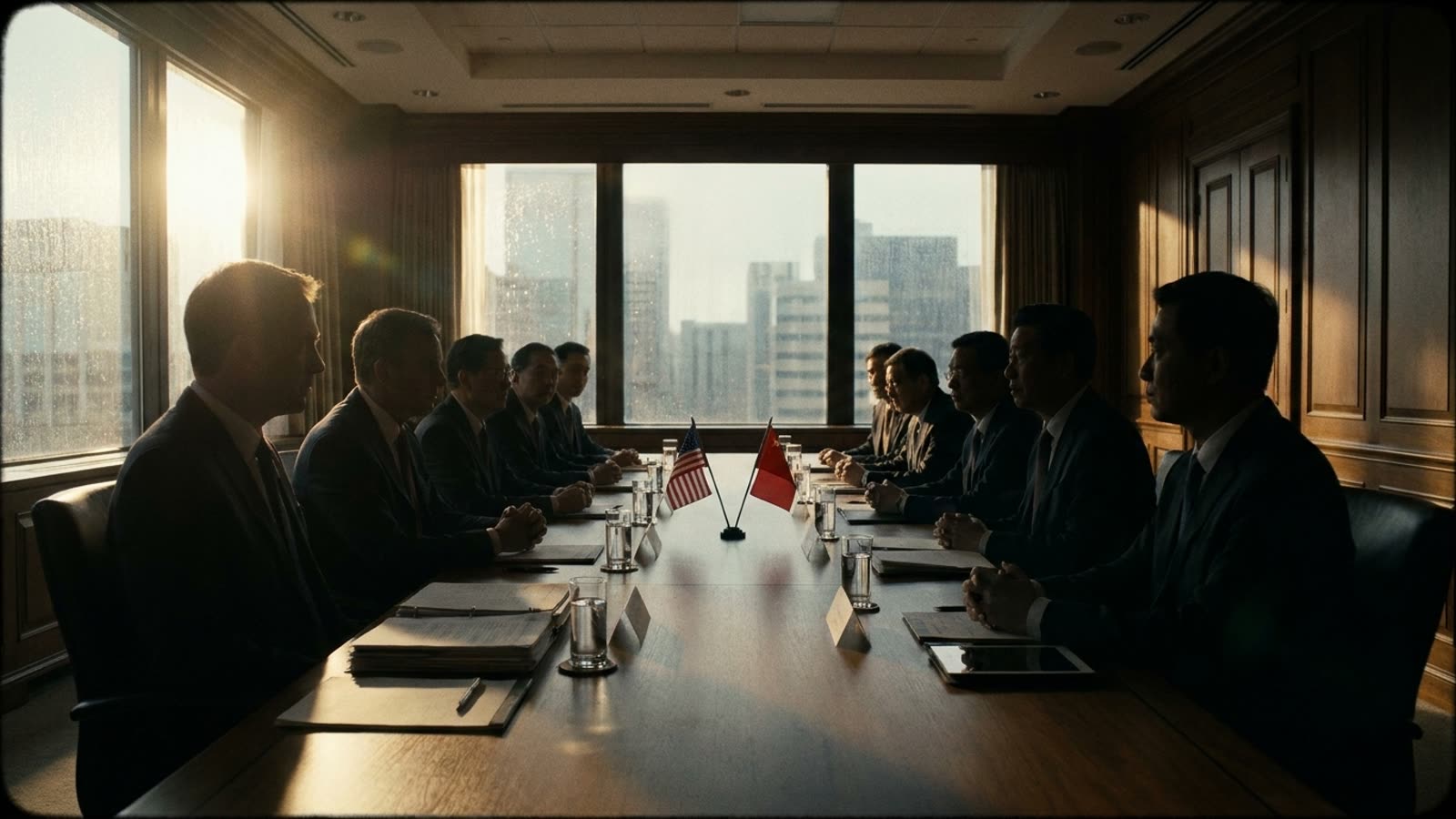
The headlines have moved on. Inflation, midterms, and Middle Eastern oil shocks have crowded out the once-dominant narrative of US-China economic confrontation. But the trade war between the world's two largest economies has not concluded—it has merely entered a quieter, more dangerous phase. The tariffs remain in place. The supply chain decoupling continues. And neither capital has done anything substantive to prevent the next flare-up.
What passes for peace is really exhaustion. The Trump administration, consumed by domestic political calculations ahead of Tuesday's midterms, has little appetite for a fresh tariff offensive that could spike consumer prices further. Beijing, managing its own property-sector hangover and sluggish domestic demand, prefers stability to confrontation. This mutual convenience has produced a ceasefire, not a settlement.
The tariffs that never left
The architecture of economic hostility erected since 2018 remains largely intact. Hundreds of billions of dollars in Chinese goods still face elevated duties. Beijing's retaliatory tariffs on American agricultural and industrial products persist. The Phase One trade deal signed in early 2020—remember that?—was never fully implemented and has effectively lapsed into irrelevance. Neither side has proposed a successor framework.
Meanwhile, the Biden-era technology restrictions have been maintained and, in some cases, tightened under Trump's return. Semiconductor export controls, entity-list designations, and investment screening mechanisms continue to constrain the flow of advanced technology to China. Beijing has responded with its own export controls on critical minerals and accelerated efforts toward technological self-sufficiency. The decoupling is structural, not cyclical.
Why the calm is misleading
Markets have largely priced in the status quo, treating the current tariff regime as a permanent feature of the trading landscape rather than an ongoing dispute. This complacency is dangerous. The conditions that produced the original trade war—persistent US trade deficits, Chinese industrial policy, intellectual property concerns, and great-power rivalry—have not been addressed. They have been deferred.
Any number of triggers could reignite active hostilities: a Taiwan Strait incident, a Chinese economic stimulus that floods global markets with subsidized goods, or simply a post-midterm Trump administration looking for foreign policy wins. The infrastructure for rapid escalation—legal authorities, institutional knowledge, political will—remains in place on both sides.
Our take
The trade war's disappearance from front pages reflects attention spans, not resolution. American and Chinese economies remain locked in a slow-motion divorce, with both sides accumulating grievances faster than they resolve them. The current calm is not peace; it is the interlude between movements. Investors and policymakers treating this as the new normal are making the same mistake they made in 2017, when permanent US-China economic integration seemed inevitable. The only certainty is that certainty is unwarranted.