Morocco's 2022 World Cup semifinal run was supposed to be the anomaly, the beautiful accident that small footballing nations are permitted once per generation before resuming their rightful place in the early rounds. Four years later, the Atlas Lions have made clear that they have no interest in rightful places.
Azzedine Ounahi's masterclass against Canada on Friday—two assists and the kind of midfield control that makes opponents look like they're running in sand—propelled Morocco into the World Cup quarterfinals with the inevitability of a team that knows exactly what it is. The 2-0 scoreline flattered Canada; the match was decided somewhere around the twentieth minute, when Ounahi received the ball in a pocket of space that shouldn't have existed, turned, and threaded a pass that split three defenders like they were traffic cones.
The Ounahi phenomenon
At 26, Ounahi has completed the journey from relative obscurity to the kind of player neutrals tune in specifically to watch. His 2022 World Cup performances earned him a move to Marseille, where he has spent the intervening years refining the qualities that make him so difficult to contain: the low center of gravity, the preternatural awareness of where space will open, the first touch that seems to add time to the clock rather than subtract from it.
Against Canada, he was everywhere and nowhere—drifting into channels, appearing behind Jesse Marsch's pressing traps, always seeming to have an extra second on the ball that physics shouldn't allow. His assist for Hakim Ziyech's opener was technically simple, a weighted ball into the channel, but the vision to see it required the kind of football intelligence that cannot be coached.
Canada's identity crisis deepens
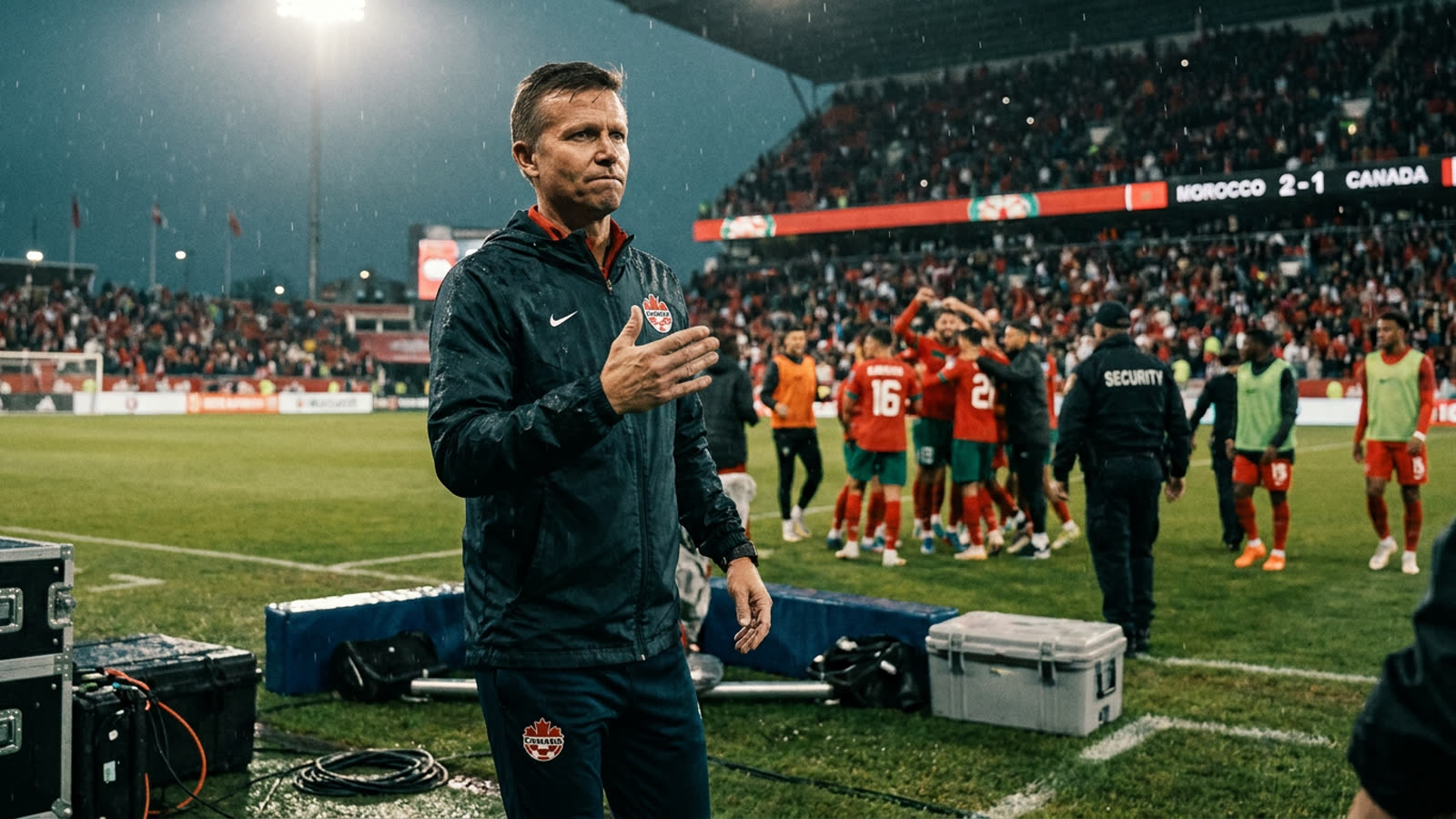
For Marsch and Canada, the defeat compounds the questions raised by their unconvincing group-stage performances. This is a team with individual talent—Alphonso Davies remains one of the world's most electric players when given space—but without a coherent idea of what to do when opponents deny them transitions. Morocco sat in a mid-block, invited Canada to build, and watched them pass sideways until frustration set in.
The American coach's post-match comments about Canada being "the better team" will not age well. Morocco had 58% possession, created twice as many clear chances, and never looked remotely troubled. Canada's World Cup ends with a whimper, and the project Marsch inherited now faces serious questions about its ceiling.
Our take
Morocco are no longer a story about defying expectations; they are simply a very good football team, methodical and ruthless in ways that belie their supposed underdog status. Ounahi is the engine, but Walid Regragui's tactical discipline is the foundation. Whoever draws them in the quarterfinals—likely Spain or Germany—will not be celebrating. The Atlas Lions have stopped asking for permission.