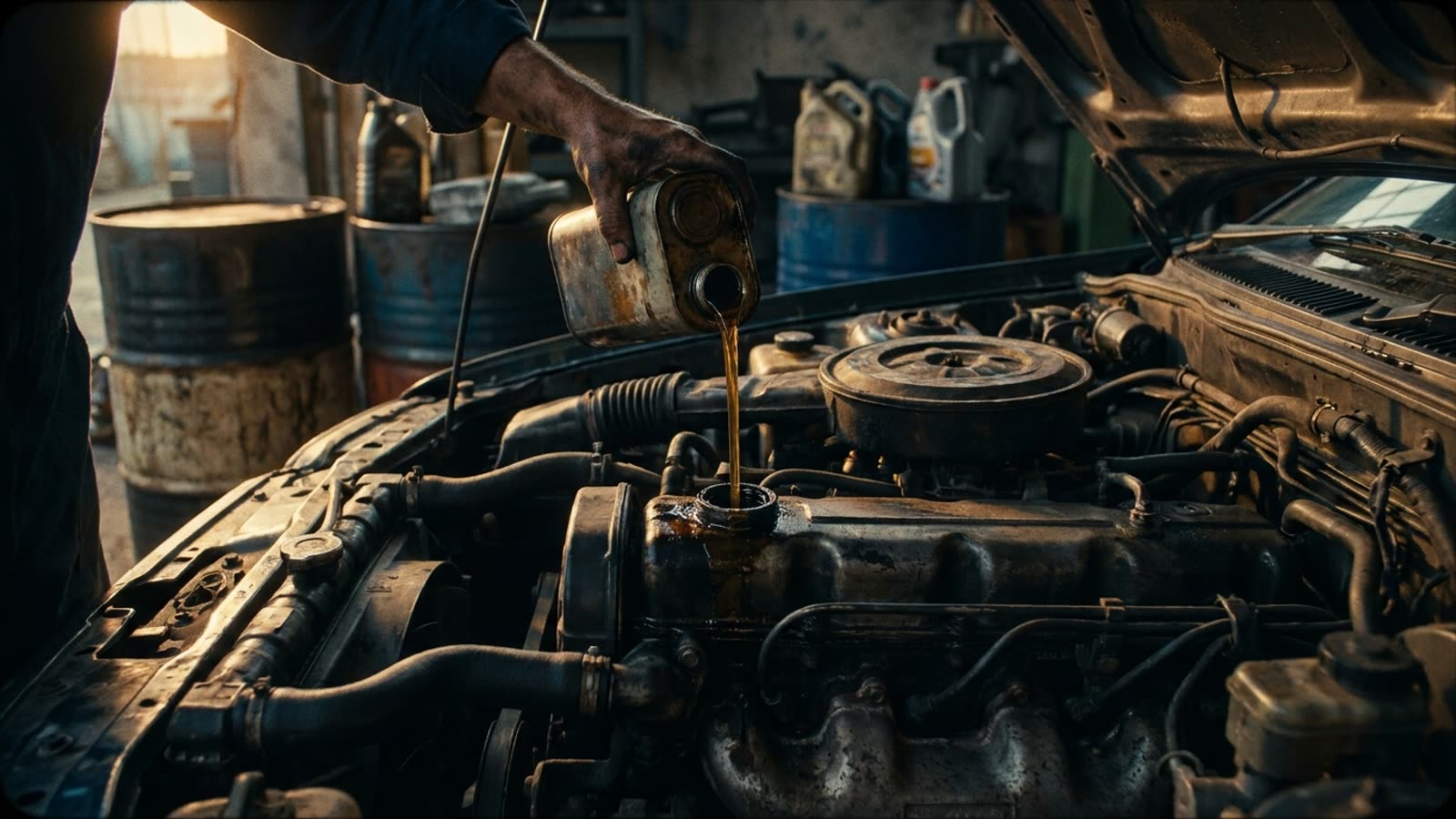
The auto industry spent the early 2020s learning painful lessons about semiconductor shortages. Now it faces a quieter but potentially more disruptive bottleneck: the base oils and additives that keep engines from seizing up.
Motor oil rarely makes headlines. It lacks the technological mystique of microchips or the political charge of battery minerals. But every gasoline and diesel vehicle on the road—roughly 280 million in the United States alone—depends on regular oil changes, and the refining infrastructure that produces lubricant base stocks is showing strain. Geopolitical disruptions to crude supplies, aging domestic refineries, and surging demand from markets still decades away from electrification have combined to create what industry insiders describe as a slow-motion squeeze.
The refinery math doesn't work
Base oil is a byproduct of refining crude into gasoline and diesel. As fuel demand in developed economies plateaus and some refineries shutter, the supply of lubricant feedstocks contracts in tandem. Meanwhile, the global vehicle fleet continues to grow—particularly in Asia, Africa, and Latin America, where internal combustion will dominate for decades. The mismatch is structural, not cyclical.
American refiners have underinvested in lubricant capacity for years, betting that electrification would eventually render the product obsolete. That bet may prove correct by 2045; it looks premature in 2026. The result is a market where spot prices for Group II and Group III base oils have climbed steadily, and some blenders report allocation constraints for the first time since the pandemic.
Dealers and consumers feel the pinch
For automakers, the immediate concern is warranty service and dealership operations. A vehicle stuck waiting for an oil change is a vehicle not generating service revenue—and a customer growing impatient. For consumers, higher lubricant costs add another line item to already elevated vehicle ownership expenses, from insurance to tires to fuel.
Fleet operators face the sharpest pressure. Trucking companies, delivery services, and municipal vehicle pools run on tight maintenance schedules; any disruption cascades into delayed shipments and service gaps. The irony is thick: the supply chain that moves goods across America could be hobbled by a shortage of the fluid that keeps trucks running.
Our take
Motor oil is the definition of an unglamorous commodity—until it isn't there. The industry's assumption that electrification would smoothly retire internal combustion has collided with the reality that transitions take decades and legacy fleets don't evaporate on command. Detroit spent years chasing chips and batteries; it may have forgotten to watch the oil gauge.