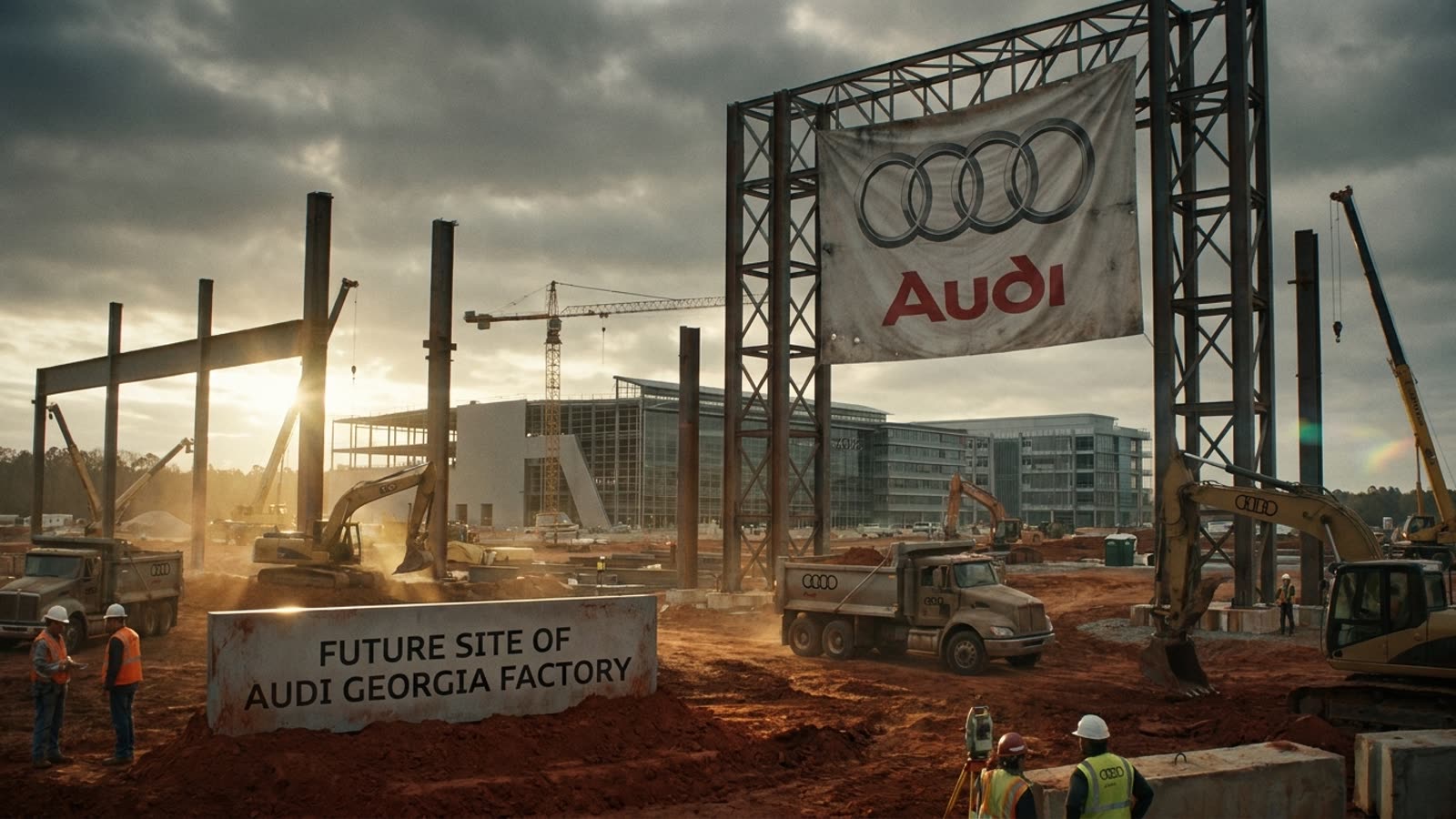
The tariff era has claimed another convert. Audi, the Ingolstadt-based luxury marque that has spent decades shipping sedans and SUVs across the Atlantic from Bavaria and Mexico, will construct a manufacturing plant in Georgia — its first on American soil. The announcement, confirmed by President Trump himself, marks a significant victory for an administration that has wielded import duties as a bludgeon to force foreign automakers into domestic production.
Audi's predicament was acute. Unlike BMW, which has operated a sprawling plant in South Carolina since 1994, or Mercedes-Benz, which builds SUVs in Alabama, Volkswagen's upmarket brand maintained a pure import model for the American market. That strategy became untenable when the latest round of tariffs pushed the effective duty on European-assembled vehicles well above the threshold where German engineering premiums could absorb the cost.
The arithmetic of reshoring
The calculus is brutal but straightforward. With tariffs on European Union automotive imports now substantial enough to add tens of thousands of dollars to the sticker price of an Audi Q8 or e-tron, the brand faced a choice: cede market share to domestically produced rivals or spend billions building local capacity. Georgia, with its established automotive supply chain, right-to-work labor laws, and generous state incentives, emerged as the logical site.
For Volkswagen Group, the decision also reflects lessons learned from its existing Chattanooga, Tennessee facility, which produces the Atlas SUV and ID.4 electric vehicle. Audi can leverage shared platforms and supplier relationships while maintaining the brand separation that justifies its price premium over VW-badged siblings.
What it means for American buyers
Consumers should not expect immediate relief. Factory construction typically requires three to four years before the first vehicles roll off the line, meaning Audi's Georgia-built models will not reach showrooms until the end of the decade at the earliest. In the interim, American Audi buyers will continue absorbing tariff-inflated prices — or defecting to Lexus, Genesis, and domestic alternatives.
The broader implication is a permanent restructuring of luxury automotive geography. European brands that once treated America as an export market are now treating it as a production base, with all the capital expenditure and employment that entails.
Our take
Trump's tariff regime is achieving exactly what it was designed to achieve: foreign direct investment extracted under economic duress. Whether this constitutes sound industrial policy or merely an expensive rearrangement of global supply chains is a debate economists will litigate for decades. What is undeniable is that Audi had no realistic alternative. The era of frictionless transatlantic automotive trade is over, and the Four Rings will soon be stamped in the American South.